
Pruning
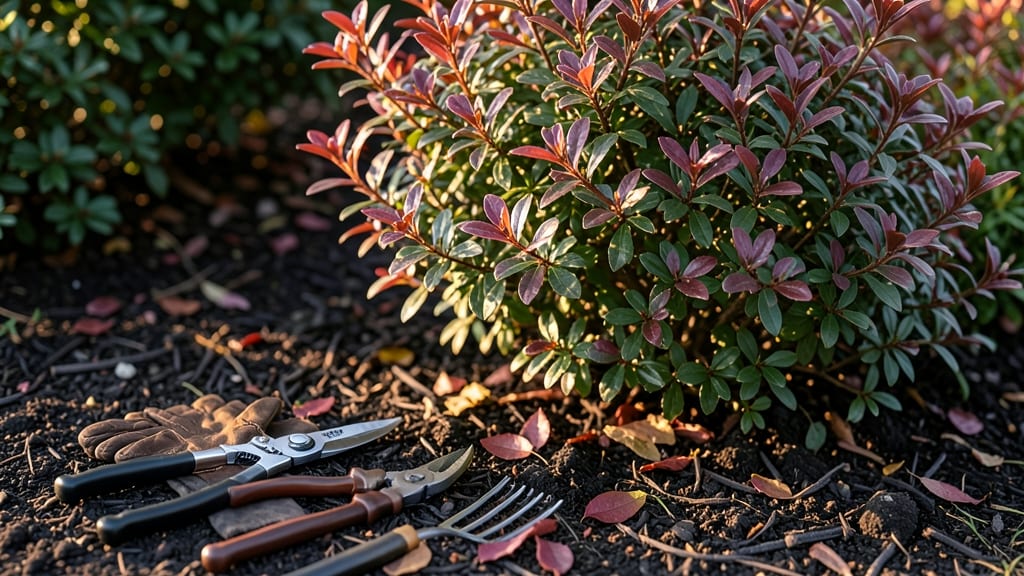
Pruning Japanese barberry isn't just about shaping—it's about taming those thorns while keeping those stunning spring blooms. ✂️ I've learned the hard way that aggressive cuts back too early can leave you with a bare bush, but the right timing and technique turns this into a foolproof way to keep your barberry lush and manageable.
The secret starts in late winter or early spring, just as new growth begins but before the buds burst. Grab your sharp pruners (dull blades tear bark) and heavy-duty gloves—those thorns pack a punch.
We're targeting dead wood first, then thinning out crowded stems to let light reach the center, where those vibrant yellow flowers will appear. You'll end up with a bush that's half the thorns but twice as productive, with better air circulation that keeps diseases at bay.
The key is patience: never remove more than 25% of the plant in one season, and always cut just above a bud or branch union to encourage new growth. Works for both formal hedges and naturalized shrubs.
Here's how to do it right the first time—no more tangled messes or bare patches.
📚 In This Guide
- What you need
- Instructions
- Tips and common mistakes
- Wrapping up and next steps
What you need
- ● Pruning shears: Bypass pruners (for clean cuts) or anvil pruners (for thicker stems). Opt for sharp, bypass-style shears (5–8" blades) to avoid crushing stems.
- ● Loppers: For thicker branches (½"–1.5" diameter). Choose ratcheting loppers for leverage or bypass loppers for precision.
- ● Heavy-duty gloves: Leather or thorn-proof gloves (e.g., Mechanix or Filson) to protect against thorns and cuts.
- ● Pruning saw: A curved-tooth pruning saw (for branches >1.5" thick) to avoid tearing bark.
- ● Disinfectant: 70% isopropyl alcohol or a pruning sealant (e.g., Tanglefoot Tree Wound Pruning Seal) to prevent disease spread.
- ○ Garden twine or ties: For securing branches if needed (optional but handy for large shrubs).
- ● Safety glasses: Protect your eyes from debris, especially when sawing.
- ● Knee pads: For comfort if you’re working with large or sprawling barberries.
- ● Sharpie or marker: To label branches if you’re doing structured pruning (e.g., shaping for hedges).
- ● Wheelbarrow or bucket: For collecting pruned branches and thorns (wear gloves when handling!).
- ● Timing: Prune in late winter or early spring (before new growth) or right after flowering (to avoid removing next year’s blooms).
- ● Weather: Choose a dry, cool day (avoid pruning in extreme heat or wet conditions).
- ● Safety check: Ensure the area around the shrub is clear of pets, kids, and foot traffic (those thorns are no joke! 🌟).
Step-by-step instructions for pruning Japanese barberry
Here’s how I prune mine every spring—keeping thorns manageable while preserving those stunning blooms.
✂️ Step 1: Time Your Prune for Spring Growth
Wait until late winter or early spring, just as new growth begins but before buds swell. This timing ensures you remove old, thorn-heavy wood while leaving next year’s blooms intact. I know it’s ready when the stems start to soften slightly—give them a gentle squeeze to test.
Japanese barberry blooms on old wood, so avoid pruning in fall or winter. Cutting back too early risks removing next year’s flowers entirely. If you missed the window, wait until after blooming to do a light clean-up, but expect fewer flowers that season.
✂️ Step 2: Remove Dead or Damaged Branches First
Start by cutting out any dead, diseased, or crossing branches with clean, sharp pruners. Look for stems that are brown inside when snapped or have blackened spots. Remove these first—they’re the easiest to spot and won’t affect blooms.
Cut back to a healthy bud or branch junction, angling the cut slightly upward to prevent water from pooling. I like to make my cuts just above a leaf node where new growth can emerge. If a branch is completely dead, cut it all the way back to the main stem.
✂️ Step 3: Thin Out Dense Growth for Airflow
Focus on reducing the thorniest, most crowded branches to improve airflow and sunlight penetration. Japanese barberry naturally grows in a rounded shape, so aim to maintain that form. Start at the center and work outward, removing branches that rub against each other or block light.
Don’t thin more than 25% of the plant at once—this keeps stress low and ensures blooms aren’t compromised. If your barberry is overgrown, spread pruning over 2-3 years to avoid shocking the plant. You’ll know you’ve done enough when you can see light reaching the inner branches.
✂️ Step 4: Shape for Balance and Thorn Control
Use your pruners to gently shape the plant, keeping the outer branches slightly longer than the inner ones. This encourages a fuller, more compact growth habit. Cut back the longest branches by about one-third to promote bushier growth and reduce thorn density.
Pay special attention to branches growing toward the center—they’ll create a dense, thorny tangle if left unchecked. Step back occasionally to check your work. A well-shaped barberry should look balanced from all sides, with no single branch dominating the others.
🌿 Step 5: Clean Up and Monitor Recovery
After pruning, remove all debris from the area to prevent disease. Dispose of clippings in a sealed bag—Japanese barberry can spread aggressively if left on-site. Water the plant deeply to help it recover, especially if you’ve made significant cuts.
Watch for new growth in 3-4 weeks—this is your signal that the pruning was successful. If the plant looks stressed (yellowing leaves, wilting), it may need a light fertilizer to bounce back. Regular pruning like this keeps thorns under control while keeping those vibrant blooms coming back year after year.
Tips & tricks for pruning Japanese barberry
These little details make all the difference when pruning your barberry—trust me, I learned this the hard way after turning my garden into a thorny mess!
Timing is Everything: The late winter/early spring window is non-negotiable for preserving blooms. I test readiness by gently squeezing stems—they should feel just slightly soft, like a ripe peach. If you prune too early, you risk removing next year's flower buds entirely. Mark your calendar for when your local area typically hits 40-50°F nighttime temperatures—this usually aligns with the perfect pruning window.
Tool Technique: Always use bypass pruners (not anvil pruners) for clean cuts that heal properly. I sterilize my tools with rubbing alcohol between cuts on diseased branches to prevent spreading pathogens. For branches thicker than your thumb, use loppers—never force small pruners through thick stems, as this crushes the plant tissue and invites infection.
Shape Smart: When shaping in Step 4, remember the one-third rule—never cut back more than one-third of any branch's length in a single season. I visualize the plant as a rounded dome, keeping outer branches slightly longer to maintain that natural shape. For stubborn thorny branches, cut just above a leaf node where new growth will emerge—this encourages bushier, less thorny regrowth.
Recovery Check: That 3-4 week recovery window is your plant's way of telling you whether you did it right. If you see new growth within this timeframe, you've pruned successfully. If not, you may have been too aggressive—next time, focus on removing only the most problematic branches rather than reshaping the entire plant at once.
Pro Tips for Pruning Japanese Barberry
- These little details make all the difference when pruning your barberry—trust me, I learned this the hard way after turning my garden into a thorny mess!
- Timing is Everything: The late winter/early spring window is non-negotiable for preserving blooms.
- Tool Technique: Always use bypass pruners (not anvil pruners) for clean cuts that heal properly.
Frequently asked questions
Got questions about pruning your Berberis thunbergii (Japanese barberry)? You’re not alone! Here are answers to the most common concerns—from timing to thorn management—so you can keep your shrub healthy and blooming beautifully.
When is the best time to prune Japanese barberry for thorn reduction?
The ideal time is late winter or early spring (just before new growth starts). This ensures you remove thorns while the plant is dormant, minimizing stress. Avoid pruning in fall—it can stimulate tender new growth that may not survive winter freezes.
How much can I trim back Japanese barberry without harming it?
You can safely remove up to ⅓ of the plant’s height or volume in one season. For thorn reduction, focus on cutting back overly dense or leggy branches to ¼ inch above a bud or lateral branch. Avoid shearing into a flat top—this encourages more thorns!
Will pruning Japanese barberry reduce its berries or flowers?
No—pruning actually encourages more blooms! By removing old wood and thinning dense areas, you improve airflow and sunlight, which boosts flowering. Just avoid heavy pruning after blooming (late spring), as this can cut off next year’s flower buds.
Are there alternatives to pruning for reducing thorns?
Yes! If pruning feels too aggressive, try:
- Selective branch removal: Cut only the thorniest stems back to the base.
- Thinning: Remove a few branches entirely to reduce density.
- Mulching: Apply 3–4 inches of mulch around the base to suppress new thorny growth.
- Cultivar choice: Opt for thornless varieties like ‘Rose Glow’ or ‘Superba’ if thorns are a major issue.
Why does my Japanese barberry keep growing thorns after pruning?
Thorns are a natural defense mechanism—pruning alone won’t eliminate them. To reduce regrowth:
- Prune consistently (annually in late winter).
- Avoid shearing (use hand pruners for precision).
- Apply a balanced fertilizer (10-10-10) in early spring to promote healthier, less thorny growth.
- Consider plant placement: Move it away from high-traffic areas if thorns are problematic.
Patience is key—over time, regular pruning will reduce thorniness.
Wrapping up and next steps
Pruning your Japanese barberry doesn’t have to be daunting—with the right techniques, you can reduce thorns while keeping those vibrant blooms thriving! 🌿 The key is timing, sharp tools, and a little patience.
By following these steps, you’ll not only enhance your plant’s health but also create a safer, more manageable landscape.
Ready to take the next step? Grab your pruners and schedule your first pruning session—your future (and your hands!) will thank you. Happy pruning! ✂️💪