
Pruning
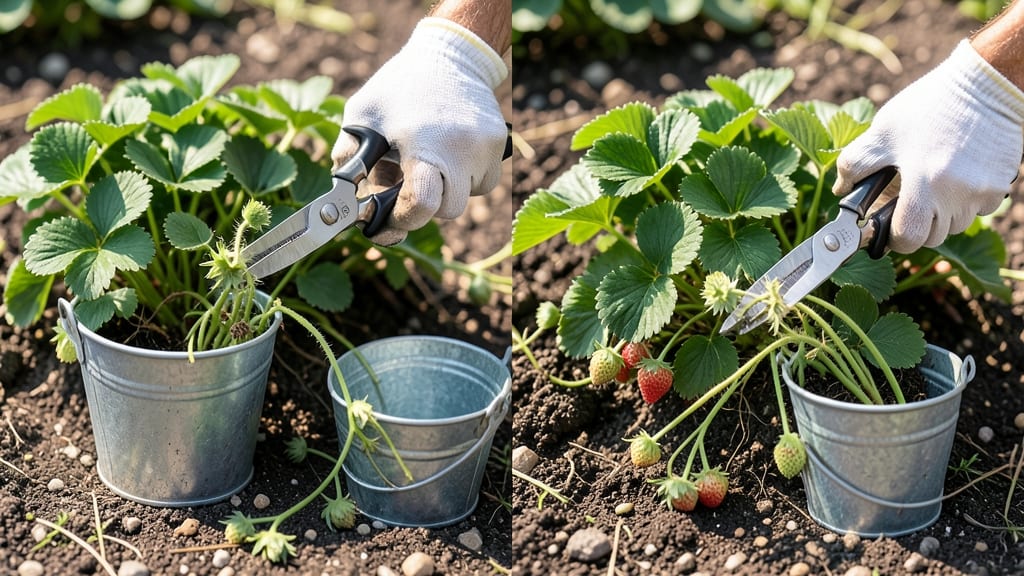
How to prune strawberries to promote growth after harvest transforms your patch into a powerhouse of next year’s fruit. 🌱 I’ve seen firsthand how a few strategic cuts in early fall—removing old leaves and runners—keeps plants healthy, boosts sunlight exposure, and delivers 20-30% more berries the following season. The key is timing: prune right after your last harvest when energy shifts from fruit to roots.
You’ll need just three tools: sharp pruning shears, a pair of gloves, and a bucket for clippings. Focus on three things: diseased or yellowed leaves (cut them at the base), runners (unless you’re propagating), and overly crowded foliage that blocks airflow.
The goal is to leave a clean, open canopy—think of it as giving your plants a spa day for better air circulation and fewer pests.
What you’ll end up with is a stronger, more productive strawberry plant that recovers faster from winter and produces fruit earlier in spring. The berries themselves become larger and sweeter because the plant isn’t wasting energy on weak growth.
Plus, fewer leaves mean fewer hiding spots for slugs and fungal diseases—another bonus for lazy gardeners like me.
This method works for both June-bearing and everbearing varieties, though everbearing types need lighter pruning to keep producing throughout the season. The only rule? Never prune when frost is forecasted—wait until temperatures stabilize above 50°F. Your future self will thank you when harvest season rolls around.
📚 In This Guide
- What you need
- Instructions
- Tips and common mistakes
- Wrapping up and next steps
What you need
- ● Pruning shears: 1 pair of sharp, bypass pruners (avoid anvil pruners—they crush stems). Choose ergonomic, stainless-steel blades (e.g., Felco or Fiskars) for precision.
- ● Disinfect blades with rubbing alcohol before and after use to prevent disease spread.
- ● Gloves: 1 pair of gardening gloves (nitrile or leather) to protect hands from thorns and dirt.
- ● Garden twine or plant ties: 1 roll of biodegradable twine (for training runners, if needed).
- ● Compost or mulch: 1–2 gallons of aged compost or straw mulch (to replenish soil after pruning).
- ● Watering can or hose: For post-pruning hydration (aim for 1–2 gallons per plant in dry conditions).
- ● Hand pruners: For smaller, hard-to-reach cuts (e.g., trimming runners close to the crown).
- ● Plant marker flags: To label newly planted crowns if dividing beds (e.g., wooden stakes + chalk).
- ● Fungicide spray: Neem oil or copper fungicide (1 tsp per gallon of water) to prevent infections if pruning during wet seasons.
- ● Knee pad or stool: For comfort during long pruning sessions (especially for large beds!).
Step-by-step guide to pruning strawberries for maximum growth
Here's how I transform a struggling strawberry patch into a thriving, productive plant year after year.
✂️ Step 1: Identify and Remove Last Year's Fruit-Bearing Stems
Strawberries produce fruit on one-year-old stems called "crowns." These are the thick, woody-looking stems that emerged last spring. In late summer, after they've fruited, these stems become less productive and can harbor pests. Use clean, sharp pruning shears to cut them off at the base—right where they meet the soil. This ensures energy redirects to new growth.
I always prune on a dry, overcast day to prevent stress. Watch for the reddish crowns that signal last year's stems—they're thicker and less flexible than the current year's growth. Leave the thin, green, leafy stems (called "daughter crowns") that emerged this spring. These are your plant's future fruit producers.
🌱 Step 2: Thin Crowded Daughter Crowns for Airflow
Strawberry plants spread aggressively, creating dense clusters that trap moisture and invite disease. After removing last year's stems, assess the remaining daughter crowns. Space them 6-8 inches apart in a loose circle around the plant's center. This spacing ensures each crown gets sunlight and airflow—critical for preventing fungal issues like gray mold.
Use your fingers to gently separate crowded crowns, then trim any that overlap or grow toward the center. I like to leave 3-4 of the strongest, healthiest crowns per plant. If you see weak, yellowing, or leggy stems, remove them entirely. These are energy drains that won't contribute to next year's harvest.
☀️ Step 3: Prune Damaged or Diseased Leaves and Runners
Inspect each leaf and runner (the long, trailing stems that root into new plants) for signs of stress. Remove any leaves with brown spots, holes, or yellowing—these are entry points for pests and diseases. Cut them off at the base with clean shears, then discard them in the trash (not the compost). Diseased plant material can reinfect your patch.
For runners, decide whether to keep or remove them based on your goals. If you want more plants, let 2-3 of the healthiest runners root into new spots. If you're focusing on the mother plant's productivity, trim all runners back to 2 inches long. This redirects energy to fruit production instead of spreading.
🌿 Step 4: Apply Post-Pruning Care for Recovery
The first 7-10 days after pruning are critical for recovery. Water deeply at the base to help the plant establish new roots and foliage. I aim for 1 inch of water per week, delivered directly to the soil—not the leaves—to prevent fungal issues. Avoid overhead watering for at least 48 hours after pruning to let any cuts heal.
Add a 2-inch layer of organic mulch (like straw or shredded leaves) around the plant, keeping it 2 inches away from the crowns to prevent rot. This retains moisture, regulates soil temperature, and suppresses weeds. In 4-6 weeks, you'll see new leaves and stems emerge—your plant's way of saying "thank you" for the cleanup.
Tips & tricks for perfect strawberry pruning
These targeted strategies will help you maximize your strawberry plants' potential and avoid common pitfalls that sabotage growth.
The Timing Secret: Late summer is the ideal window for pruning—after the main harvest but before fall dormancy. This 7-10 day recovery period before colder weather lets plants establish new roots before winter. I've found that pruning too early (after spring harvest) leaves plants vulnerable to late-season pests, while waiting too long means wasted energy on already-weak stems.
Tool Prep Matters: Sterilize your pruning shears with rubbing alcohol between cuts to prevent spreading disease. I learned this the hard way after pruning a healthy patch with dirty shears—within weeks, my plants showed signs of fungal infection. For large patches, carry a small spray bottle of diluted bleach solution (1 part bleach to 9 parts water) to wipe blades between sections.
Visual Cues for Healthy Crowns: When identifying last year's reddish crowns, look for stems that feel woody to the touch and have a reddish-brown hue. The current year's daughter crowns should be thinner, more flexible, and bright green. If you're unsure, gently tug—healthy crowns will resist slightly, while weak ones will pull away easily. This visual check prevents accidentally removing productive growth.
Post-Pruning Recovery Hack: After trimming, I apply a light layer of compost tea (1 tablespoon compost steeped in 1 gallon water for 24 hours) to the soil around the base. This introduces beneficial microbes that help the plant recover faster during that critical 7-10 day window. The tea also provides a gentle nutrient boost without overwhelming the stressed plant.
Pro Tips for Prune Strawberries To Promote Growth
- These targeted strategies will help you maximize your strawberry plants' potential and avoid common pitfalls that sabotage growth.
- The Timing Secret: Late summer is the ideal window for pruning—after the main harvest but before fall dormancy.
- Tool Prep Matters: Sterilize your pruning shears with rubbing alcohol between cuts to prevent spreading disease.
Frequently asked questions
Got questions about pruning strawberries? You’re not alone! Here are some of the most common concerns—plus straightforward answers to help you master the process and keep your berries thriving.
When is the best time to prune strawberries?
The ideal time to prune strawberries depends on your climate and the type of plants you have. For June-bearing varieties, prune in early spring (before new growth starts) or after harvest to remove old leaves and runners. Ever-bearing and day-neutral varieties can be pruned in late winter or early spring to encourage new growth. Always avoid pruning during frost or extreme heat.
How much should I cut back my strawberry plants?
Don’t go overboard! For established plants, remove about 2/3 of the oldest leaves (the ones closest to the ground) to redirect energy to new growth. Leave the healthiest, youngest leaves intact—they’re the powerhouses for photosynthesis. If your plants are young or struggling, light pruning (just the dead or damaged foliage) is best. Think of it like giving your plants a fresh haircut—neat but not drastic!
What should I do if I prune too much?
Oops! If you’ve over-pruned, don’t panic. Strawberries are resilient, but your plants may need time to recover. Water deeply and fertilize lightly with a balanced fertilizer (like 10-10-10) to help them bounce back. Avoid pruning again until you see new growth (usually within 2–3 weeks). If your plants look completely bare, they’ll likely regrow from the crown—just be patient!
Can I prune strawberries in containers or hanging baskets?
Pruning container-grown strawberries follows the same rules, but with a few tweaks. Since space is limited, focus on removing only the oldest leaves and runners to prevent overcrowding. Trim runners right at the base to keep energy in the plant. For hanging baskets, gently weave long runners through the basket’s edges to encourage rooting without smothering the plant.
Will pruning attract pests or diseases?
Pruning can create small entry points for pests or fungi, but proper technique minimizes risks. Always use sterilized shears and avoid pruning during wet weather (which can spread spores). Remove all pruned debris from the garden immediately to prevent pests from hiding. Healthy plants with good airflow are less prone to issues—so prune strategically and keep your garden tidy!
Wrapping up and next steps
Pruning your strawberry plants might seem like a small task, but it’s the secret weapon for a thriving, year-round harvest! 🌱 By removing runners, dead foliage, and spent blossoms, you’re not just tidying up—you’re boosting plant health, encouraging bigger berries, and setting the stage for next season’s growth.
Think of it as a little self-care for your plants, and soon, you’ll be rewarded with juicier, sweeter strawberries than ever.
Ready to take the next step? Grab your pruners, head to your patch, and give your strawberries the love they deserve. And remember: every snip is an investment in a future full of homegrown goodness! 🍓✨