
Pruning
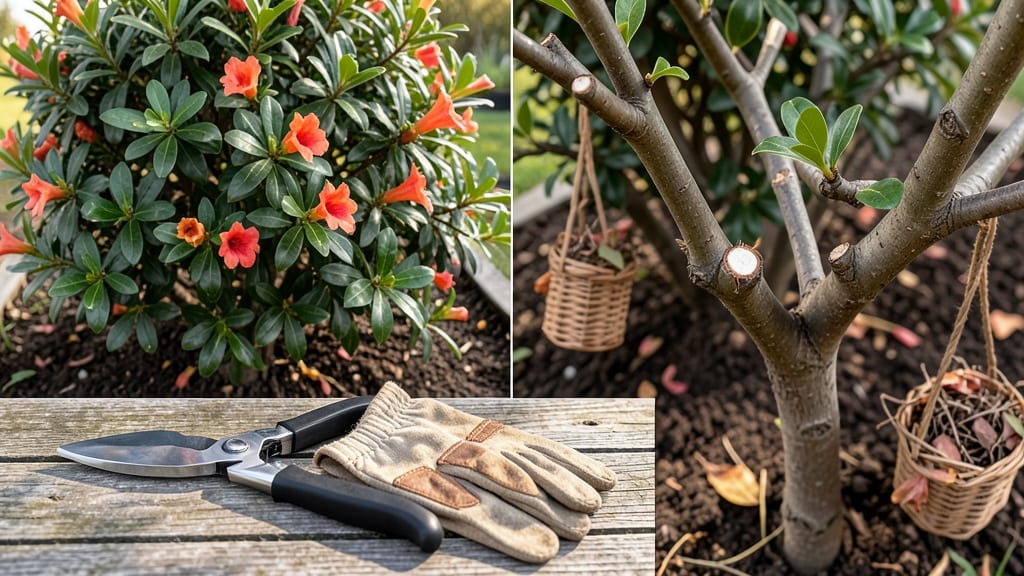
Pruning your pomegranate bush in late winter transforms it from a tangled mess into a fruit-producing powerhouse—and I’ve learned the hard way that timing is everything. 🌱 The dormant season (just before buds swell) is the perfect window to shape your bush without stressing it, while post-harvest pruning risks stunting next year’s crop.
My first attempt left half the branches looking like a bird’s nest, but now I’ve got a system that guarantees stronger canes and bigger fruit.
You’ll need just three tools: sharp pruning shears, loppers for thicker branches, and rubbing alcohol to sterilize cuts (trust me, this prevents disease). The real work? Removing dead, crossing, or weak growth—think of it like giving your bush a haircut for airflow and sunlight.
I cut back about one-third of the oldest canes each year to encourage new, vigorous growth where the fruit forms. It’s not about making it look pretty; it’s about setting up next summer’s harvest.
After pruning, your bush should look open and airy, with sunlight reaching the center where most fruit develops. Apply a balanced fertilizer in early spring to fuel new growth, and watch as those cuts heal into sturdy canes by midsummer.
The payoff? More fruit, fewer pests, and a bush that lives for decades instead of fading after a few years. Just don’t overdo it—less is more with pomegranates.
For troubleshooting, yellowing leaves usually mean you pruned too late or too aggressively, while no new growth signals under-pruning. If you’re unsure, start small: trim just the obvious deadwood first, then expand next year. The key is consistency—your bush will thank you with juicy, ruby-red fruit come harvest season.
📚 In This Guide
- What you need
- Instructions
- Tips and common mistakes
- Wrapping up and next steps
What you need
- ● Pruning shears or secateurs: Sharp, clean, and bypass-style (avoid anvil-type shears to prevent crushing stems). Quantity: 1 pair.
- ● Loppers: For thicker branches (½”–1.5” diameter). Quantity: 1 pair.
- ● Hand pruners or pruning saw: For stubborn, larger branches. Quantity: 1.
- ● Disinfectant (70% isopropyl alcohol or bleach solution): To sterilize tools between cuts. Quantity: Small bottle or spray.
- ● Gloves: Heavy-duty, cut-resistant gloves (pomegranate thorns are no joke!). Quantity: 1 pair.
- ● Rake or broom: To clear debris. Quantity: 1.
- ● Trash bags or compost bin: For pruned branches. Quantity: 2–3 bags.
- ○ Marking twine or flags: Optional but helpful for labeling cuts.
- ● Dormant season timing: Prune in late winter or early spring (before buds swell) or summer after harvest.
- ● Weather check: Choose a dry, calm day to avoid spreading disease.
- ● Safety gear: Long sleeves, pants, and closed-toe shoes to protect from thorns.
- ● Pomegranate bush assessment: Identify dead, diseased, or crossing branches before pruning.
- ● Pruning sealant: For large cuts (1”+ diameter) to prevent disease.
- ● Notebook & pen: To sketch your bush’s structure before/after pruning.
- ● Ladder or step stool: If your bush is taller than 6 feet.
- ● Mulch: To replenish the soil after pruning.
Step-by-Step instructions for pruning pomegranate bushes in dormant season
Here's how I transform a tangled pomegranate into a vigorous, fruit-bearing machine—every cut matters.
✂️ Step 1: Remove Dead, Diseased, or Damaged Wood First
Start by scanning the bush for any branches that are completely brown, brittle, or showing signs of fungal infection like blackened spots or powdery residue. Use clean, sharp pruning shears to cut these out at the base where they meet the main trunk. I always disinfect my tools with rubbing alcohol between cuts—this prevents spreading any hidden pathogens to healthy wood.
Look for branches that are thinner than a pencil or have no signs of life when you scratch the bark. These are called "dead canes" and should be removed entirely. Don't leave stubs—they invite disease. Cut cleanly at a 45-degree angle just outside the branch collar (the swollen area where the branch meets the trunk).
✂️ Step 2: Thin Out Overcrowded Branches for Better Airflow
Pomegranates thrive when they get plenty of sunlight and air circulation. Remove any branches that are rubbing against each other or growing inward toward the center of the bush. These compete for resources and create shaded, damp conditions that foster fungal problems. Aim to keep the bush open with branches spaced 12-18 inches apart.
I prioritize removing the smallest, weakest branches first—they're the ones that won't recover well. If you have to choose between two crossing branches, keep the one that's healthier and more vigorous**. Cut back to a lateral bud or side branch that's growing outward. Never leave a stub—it's an open wound that invites infection.
✂️ Step 3: Prune for Structure and Fruit Production
Pomegranate bushes fruit best on mature wood—the older, thicker branches. Focus your cuts on shaping the bush while preserving these fruit-bearing canes. Remove any branches that are growing straight up (called "watersprouts") unless they're part of your main scaffold. These vertical shoots use energy that could go to fruit production.
For each main branch, I look for 3-5 strong lateral branches and prune back any weaker growth. Cut just above a bud that faces outward—this encourages new growth that will fill out the bush. Avoid cutting back more than one-third of the bush's total growth in a single season. Over-pruning stresses the plant and reduces next year's fruit.
✂️ Step 4: Clean Up and Apply Protective Measures
After pruning, rake up all the clippings and dispose of them in the trash—not the compost pile. Pomegranate prunings can harbor fungal spores that survive decomposition. I also sterilize my tools again with rubbing alcohol to prevent cross-contamination between cuts. If your bush is in a humid climate, consider applying a copper fungicide spray to any large cuts to prevent infection.
Finally, spread a 2-3 inch layer of mulch around the base of the bush (keeping it 6 inches away from the trunk to prevent rot). This helps retain moisture and regulates soil temperature. Water deeply after pruning to help the plant recover. You'll see fresh, green growth emerging from the buds within 4-6 weeks—that's your sign the pruning was successful.
Tips & tricks for pruning pomegranate bushes like a pro
Transforming a tangled pomegranate bush into a thriving fruit producer takes precision—and these pro tips will help you avoid common pitfalls while maximizing your harvest.
Tool Prep is Non-Negotiable: Before you make your first cut, sharpen your pruning shears and sterilize them with rubbing alcohol. Dull blades tear wood instead of making clean cuts, which slows healing and invites infection. I also keep a small spray bottle of alcohol handy to disinfect between cuts on different branches—this prevents cross-contamination of any hidden pathogens lurking in the bush.
The 45-Degree Angle Secret: When removing branches in Step 1, that 45-degree angle isn't arbitrary—it's about directing water runoff away from the branch collar. Cutting at a downward angle helps rainwater flow away from the wound, reducing the risk of rot. Pro tip: Use a small notched tool or make a shallow notch on the underside of the branch before cutting to create a natural water channel.
Bud Direction Matters: In Step 3, when you're cutting back to encourage outward growth, pay close attention to which way the buds face. Buds that point outward will grow into branches that spread the canopy, while inward-facing buds create dense centers that block sunlight. Aim to make cuts just above outward-facing buds—this simple detail makes all the difference in creating an open, airy bush structure.
Mulch Placement Precision: That 2-3 inch layer of mulch in Step 4 isn't just about moisture retention—it's about placement. Keep it 6 inches away from the trunk to prevent rot while still protecting the root zone. I like to create a slight mound of mulch around the base, sloping gently away from the trunk. This helps water drain properly while still insulating the roots during winter.
Pro Tips for Prune Pomegranate Bush
- Transforming a tangled pomegranate bush into a thriving fruit producer takes precision—and these pro tips will help y...
- Tool Prep is Non-Negotiable: Before you make your first cut, sharpen your pruning shears and sterilize them with rubb...
- The 45-Degree Angle Secret: When removing branches in Step 1, that 45-degree angle isn't arbitrary—it's about directi...
Frequently asked questions
Got questions about pruning your pomegranate bush? You’re not alone! Here are some of the most common concerns—plus straightforward answers to keep your plant thriving.
When is the best time to prune a pomegranate bush?
The ideal time is late winter or early spring, before new growth begins. This aligns with the bush’s dormant season (typically January–February in most climates). Avoid pruning in fall, as wounds may not heal before winter. Pro tip: If you missed the window, prune in early spring—just don’t delay past bud break!
How much can I cut back my pomegranate bush?
Prune back 1/3 to 1/2 of the oldest, thickest canes to encourage new growth and fruit production. For young bushes, aim for lighter pruning (removing only dead or crossing branches). Over-pruning can stress the plant, so err on the side of caution—you can always trim more next year if needed.
What if I see no buds after pruning?
Don’t panic! Pomegranates need time to recover. If buds are sparse, check for these issues:
- Underwatering: Deep water weekly during dry spells.
- Poor sunlight: Ensure 6+ hours of sun daily.
- Over-fertilizing: Too much nitrogen = leafy growth, few flowers.
Can I prune a pomegranate bush in summer?
Summer pruning is possible, but it’s not ideal. Heavy pruning during hot months can stress the plant and reduce fruit set. If you must prune, do so early morning or late evening to minimize heat shock. Focus on removing only dead/diseased branches—save major cuts for dormancy.
Will pruning increase my pomegranate harvest?
Pruning removes crowded or weak canes, allowing the bush to redirect energy to fewer, healthier branches—which produce more and larger fruit. Think of it like decluttering: less competition = bigger, juicier pomegranates! Just remember, patience is key—it may take a year or two to see the full benefits.
How do I prune a pomegranate bush in cold climates?
Cold-hardy varieties (like ‘Wonderful’ or ‘Eversweet’) can handle dormant pruning, but take extra care:
- Wait until after the last frost to prune (usually March in Zone 7+).
- Use sharp, sterilized tools to prevent disease entry.
- Mulch heavily around the base to protect roots from freeze-thaw cycles.
Wrapping up and next steps
Pruning your pomegranate bush during dormancy is a game-changer—it boosts fruit production, improves airflow, and keeps your plant thriving for years to come! 🌱 By following the right techniques, timing, and tools, you’ll encourage stronger canes and a bountiful harvest.
Now that you’re armed with the know-how, grab your pruners and get started! For best results, mark your calendar to prune again next winter and enjoy the rewards of your hard work.
Pro tip: 💡 Keep a journal to track your pruning progress—note which cuts yield the best fruit, and refine your approach each season!