
How To
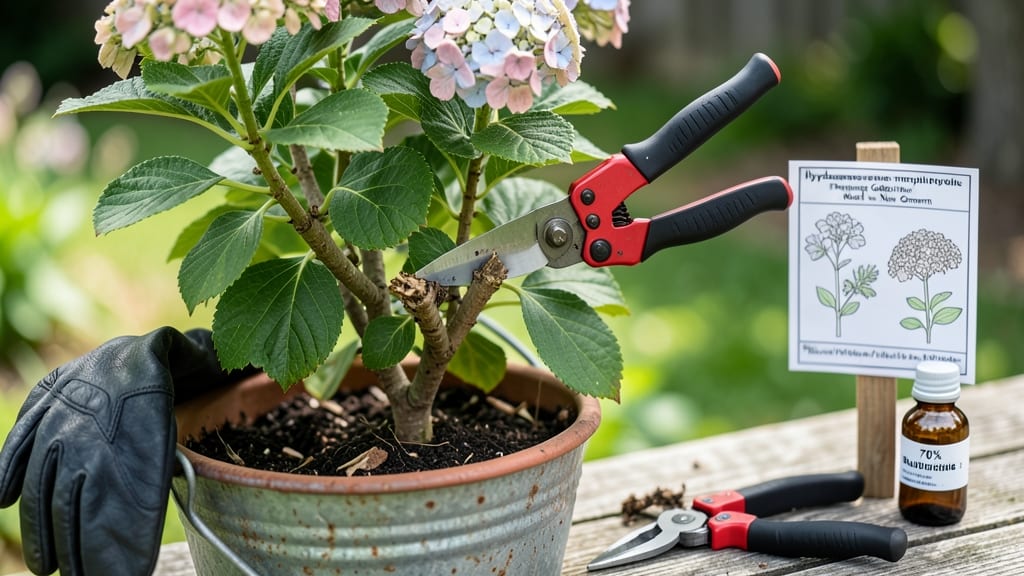
Pruning bigleaf hydrangeas in late winter transforms your shrub from a tangle into a showstopping summer canopy—and the secret is timing and knowing which stems to cut. 🌿 I’ve turned my hydrangeas from sparse to lush by focusing on the old wood (last year’s growth) where the flowers form, while leaving the new green stems untouched.
The key? Wait until after the last frost but before buds swell, then trim only the brown, woody stems that bloomed last year—never the fresh green ones.
Grab your pruners and gloves, then look for dried-out stems (they’ll snap easily) or buds near the base—these are your clues. Cut just above the first set of healthy buds, at a 45-degree angle, to encourage fuller growth.
Avoid over-pruning: never remove more than ⅓ of the plant, or you’ll sacrifice next year’s blooms. The payoff? A denser, more vibrant shrub by summer, with flowers that last from June until frost. Just don’t rush—patience here means big rewards later.
📚 In This Guide
- What you need
- Instructions
- Tips and common mistakes
- Wrapping up and next steps
What you need
- ● Pruning shears or loppers – Choose bypass pruners (sharp, clean blades) for clean cuts. For thicker branches (over ½ inch), opt for loppers (18–24 inches long).
- ● Garden gloves – Heavy-duty, cut-resistant gloves (e.g., mechanized or leather) to protect against thorns and sap.
- ● Disinfectant (70% isopropyl alcohol or bleach solution) – Wipe tools before and after use to prevent disease spread. Mix 1 part bleach to 9 parts water for DIY sanitizer.
- ● Rags or paper towels – For cleaning tools and wiping sap off cuts.
- ○ Markers or flags (optional but helpful) – Use color-coded tags or paint to mark branches for removal (e.g., red = cut, green = keep).
- ● Heavy-duty trash bags or bucket – For collecting pruned branches (aim for 3–5 gallons capacity).
- ● Safety glasses – Protect your eyes from debris, especially when pruning dense canopies.
- ● Extension pole pruners – For high branches (reaches up to 8–10 feet).
- ● Hydrangea-specific fertilizer – Apply balanced 10-10-10 or acid-loving plant food post-pruning to boost recovery.
- ● Mulch (pine bark or wood chips) – Spread 2–3 inches around the base to retain moisture and deter weeds.
- ● Pruning sealant (not always recommended) – Only use on large cuts (>1 inch) to prevent disease (e.g., tree wound pruning paste).
- ● Camera or phone – Snap before/after photos to track progress!
Step-by-step instructions for pruning big leaf hydrangeas
Pruning at the right time transforms your big leaf hydrangeas from ragged to showstopping. Here's my foolproof late-winter method.
⏰ Step 1: Time Your Pruning Perfectly
Wait until late winter when the plant is fully dormant and before new growth begins. In most climates, this means pruning between mid-February and early March. You'll know it's time when the stems feel woody and no buds have swollen yet. Pruning too early risks cold damage to fresh cuts, while waiting too long encourages new growth that could be killed by late frosts.
Check your local frost dates if unsure. I always mark my calendar with the last frost date and prune 4-6 weeks before it arrives. This timing ensures your plant has time to establish new growth before summer heat arrives. If you're in a mild climate with no frost, aim for late January to early February instead.
✂️ Step 2: Gather the Right Tools and Safety Gear
Use clean, sharp pruning shears for clean cuts—dull blades crush stems and invite disease. I sterilize my tools with rubbing alcohol before starting to prevent spreading any fungal spores that might be lingering from last season. Wear gloves to protect your hands from thorns and sap, and have a bucket ready to collect clippings.
Keep a sharp pencil and notebook nearby to mark stems you're unsure about. This helps you track which branches you've pruned and which might need attention next year. I also like to have a small spray bottle with water to refresh my tools if they get sticky from sap.
🌿 Step 3: Remove Dead, Diseased, or Weak Growth
Start by inspecting the plant for dead, diseased, or weak stems. Dead wood appears dry, brittle, and often gray or brown. Diseased stems might have black spots, mold, or ooze. Cut these out first at the base, making a 45-degree angle just above a bud or lateral branch. This prevents water from pooling on the cut and reduces the risk of rot.
Next, look for thin, spindly growth that never bloomed well last year. These stems are energy vampires—they sap nutrients from the plant without contributing much. Snip them off at their base. You'll notice the plant's structure becomes clearer as you remove these underperformers. If a stem is less than 1/4 inch thick, it's likely a candidate for removal.
✂️ Step 4: Thin Out Crowded Branches for Better Airflow
Big leaf hydrangeas thrive when they have good airflow around their branches. Look for areas where stems are growing too close together, creating a dense tangle. Select one or two of the strongest, healthiest stems in each cluster and remove the rest. This opens up the center of the plant, allowing sunlight to reach inner buds and reducing humidity that can lead to fungal issues.
Focus on removing about 20-30% of the plant's total stems. You're not trying to drastically reduce size—just creating a balanced shape. As you prune, step back occasionally to visualize the plant's form. Aim for a rounded, open structure that allows light to penetrate to the center. Avoid leaving large gaps, as this can make the plant look sparse.
☀️ Step 5: Shape the Plant for Optimal Bloom and Light Exposure
Now it's time to shape the plant. Big leaf hydrangeas bloom on current season's growth, so you want to encourage strong, outward-facing branches. Look for lateral buds—these are the small bumps on stems where new growth will emerge. Make your cuts just above these buds, angled away from the bud to prevent water from running down the stem.
Prune to create a rounded, slightly domed shape. Avoid cutting back to the ground or leaving stubs—always cut back to a bud or lateral branch. If you're unsure which way to angle your cut, imagine the direction you want the new growth to go and cut accordingly. After pruning, your plant should look balanced and full, with no single branch dominating the structure.
Tips & tricks for perfect big leaf Hydrangea pruning
These essential insights will help you transform your hydrangeas into a thriving summer spectacle with minimal effort and maximum impact.
Timing Secret: The late-winter window between mid-February and early March is non-negotiable for big leaf hydrangeas. I learned this the hard way after pruning too early in January—my cuts froze and died before new growth could establish. The key is checking for dormant stems with no swollen buds. If you're unsure about your climate, use your last frost date as a guide: prune 4-6 weeks before that date to give new growth time to harden off before summer heat arrives.
Tool Technique: Sterilizing your pruning shears with rubbing alcohol isn't just about clean cuts—it's about preventing fungal spread between plants. I keep a small spray bottle of 70% isopropyl alcohol handy and wipe down blades between every 3-4 cuts. For stubborn sap buildup, use a damp paper towel instead of water, which can dilute the alcohol. The sharp pencil and notebook trick is also invaluable: I mark questionable stems with a "Q" and revisit them next year if they don't improve.
Pruning Precision: When making your 45-degree cuts above lateral buds, visualize the direction you want new growth to go. I angle cuts away from the bud to prevent water from pooling. For stems less than ¼-inch thick, I use my fingers to gently pinch them off at the base—no need for shears. This creates cleaner cuts that heal faster. Remember, you're sculpting the plant's future shape, so step back every few cuts to assess balance.
Airflow Strategy: The 20-30% stem removal guideline might seem vague, but here's how I make it concrete: I count the total stems and remove every third one in crowded areas. This creates that perfect open structure while maintaining density. For large plants, I work in sections—top, middle, bottom—to avoid overwhelming myself. The goal is sunlight penetration to the center, not drastic size reduction.
Pro Tips for Prune Big Leaf Hydrangeas
- These essential insights will help you transform your hydrangeas into a thriving summer spectacle with minimal effort and maximum impact.
- Timing Secret: The late-winter window between mid-February and early March is non-negotiable for big leaf hydrangeas.
- Tool Technique: Sterilizing your pruning shears with rubbing alcohol isn't just about clean cuts—it's about preventing fungal spread between plants.
Frequently asked questions
Got questions about pruning your big leaf hydrangeas? You're not alone!
Here are answers to the most common concerns—so you can prune with confidence and keep those blooms looking their best.
When is the absolute best time to prune big leaf hydrangeas?
The ideal window is late winter (just before buds swell) or early spring. Avoid pruning in fall—it removes next year’s blooms! For late-winter pruning, aim for February or March in most climates. If you miss this, wait until after blooming (but you’ll sacrifice some summer flowers).
Can I prune big leaf hydrangeas in winter? What if there’s still snow?
Yes, but only if the ground isn’t frozen and you’re in a mild-winter zone (Zones 7-9). In colder areas, wait until after the last frost—pruning too early can stress the plant. If snow’s still on the ground, patience is key! Bundle up, grab your shears, and prune when temps rise above freezing for a few days.
Will pruning big leaf hydrangeas make them bloom more?
Not necessarily! Big leaf hydrangeas (Hydrangea macrophylla) bloom on old wood, so aggressive pruning can reduce flowers. Focus on shaping (removing dead/weak stems) and thinning sparingly. For bigger blooms, prioritize health over size—think less is more!
What if I prune at the wrong time and my hydrangea doesn’t bloom?
Don’t panic! Big leaf hydrangeas are hardy. If you pruned too late (after buds swell), you may see fewer blooms that year, but the plant will recover. Next year, prune in late winter and keep stems healthy. For a quick fix, avoid fertilizing until new growth appears—this helps redirect energy to blooms.
Can I prune big leaf hydrangeas the same way as panicle or oak leaf types?
Nope!
Big leaf hydrangeas (old wood bloomers) need gentle pruning, while panicle (H. paniculata) and oak leaf (H. quercifolia) bloom on new wood—so they can handle harder cuts. Mixing up the two? You’ll end up with no blooms on your big leaf! Always check your variety first.
Pro Tip: Label your hydrangeas! If you have multiple types, use plant tags to avoid pruning mix-ups. Trust us—your future self (and your blooms) will thank you.
Wrapping up and next steps
Pruning your big leaf hydrangeas in late winter isn’t just about tidying up—it’s your secret weapon for stunning summer blooms! By following the right techniques, you’ll encourage stronger growth, vibrant flowers, and a healthier plant. Remember, patience and precision pay off, so take your time and enjoy the process.
Now that you’re armed with the know-how, grab those shears and give your hydrangeas the care they deserve. Ready to see your garden thrive? 🌿✨ Next, check out our guide on fertilizing tips to keep those blooms lush all season!