
Pruning
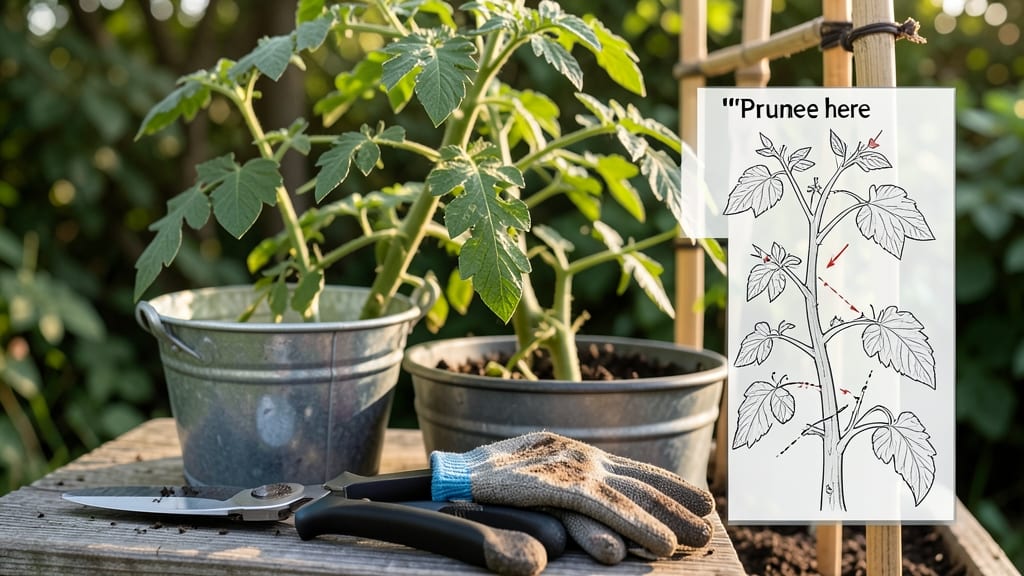
Pruning tomato plants in containers isn't just about trimming—it’s the secret to doubling your harvest in a 5-gallon bucket. 🌱 I learned the hard way that skipping pruning means fewer tomatoes and more leafy vines fighting for space.
The right cuts redirect energy to fruit, not foliage, and keep air circulating so diseases stay away. Start when plants hit 12 inches tall, using clean pruners and a sunny afternoon.
Snip just above a leaf where two stems meet, and focus on three key areas: suckers (side shoots), lower leaves (for airflow), and damaged branches. Each cut takes seconds but adds weeks to your harvest season.
By mid-summer, your plants will look bushier, not leggier, and each vine will support 2-3 times more tomatoes than unpruned ones. The fruit ripens faster too, so you’re picking in July instead of August. Plus, containers stay cleaner with less foliage blocking sunlight. Common mistakes?
Pruning too late or too aggressively—stick to one-third of the plant’s height as your max. And always prune after morning dew dries to avoid spreading fungal spores. Your container garden will thank you with a bounty that puts store-bought tomatoes to shame.
📚 In This Guide
- What you need
- Instructions
- Tips and common mistakes
- Wrapping up and next steps
What you need
- ● Pruning shears or sharp scissors – Look for bypass pruners (clean cuts!) or sterilized scissors to avoid disease.
- ● Clean, sharp knife or razor blade – For precise cuts if shears aren’t available.
- ○ Gloves (optional but recommended) – Thorn-resistant or heavy-duty gloves to protect your hands.
- ● Disinfectant (rubbing alcohol or bleach solution) – 1 part bleach to 9 parts water to sterilize tools between cuts.
- ● Container-grown tomato plant – Indeterminate varieties (like ‘Cherry Roma’ or ‘Sungold’) need pruning; determinate types (like ‘Roma’) don’t!
- ● Plant ties or soft twine – To support stems after pruning (especially for tall varieties).
- ● Compost or mulch – To replenish nutrients after pruning stress.
- ● Spray bottle with water – To mist cuts and reduce shock.
- ● Garden journal or app – Track pruning dates and plant growth for future reference!
Step-by-Step instructions for pruning container tomatoes
Here's the simple, foolproof method I use to keep my container tomatoes productive all season.
✂️ Step 1: Identify and Remove Suckers Early
Suckers are the small shoots that grow in the "V" between the main stem and a branch. These compete with your fruit for energy, so I remove them when they're about 1-2 inches long. Use your thumb and forefinger to gently pinch them off—no need for scissors. I check my plants every 7-10 days during peak growth because suckers appear fast in warm weather.
Real talk: If you miss a sucker, don't stress. It won't ruin your harvest. Just keep up with regular checks. The key is consistency—you'll see fewer suckers over time as the plant matures. Focus on the main stem and lower branches first, where suckers appear most aggressively.
🌱 Step 2: Prune Lower Leaves for Airflow
Remove all leaves from the bottom 6-12 inches of the plant when it reaches 18-24 inches tall. This improves airflow and prevents soil-borne diseases like blight. I use clean, sharp pruning shears for larger leaves and pinch smaller ones by hand. The goal is to expose the fruit clusters to sunlight while keeping the foliage above them intact.
Here's the thing—don't overdo it. You're not stripping the plant bare. Leave enough leaves to provide energy for fruit development. If your plant looks stressed after pruning, you've gone too far. Watch for new leaf growth in 3-5 days as a sign you've done it right.
☀️ Step 3: Thin Fruit Clusters for Bigger Tomatoes
When fruit clusters form, leave only 2-3 tomatoes per cluster on the plant. Remove the smallest ones first—they won't ripen fully and will drain energy from the keepers. I use the same pinching method for small fruit, but for larger tomatoes, I gently twist them off at the stem. This prevents disease entry points better than cutting.
You'll notice the remaining tomatoes grow larger and ripen faster. This is normal—the plant focuses its resources on fewer fruits. If you're growing cherry tomatoes, you can leave 4-5 per cluster since they're smaller. The rule is simple: fewer tomatoes = bigger tomatoes in containers where space is limited.
⏰ Step 4: Adjust Pruning as the Season Progresses
After the first flush of fruit sets, reduce pruning to just removing diseased or yellowing leaves. The plant needs all its energy for ripening. In late summer, I stop pruning entirely about 4-6 weeks before your first frost to let the plant harden off. This gives the tomatoes time to mature before cold weather arrives.
Watch for signs of stress: sudden wilting, yellowing leaves, or stunted growth. These often mean you've pruned too aggressively. Container tomatoes have less root space than in-ground plants, so they recover more slowly. If you see these signs, hold off on pruning for 10-14 days to let the plant rebound.
Tips & tricks for pruning container tomatoes
A few simple strategies that'll make all the difference in your container tomato harvest this season.
Timing Secret: In Step 1, when you're removing those 1-2 inch suckers every 7-10 days, I've found morning is the best time. The plant's sap is flowing upward, making suckers easier to pinch off cleanly. Plus, you'll spot new suckers more easily when the plant is fully hydrated from overnight watering. This small habit saves time and prevents missed suckers that could compete with your fruit.
Pruning Tool Wisdom: For Step 2, I always keep a small pair of clean pruning shears dedicated just to my tomato plants. Sterilize them with rubbing alcohol between uses to prevent spreading disease. The shears make quick work of larger leaves at the 6-12 inch mark, while I still use my fingers for smaller leaves—it's faster than you'd think once you get the rhythm. This two-tool approach keeps your pruning efficient and hygienic.
Visual Cue for Step 3: When thinning fruit clusters to 2-3 tomatoes, look for the one that's slightly larger than the others—the "runner" in each cluster. This is your keeper! The others won't reach full maturity and will steal energy. I also check for any tomatoes showing signs of blossom end rot (dark spots at the bottom) and remove those immediately. This simple visual check ensures you're always keeping the healthiest, most productive fruit.
Late-Season Strategy: In Step 4, when you stop pruning 4-6 weeks before frost, I recommend marking your calendar with both the stop date AND the frost date. Container tomatoes in smaller pots need that extra time to harden off, especially if you're in a cooler climate. You'll notice the plant starts putting all its energy into ripening existing fruit rather than new growth—this is exactly what you want at this stage.
Pro Tips for Prune Tomato Plants In Containers
- A few simple strategies that'll make all the difference in your container tomato harvest this season.
- Timing Secret: In Step 1, when you're removing those 1-2 inch suckers every 7-10 days, I've found morning is the best time.
- Pruning Tool Wisdom: For Step 2, I always keep a small pair of clean pruning shears dedicated just to my tomato plants.
Frequently asked questions
Got questions about pruning container tomatoes? You’re not alone! Here are answers to the most common concerns—plus a few pro tips to keep your plants thriving.
When is the best time to prune tomato plants in containers?
Prune your container tomatoes early and often—start when plants are 6–12 inches tall. Focus on removing suckers (side shoots) in the morning to allow wounds to heal by evening. Avoid heavy pruning during extreme heat or cold, as stress can slow recovery. For indeterminate varieties, prune continuously throughout the growing season.
Do I need to prune determinate (bush) tomatoes in containers?
Determinate tomatoes don’t require heavy pruning like indeterminate types. Simply remove yellow leaves (diseased or damaged) and any shoots growing below the first flower cluster. Light trimming improves airflow, reducing humidity-related diseases. Over-pruning can limit fruit production, so keep it minimal!
What should I do if I prune too much or too late?
If you’ve over-pruned, don’t panic! Your plant may recover if at least 3–4 main stems remain. For late pruning, focus on removing only diseased or dead growth—avoid cutting back healthy foliage. Water deeply and fertilize lightly (with a balanced 10-10-10) to support regrowth. Indeterminate tomatoes are more forgiving than determinate types.
Will pruning reduce my tomato yield in containers?
Not if done correctly! Pruning increases yield by directing energy to fruit production. In containers, proper pruning also prevents overcrowding, which reduces disease risk. For indeterminate varieties, aim to leave 1–2 main stems (or 3 for bushier growth). Pro tip: Prune aggressively early in the season to boost later harvests!
How do I sterilize pruning tools to prevent disease?
Always clean your shears or pruners with 70% isopropyl alcohol or a 10% bleach solution (1 part bleach to 9 parts water) before and after pruning. Rinse with water and dry thoroughly. Diseased plants should be pruned last to avoid cross-contamination. Bonus: Sharpen blades regularly for cleaner cuts that heal faster!
Still unsure? Drop your question below—we’re happy to help your container tomatoes reach their full potential!
Wrapping up and next steps
Pruning your container-grown tomato plants doesn’t have to be intimidating—just a few strategic cuts can boost your harvest and keep your plants thriving! 🌱 By removing suckers early, pinching back leaves, and trimming damaged growth, you’ll encourage stronger stems, better airflow, and more delicious tomatoes all season long.
Now that you’re armed with the know-how, grab those shears and get pruning! Watch your plants flourish, and soon you’ll be enjoying homegrown tomatoes like a pro. Ready to take it further? Experiment with different pruning techniques or even try growing heirloom varieties for a unique twist!