
Pruning
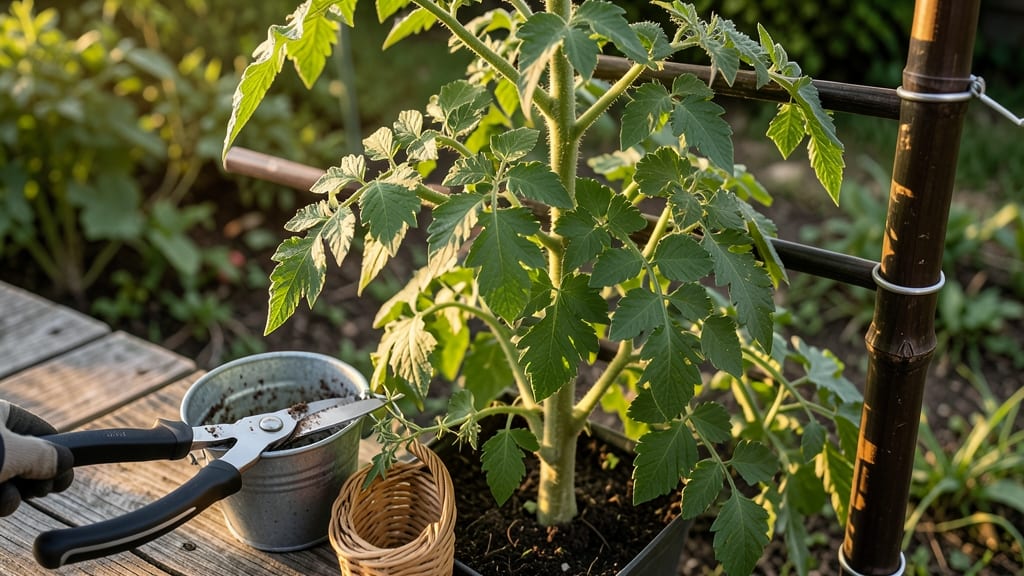
Pruning potted tomatoes isn't just about shaping plants—it's how you turn a 5-gallon container into a fruit factory. ✂️ I learned the hard way that skipping pruning means fewer tomatoes and more leafy vines. The right cuts redirect energy where it matters: to bigger, sweeter fruit instead of endless foliage.
You only need three tools: sharp pruners, a small notebook for tracking growth, and a spray bottle for sanitizing cuts.
Start pruning when plants hit 12-18 inches tall, focusing on three key areas: suckers (those little shoots between stems), lower leaves (up to 12 inches from the pot), and damaged branches. Each cut should take less than 30 seconds—speed keeps stress low.
By mid-summer, your pruned plants will be bursting with 30-50% more tomatoes than unpruned neighbors. The fruit ripens faster too, with thicker walls and deeper color. The secret? Better airflow through the plant means fewer diseases and more sunlight reaching developing fruit.
Container-specific tip: Never prune more than 25% of the plant at once, or you'll shock the roots. Small pots dry out faster, so prune on cool mornings when plants are hydrated. Over-pruned tomatoes in pots often wilt because they can't recover—keep it gradual, and you'll harvest until first frost.
📚 In This Guide
- What you need
- Instructions
- Tips and common mistakes
- Wrapping up and next steps
What you need
- ● Clean, sharp pruning shears or scissors – Sterilized with rubbing alcohol (70% or higher) to prevent disease spread.
- ○ Gloves (optional but recommended) – Nitrile or garden gloves to protect hands from thorns and dirt.
- ● Potted tomato plants – Mature enough to show at least 3-4 main stems (or suckers, depending on variety).
- ● Small container of rubbing alcohol (70%+) – For sterilizing tools between cuts.
- ○ Compost or mulch (optional but helpful) – To cover pruned areas and retain moisture.
- ● Plant ties or soft twine – To secure stems if your tomato is top-heavy.
- ● Garden twine or stakes – For support if your plant needs extra stability.
- ● Disinfectant spray (hydrogen peroxide or copper-based) – For extra sterilization if working with multiple plants.
- ● Notebook & pen – To track pruning dates and plant progress!
How to prune potted tomatoes for bigger harvests
Here's the method I use every season to turn my container tomatoes into fruit machines.
✂️ Step 1: Remove Suckers When They're Pencil-Thin
Suckers are the little shoots that grow in the V-shaped junction between a stem and a branch. When they're still under 2 inches long and about the thickness of a pencil, they're easiest to remove. Use your thumb and forefinger to gently pinch them off at the base—no need for shears yet. I check my plants every 5-7 days during the growing season because these grow fast.
This ensures your plant directs energy to fruit production instead of leafy growth. If you wait until suckers get thicker, you'll be tearing stems and stressing the plant. Watch for new suckers forming at every leaf junction—they'll appear as tiny bumps first.
☀️ Step 2: Prune Lower Leaves for Airflow and Sunlight
When your plant reaches 18-24 inches tall, start removing the largest leaves from the bottom 6 inches of stem. These leaves block sunlight and airflow, creating perfect conditions for disease. Use clean, sharp pruners to make cuts just above a leaf node where new growth can emerge. I remove about 3-5 leaves per pruning session, spaced a week apart.
You'll notice the center of the plant looks more open after this. This isn't about removing all leaves—just the ones that aren't contributing to photosynthesis for the fruit cluster. The goal is to let sunlight reach the developing tomatoes while keeping foliage where it can feed the plant.
🌱 Step 3: Trim Back Overgrown Branches After Flowering
Once your plant flowers and sets fruit, focus on removing any branches that are growing toward the center of the plant or crossing over other stems. These compete for nutrients and create shaded areas where fruit won't ripen properly. Make cuts at a 45-degree angle just above an outward-facing leaf or bud to encourage new growth in the right direction.
I also remove any branches that have already produced fruit and are now turning yellow. These are energy drains. You'll see the remaining branches grow thicker and sturdier after these cuts, which supports heavier fruit loads. This is the final pruning phase—do it when 50% of the fruit is mature to avoid stressing the plant too late in the season.
⏰ Step 4: Time Your Final Pruning for Late Season
About 4-6 weeks before your first frost date, give your tomato plant one last pruning. Remove any remaining suckers and any leaves that are yellowing or diseased. This helps the plant focus its remaining energy on ripening existing fruit rather than maintaining foliage. I stop pruning completely after this—no more cuts after mid-September in my climate zone.
You'll notice fruit ripening faster after this final cut. The plant's energy goes directly to the tomatoes rather than new growth. This is especially important for potted tomatoes, which have limited root space to support late-season growth. Harvest any ripe tomatoes immediately to encourage more to follow.
Tips & tricks for pruning potted tomatoes
These simple strategies will help you avoid common pruning mistakes and get the most out of your container-grown tomatoes.
Timing is Everything: I check my plants every 5-7 days during the growing season because suckers grow so fast—waiting even a few days means you'll be tearing stems instead of pinching them cleanly. The key is to catch those pencil-thin shoots before they get thicker. I've learned this the hard way after watching suckers grow into thick, stubborn stems that required shears and stressed my plants.
Pruning Technique Matters: When removing leaves in Step 2, make your cuts just above a leaf node where new growth can emerge. This encourages the plant to regrow leaves in the right places rather than leaving ugly stubs. I also avoid cutting into the main stem—always cut at a slight angle to prevent water from pooling and causing rot. This simple technique keeps your plant healthy and looking its best.
Late-Season Strategy: About 4-6 weeks before your first frost date, give your plant that final pruning to focus energy on ripening fruit. I stop pruning completely after mid-September in my zone, even if there are a few remaining suckers. The goal is to avoid stressing the plant when it's already working hard to ripen what's already on the vine. You'll notice fruit ripening faster after this final cut.
Pro Tips for Pruning Tomatoes In Pots
- These simple strategies will help you avoid common pruning mistakes and get the most out of your container-grown tomatoes.
- Timing is Everything: I check my plants every 5-7 days during the growing season because suckers grow so fast—waiting even a few days means you'll be tearing stems instead of pinching them cleanly.
- Pruning Technique Matters: When removing leaves in Step 2, make your cuts just above a leaf node where new growth can emerge.
Frequently asked questions
Got questions about pruning tomatoes in pots? You’re not alone—gardeners often wonder about timing, techniques, and how to avoid mistakes. Here are answers to the most common queries to help you prune like a pro!
When is the best time to start pruning potted tomatoes?
Prune your potted tomatoes when they’re 12–18 inches tall and have a few true leaves. Focus on removing suckers (side shoots) early in the morning to give plants time to heal. Avoid pruning during heatwaves or right before heavy rain, as stress can slow recovery. For indeterminate varieties, keep pruning throughout the season!
How often should I prune tomatoes in containers?
Prune weekly or biweekly during the growing season (spring to fall) to encourage airflow and fruit production. Check for suckers (those little shoots in the leaf axils) every 5–7 days. Over-pruning can stress plants, so balance removal with growth—aim to keep 3–5 main stems for bushier varieties and 1–2 for indeterminate types.
What if I skip pruning my potted tomatoes?
Skipping pruning won’t kill your plants, but you’ll likely get fewer, smaller fruits and more disease risk. Without pruning, energy goes to leafy growth instead of blossoms. However, if space is tight, minimal pruning (removing only diseased or crowded leaves) is better than nothing. Varieties like ‘Tiny Tim’ or ‘Patio’ handle less pruning well!
Can I prune tomatoes too much? What are the signs?
Yes! Over-pruning shows up as yellowing leaves, stunted growth, or no fruit at all. If you’ve removed more than ⅓ of the foliage at once or pruned aggressively late in the season, your plant may struggle. Rule of thumb: Never cut more than 20% of the plant’s canopy in a single session. Stop pruning 4–6 weeks before your first frost.
Are there pruning alternatives for small pots or limited space?
For tiny pots (under 5 gallons), opt for determinate varieties (like ‘Balcony Red’) that don’t need heavy pruning. Alternatively, top tomatoes at 12–18 inches to redirect energy to fruit instead of height. Use cage supports to save space and reduce the need for pruning—just remove only diseased leaves or suckers that block airflow.
Wrapping up and next steps
Pruning your potted tomatoes doesn’t have to be intimidating—it’s all about timing, technique, and a little patience. 🌱 By mastering the sucker removal, topping, and leaf pruning cuts, you’ll unlock healthier plants, better air circulation, and a bountiful harvest that’ll make your neighbors jealous.
Whether you’re a first-timer or a seasoned gardener, these strategic snips will transform your container garden into a productivity powerhouse.
Now that you’re armed with the know-how, grab those shears and get pruning! 🌟 Start with one plant, observe how it responds, and let your confidence grow—literally.
Before you know it, you’ll be the proud owner of tomato plants that thrive in pots and reward you with juicy, homegrown goodness. Happy gardening!