
Pruning
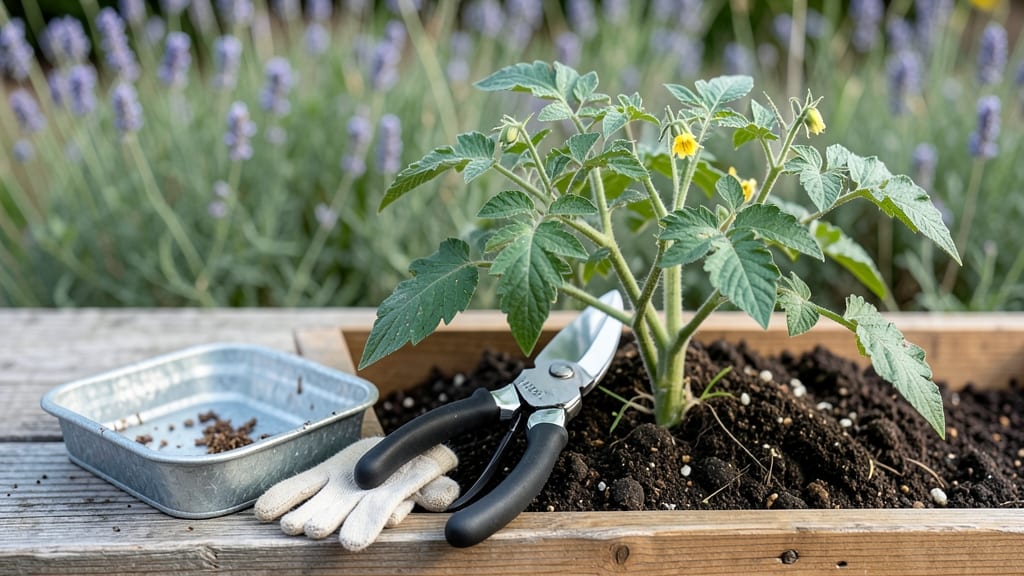
Pruning young tomato plants isn’t about trimming for shape—it’s about directing energy to where it matters most: the fruit. 🌱 I’ve gone from sad, spindly plants to bushes bursting with tomatoes by mastering just three simple cuts that boost airflow, strengthen stems, and prevent disease.
The key? Timing and technique. Start when plants hit 12-18 inches tall, and you’ll see the difference in your harvest by midseason.
You only need two tools: sharp pruning shears (cleaned with rubbing alcohol) and a pair of gloves to protect your hands from thorns.
The real work happens at the first true leaves—that’s where you make your first cut to remove suckers (those little shoots growing between the main stem and branches). These cuts might seem harsh, but they’re what turns your tomato plant from a weakling into a fruit-producing powerhouse.
Within 2-3 weeks, you’ll notice thicker stems, more leaves, and—most exciting—heavier clusters of flowers turning into tomatoes. The plant channels energy upward instead of wasting it on wild, unproductive growth. And here’s the bonus: fewer diseases lurking in crowded foliage.
Prune in the morning so wounds heal faster, and always cut at a 45-degree angle just above a leaf node to encourage new growth.
This method works for determinate (bush) and indeterminate (vining) tomatoes, though indeterminate varieties benefit most. Skip the pruning if you’re short on time—your plants will still produce—but if you want larger, earlier, and more abundant harvests, these cuts are your secret weapon.
Ready to transform those scraggly seedlings into a tomato machine?
📚 In This Guide
- What you need
- Instructions
- Tips and common mistakes
- Wrapping up and next steps
What you need
- ● Pruning shears or scissors: Clean, sharp, and disinfected (bypass pruners work best to avoid crushing stems). Quantity: 1 pair.
- ● Gloves: Garden or work gloves to protect your hands from thorns and dirt. Quantity: 1 pair.
- ● Disinfectant: Rubbing alcohol (70% isopropyl) or a mild bleach solution (1 part bleach to 9 parts water) to sterilize tools before and after use. Quantity: Small bottle or spray bottle.
- ● Compost or mulch: Organic matter to cover cut areas and promote healing. Quantity: Small bag or pile nearby.
- ● Watering can or hose: For post-pruning hydration. Quantity: 1.
- ● Plant ties or soft twine: To support stems if pruning affects stability.
- ● Hand lens or magnifying glass: For inspecting small details on stems or leaves.
- ● Spray bottle with water: To mist cuts and reduce stress on the plant.
- ● Notebook or camera: To track pruning progress and plant growth over time.
Step-by-Step guide to pruning young tomato plants
Here's how I shape my tomato plants for stronger growth and bigger yields—no guesswork involved.
✂️ Step 1: Identify the Main Stem and First Branches
Start by locating the main stem—the central vertical growth that emerges from the seed. Look for the first true leaves (the second set after the initial seed leaves) as your reference point. Below these leaves, you'll see small side shoots called suckers beginning to form in the leaf axils (the angle between the stem and leaf). These are your first targets for pruning.
Use your fingers to gently separate the sucker from the main stem. If it snaps cleanly, you've found the right spot. If it resists, it's not ready to remove yet. I always prune with clean, sharp pruners to avoid tearing the plant tissue—this prevents disease entry points and helps the plant heal faster.
✂️ Step 2: Remove Suckers Below the First Flower Cluster
Once the plant reaches about 18-24 inches tall, focus on removing suckers that appear below the first flower cluster. These lower suckers drain energy from the plant that could otherwise go toward fruit production. Use your pruners to make a clean cut just above a leaf node (the bump where leaves grow) to encourage new growth from that point.
Here's the thing—don't overdo it. If you see a sucker that's already 3-4 inches long, it's better to leave it alone. Removing it now would be too aggressive and could stress the plant. Instead, wait until it's smaller and more manageable, ideally when it's still in the pencil-thick stage.
☀️ Step 3: Prune for Airflow and Light Penetration
As the plant grows taller, focus on thinning out the foliage to improve airflow and sunlight exposure. Remove any leaves that are touching the soil or blocking light from reaching the lower fruit clusters. This reduces the risk of blossom end rot and disease while ensuring the plant puts energy into producing fruit rather than maintaining unnecessary leaves.
I like to work on overcast days when the plant is less stressed. If you must prune in hot weather, do it in the early morning or late afternoon to give the plant time to recover. After pruning, water the plant deeply to help it recover and reduce stress.
⏰ Step 4: Adjust Pruning as the Plant Matures
Once the plant is 4-5 feet tall, shift your focus to balancing growth. Remove suckers that appear above the first flower cluster but leave those that form near the top of the plant—these can help support additional fruit later in the season. For indeterminate varieties (which keep growing), continue pruning suckers to encourage vertical growth and fruit production.
For determinate varieties (which grow to a fixed size), you'll want to stop pruning entirely once the plant starts flowering heavily. These plants produce fruit all at once, so pruning too much can reduce your harvest. Watch for the first signs of flowering—that's your cue to switch to a maintenance-only approach.
🌿 Step 5: Monitor and Maintain Through the Season
Pruning isn't a one-time task—it's an ongoing process. Check your plants weekly for new suckers, especially after heavy rains or when the plant is actively growing. Remove any suckers that appear larger than a pencil to keep the plant from becoming overcrowded. This regular maintenance ensures your tomato plant stays healthy and productive.
Real talk: If you see yellowing leaves or signs of stress after pruning, you might have gone too far. The plant should still look vibrant and green with plenty of new growth. If it doesn't, hold off on further pruning for a week or two and focus on watering and fertilizing to help it recover.
Tips & tricks for strategic tomato plant pruning
These insider tricks will help you prune like a pro and maximize your tomato harvest without stressing the plants.
Tool Prep: Sterilize your pruners with rubbing alcohol or a 10% bleach solution between plants to prevent spreading disease. I also keep a small spray bottle of water handy to mist the cut areas—this helps the plant recover faster by reducing stress. Confession: I skipped this step for years and wondered why my plants looked tired after pruning!
Visual Growth Cues: In Step 1, look for the "V" shape where the sucker meets the main stem—this is your target spot. If you see a sucker that's already thicker than a pencil, it's better to leave it and focus on smaller ones. The goal is to remove suckers when they're still tender, not when they've hardened into woody growth.
Seasonal Timing: The weekly check mentioned in Step 5 is crucial, but timing matters too. Prune in the morning when temperatures are cooler—this gives the plant time to recover before the heat of the day. I've found that plants pruned in the afternoon often show stress signs overnight, while morning pruned plants bounce back within hours.
Variety-Specific Approach: For indeterminate varieties (like cherry tomatoes), keep pruning suckers all season to encourage vertical growth. For determinate varieties (like Roma tomatoes), switch to maintenance mode once flowering begins—these plants produce all their fruit at once, so aggressive pruning can reduce your harvest. Watch for the first flower clusters as your cue.
Pro Tips for Prune Young Tomato Plants
- These insider tricks will help you prune like a pro and maximize your tomato harvest without stressing the plants.
- Tool Prep: Sterilize your pruners with rubbing alcohol or a 10% bleach solution between plants to prevent spreading disease.
- Visual Growth Cues: In Step 1, look for the "V" shape where the sucker meets the main stem—this is your target spot.
Frequently asked questions
Got questions about pruning young tomato plants? You’re not alone! Here are some of the most common concerns—and their answers—to help you prune like a pro and boost your harvest.
When is the best time to start pruning tomato plants?
Prune your young tomato plants after they’ve developed their first few sets of true leaves (usually 4–6 inches tall). This gives them enough energy to establish roots before you remove any growth. Avoid pruning during extreme heat or cold, as stressed plants recover slower. Pro tip: Early morning is ideal—plants are hydrated and less stressed!
Should I prune determinate (bush) tomatoes the same way as indeterminate (vining) ones?
Nope! Indeterminate tomatoes (like ‘Sungold’ or ‘Beefsteak’) need regular pruning to encourage upward growth and fruit production. Determinate tomatoes (like ‘Roma’ or ‘Celebrity’) don’t need pruning—they bush out naturally. Over-pruning determinate types can reduce yields. Quick check: Look for the plant label or ask your nursery!
What if I accidentally prune too much? Can I fix it?
Don’t panic! If you’ve over-pruned, your plant may look sad at first, but it’ll bounce back. Focus on keeping it well-watered, fertilized, and in full sun. Avoid pruning more for at least 2–3 weeks to let it recover. If the plant is still struggling after a month, consider staking it for support. Good news: Tomatoes are resilient—give it time!
Do I need to sterilize my pruners between cuts?
Sterilizing your pruners (with rubbing alcohol or a 10% bleach solution) prevents spreading diseases like early blight or bacterial spots. Wipe them down before and after each use, especially if you’re switching between plants. Safety hack: Keep a small bottle of alcohol in your gardening toolkit for quick cleanups!
What should I do with the pruned branches I cut off?
Don’t toss them! Use pruned branches for:
- Compost: Chop them up and add to your compost pile.
- Mulch: Spread them around the base of your plants to retain moisture.
- Propagate new plants: Some tomato varieties can root in water!
Wrapping up and next steps
Pruning young tomato plants might seem like a small task, but it’s a game-changer for your harvest! 🌱 By removing suckers, shaping growth, and promoting airflow, you’re setting your plants up for healthier roots, stronger stems, and more abundant fruit.
Don’t let hesitation hold you back—grab those shears and get pruning with confidence!
Ready to take the next step? Monitor your plants weekly and adjust your pruning as they grow. Soon, you’ll be rewarded with juicy, vine-ripened tomatoes that’ll make your garden (and your dinner plate) shine! 🍅✨