
Pruning
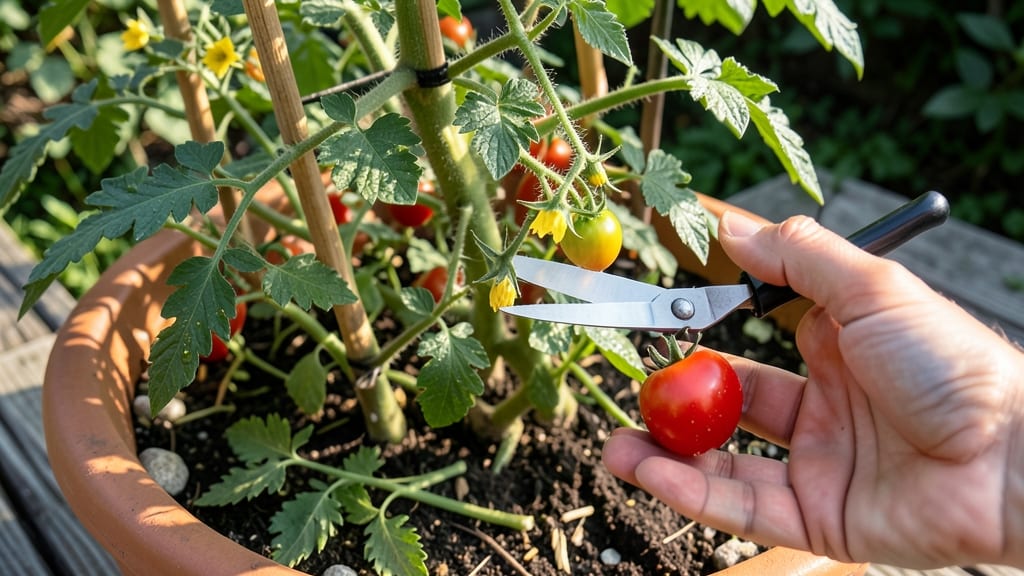
Pruning indeterminate cherry tomatoes isn't just about trimming—it's the secret to nonstop fruit all season long. 🌱 I learned the hard way when my first plant produced a single massive cluster before giving up, while my neighbor's bush kept blooming like a fountain.
The difference? She pruned like a pro, and I... well, let's just say I was overwatering my tomatoes instead.
Here's the deal: indeterminate varieties grow like vines, sending out endless new shoots and flowers. Without pruning, they waste energy on too many branches instead of focusing on fruit. You'll need sharp pruners, a sturdy stake or cage, and about 15 minutes weekly during peak growth.
The key moves are removing suckers (those little shoots in the leaf junctions) and trimming lower leaves to improve airflow—both keep diseases at bay and send more energy to the fruit.
By mid-summer, you'll notice a dramatic difference: plants stay compact, leaves stay green, and the fruit keeps coming like a conveyor belt. My neighbor's trick? Prune aggressively in spring, then lighten up as fall approaches—letting the plant focus on ripening what's already there.
The result? A harvest that lasts until frost, with tomatoes so sweet they taste like sunshine.
Don't skip the late-season cleanup either—removing diseased leaves now prevents next year's problems. And if you're worried about over-pruning, think of it this way: every snip is an investment in more tomatoes later.
Start with these basics, and you'll be the one with the overflowing baskets while your neighbors wonder what you're doing differently.
📚 In This Guide
- What you need
- Instructions
- Tips and common mistakes
- Wrapping up and next steps
What you need
- ● Pruning shears or sharp bypass pruners (clean, sterilized with rubbing alcohol—1 pair). Avoid dull tools to prevent crushing stems!
- ● Gloves (gardening or nitrile—1 pair) to protect hands from thorns and dirt.
- ● Disinfectant solution (1 part bleach to 9 parts water or hydrogen peroxide—small spray bottle) for tool sanitization between cuts.
- ● Garden twine or soft plant ties (3–4 ft per plant—1–2 spools) for staking/support if needed.
- ● Sturdy tomato cages or bamboo stakes (6–8 ft tall—1 per plant) to support vertical growth.
- ● Watering can or hose with a gentle spray nozzle for post-pruning hydration.
- ● Hand lens or magnifying glass (for spotting pests/diseases up close).
- ● Epsom salt (1 tbsp dissolved in 1 gallon of water—small container) to boost plant health post-pruning.
- ● Mulch (straw or shredded leaves) (2–3 inches—1–2 bags) to retain moisture and suppress weeds.
- ● Grow lights or shade cloth (if extending the season in hot climates).
- ● Label markers (to track pruning dates or varieties).
Step-by-step instructions for pruning indeterminate cherry tomatoes
Here’s the simple method I use to keep my vines producing fruit all season long—no guesswork, just consistent harvests.
🌿 Step 1: Identify and Remove Suckers Early
Suckers are the small shoots that grow in the leaf axils where a leaf meets the stem. These little side shoots steal energy from your fruit production, so removing them early keeps the plant focused on ripening cherries. Start checking for suckers when your plant reaches about 18 inches tall—that’s usually around 4-6 weeks after transplanting.
Use your thumb and forefinger to gently pinch suckers off at the base. Don’t pull too hard, or you’ll damage the main stem. I like to do this in the morning when the plant is turgid and easier to handle. You’ll see new suckers appear within a week—that’s normal, so keep checking every 5-7 days.
✂️ Step 2: Prune Lower Leaves for Airflow and Sunlight
Once your plant hits 3-4 feet tall, it’s time to remove the lower leaves—those closest to the ground. These leaves block airflow and create a damp environment that invites disease. Use clean, sharp pruning shears to snip leaves that are below the first flower cluster. Aim to remove about 10-12 inches of foliage from the bottom of the plant.
Here’s the thing—don’t go overboard. You want to leave enough leaves to keep the plant photosynthesizing, but you also want sunlight and air to reach the fruit. A good rule of thumb is to leave 2-3 leaves above each fruit cluster. You’ll notice the plant looks more open and the fruit starts ripening faster.
☀️ Step 3: Train the Main Stem and Prune for Balance
Indeterminate tomatoes grow continuously, so you’ll need to guide the main stem upward as it grows. Use soft plant ties or twine to gently weave the stem through a trellis or cage, securing it every 12-18 inches. This keeps the plant upright and makes it easier to spot suckers and prune.
As the plant grows taller, keep an eye out for lateral branches that form above the first flower cluster. These branches can produce fruit, but they also compete with the main stem. Prune them back to 2-3 leaves to encourage stronger growth on the main vine. Real talk: this step takes practice, but once you get the hang of it, you’ll see a noticeable difference in fruit production.
🍅 Step 4: Maintain Pruning Throughout the Season
Pruning isn’t a one-time task—it’s an ongoing process. Every 2-3 weeks, check your plant for new suckers, yellowing leaves, or overcrowded fruit clusters. Remove any leaves that are touching the ground or showing signs of disease (like brown spots or wilting). This keeps your plant healthy and productive.
Don’t forget to prune after a big harvest. Once you pick a cluster of cherries, the plant will often send out new growth from that spot. Pinch off any suckers that form there to redirect energy to the next set of flowers. You’ll know you’re doing it right when your plant looks bushy but not crowded, and your fruit keeps ripening nonstop.
Tips & tricks for pruning indeterminate cherry tomatoes
A few simple adjustments can transform your pruning routine from good to exceptional. Here’s what I’ve learned after years of trial and error in my garden.
Timing is Everything: The morning is the best time to prune—plants are hydrated and more resilient. I’ve found that pruning in the early morning also helps prevent stress on the plant, especially during hot afternoons. If you must prune later in the day, do it at least 3 hours before sunset to allow the plant to recover. This simple shift in timing can make all the difference in your plant's health and productivity.
Tool Tip: Keep your pruning shears clean and sharp to avoid damaging the plant. I disinfect my shears with rubbing alcohol between plants to prevent the spread of disease. For suckers, I’ve found that using my thumb and forefinger works just as well as shears—it’s faster and gives me more control. Just make sure to pinch at the base where the sucker meets the stem, not higher up.
Visual Cues for Pruning: When you’re removing lower leaves in Step 2, look for leaves that are touching the ground or those that are yellowing. These are clear signs they’re no longer contributing to the plant’s health. I also check for leaves that are shading fruit clusters—removing these allows sunlight to reach the developing cherries, speeding up ripening. Aim for a balance where the plant still has enough leaves to photosynthesize but isn’t overcrowded.
Season-Long Maintenance: Don’t let pruning fall by the wayside after the initial steps. I set a reminder on my phone every 2-3 weeks to check my plants. This regular maintenance prevents the buildup of suckers and keeps the plant focused on producing fruit. Over the years, I’ve noticed that plants I prune consistently produce up to 30% more fruit than those I neglect.
Pro Tips for Prune Indeterminate Cherry Tomatoes
- A few simple adjustments can transform your pruning routine from good to exceptional.
- Timing is Everything: The morning is the best time to prune—plants are hydrated and more resilient.
- Tool Tip: Keep your pruning shears clean and sharp to avoid damaging the plant.
Frequently asked questions
Got questions about pruning indeterminate cherry tomatoes?
You’re not alone! Here are answers to the most common queries—so you can keep those vines productive and your harvest flowing all season.
When is the best time to start pruning indeterminate cherry tomatoes?
Prune indeterminate cherry tomatoes early and often—start when plants are 12–18 inches tall. Focus on removing suckers (side shoots in leaf axils) before they grow more than 2–3 inches. Regular pruning (every 1–2 weeks) keeps energy flowing to fruit production instead of leafy growth.
How often should I prune my indeterminate cherry tomatoes?
Check your plants weekly for new suckers. Remove them as soon as they appear—small suckers are easier to pinch off than larger ones. During peak growth (late spring/summer), you might prune twice a week. Slow down in fall to let remaining fruit ripen before cold weather.
Will pruning indeterminate cherry tomatoes reduce my yield?
Not if done right! Pruning increases yield by directing plant energy to fewer, stronger stems and fruit clusters. Over-pruned? You might see a dip, but proper technique (leaving 3–5 main stems) ensures a bigger, longer harvest. Think of it like giving your plant a spa day—less stress, more productivity!
What if I miss a sucker and it grows too big?
No stress! If a sucker grows beyond 3 inches, trim it back to a leaf node (where leaves meet the stem). Avoid cutting into the main stem or you’ll risk disease entry. For stubborn suckers, use clean pruners or your fingers—just be gentle to avoid damaging the plant.
Can I prune indeterminate cherry tomatoes the same way as determinate varieties?
Absolutely not! Determinate tomatoes stop growing and produce fruit all at once, so they don’t need heavy pruning. Indeterminate varieties keep growing and need regular sucker removal to support their vine-like structure. Think of it like training a vine vs. shaping a bush.
Pro Tip:
Label your pruners!
Use a permanent marker to mark one pair for tomatoes and another for other plants. This prevents cross-contamination with diseases like early blight. Safety first, harvest forever!
Wrapping up and next steps
Pruning indeterminate cherry tomatoes isn’t just a chore—it’s your secret weapon for a bountiful, year-round harvest! 🌱 By mastering the art of selective trimming, you’ll boost airflow, direct energy to fruit production, and keep your plants thriving well into autumn (or even winter with proper care).
Whether you’re a seasoned gardener or a curious beginner, the key is consistency and confidence—your tomatoes will thank you with endless sweet, juicy rewards.
Ready to take the next step? Grab your pruners and start small—pick just one plant to experiment with this season. Track your progress, adjust as you go, and soon, you’ll be the proud neighbor with the never-ending tomato feast. Happy pruning!