
Pruning
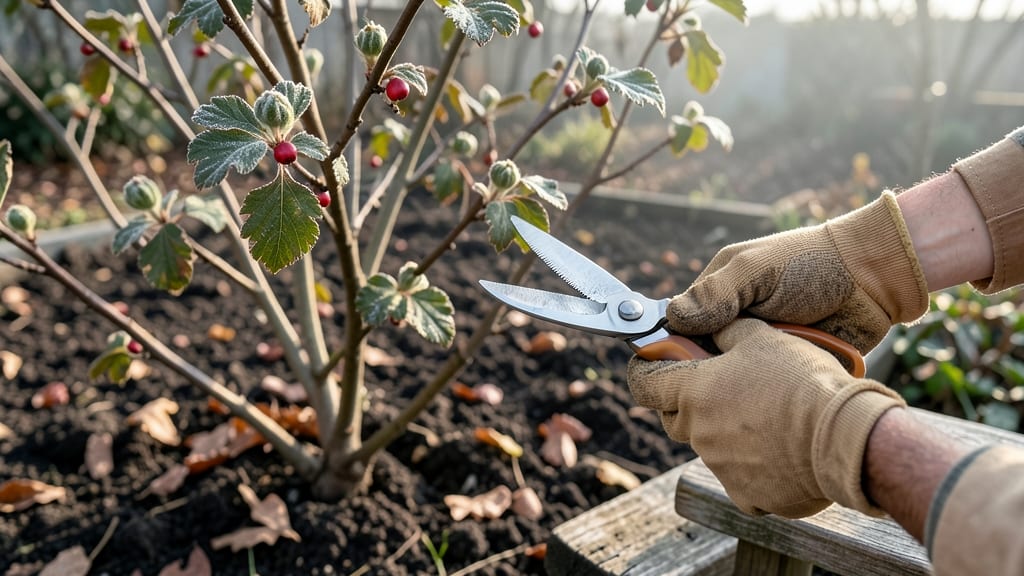
To prune a snowball bush (Viburnum opulus), schedule it in late winter or early spring just before new growth appears to protect blooms and plant health. Flowering varieties should be pruned after blooming since they develop flowers on old wood, while non-flowering types can be trimmed in late winter.
Timing matters because snowball bushes enter dormancy in winter, making them less vulnerable to stress. 🌿 Pruning during this period allows the plant to focus energy on new growth when warmer weather arrives.
Flowering types (like 'Snowball' or 'Roseum') form buds on last year's wood, so waiting until after their spring blooms prevents losing next year's flowers. Non-flowering varieties, such as 'Compactum,' can handle late-winter cuts without risking blooms.
For best results, use sharp pruning shears to make clean cuts just above a bud or branch collar. Remove any dead, crossing, or weak branches first, then shape the bush to maintain an open center for airflow.
If you're in a warmer climate, prune slightly later in early spring to avoid encouraging early growth that could be damaged by late frosts.
💡 In This Article
- Why Late Winter Pruning Benefits Snowball Bush Growth
- Step-by-Step Snowball Bush Pruning Guide by Season
Why late winter pruning benefits snowball bush growth
Snowball bushes thrive when pruned during their dormant phase, which occurs in late winter (typically January to early March in most climates). This timing aligns with the plant's natural growth cycle, when it's not actively photosynthesizing and has stored energy reserves.
The cold temperatures also help minimize sap flow, reducing stress from pruning wounds. Research shows that dormant-season pruning allows the plant to allocate resources more efficiently toward new growth as temperatures rise.
The key biological reason is how snowball bushes form buds. Flowering varieties like 'Snowball' or 'Roseum' develop their blooms on old wood—meaning last year's growth. Pruning too early would remove these flower buds before they can bloom.
Non-flowering types, however, produce flowers on new wood, so they can be pruned in late winter without risk. The plant's cold-hardiness also comes into play—snowball bushes can tolerate temperatures down to -25°F, but their recovery after pruning is faster when done before active growth resumes.
What most gardeners don't realize is how pruning timing affects the plant's vascular system. When you prune in late winter, you're cutting branches when their xylem vessels (which transport water) are inactive. This prevents excessive bleeding and allows the plant to quickly seal wounds.
In contrast, pruning during active growth (spring or summer) can lead to 30-50% more stress due to increased sap flow and energy loss.
Consider the contrast between old-wood and new-wood flowering habits. Old-wood types (like 'Snowball') produce flowers on 1-2 year old branches, so pruning after blooming ensures next year's flowers remain intact. New-wood types (like 'Compactum') form flowers on current season's growth, giving you more flexibility.
The plant's photoperiod sensitivity also plays a role—longer daylight hours in late winter trigger hormonal changes that prepare the bush for spring growth.
For those in warmer climates (USDA zones 8-10), timing shifts slightly. Prune in early spring (February-March) to avoid encouraging early growth that could be damaged by late frosts. The optimal window is when daytime temperatures consistently stay above 40°F but nights remain cool.
This balance ensures the plant isn't stressed by sudden temperature swings while still benefiting from reduced sap flow.
Here's what happens when you prune at the wrong time: Summer pruning can stimulate weak, leggy growth that's more susceptible to pests and diseases. Winter pruning before dormancy sets in (November-December) can leave cuts exposed to freezing temperatures, which may not heal properly.
The 3-4 week window before bud break is the sweet spot for most snowball bushes.