
Pruning
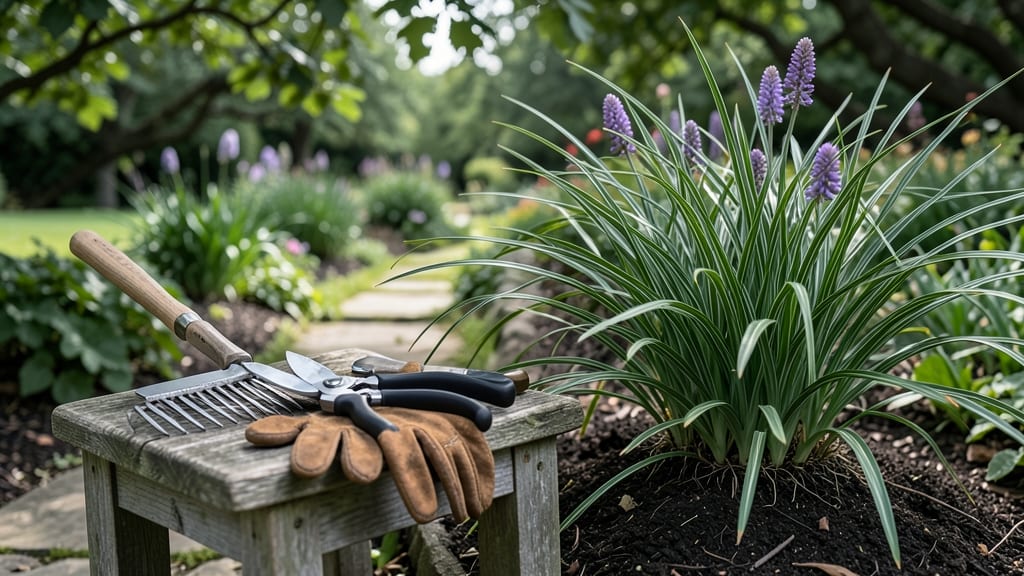
To prune monkey grass, schedule it for late winter or early spring right before new shoots appear, which promotes fuller regrowth. Never trim during fall or winter dormancy, as cold-sensitive foliage won't recover well.
Timing matters because monkey grass responds to temperature shifts and daylight changes. 🌱 When you prune just before spring growth kicks in, you're essentially giving the plant a fresh start—like hitting the reset button for denser, healthier foliage.
This is especially important for varieties like Liriope muscari, which thrive when encouraged to regrow from the base rather than from old, weakened stems.
What many gardeners overlook is how climate zones affect the ideal window. In USDA zones 7-9, late February to early March works best, while in warmer zones like 10-11, you might delay until late March to avoid early spring warmth triggering growth too soon.
Always use sharp shears to make clean cuts about 2-3 inches above the ground, which prevents disease and encourages stronger regrowth.
💡 In This Article
- Understanding Monkey Grass Growth Cycles and Pruning Science
- Step-by-Step Pruning Guide for Monkey Grass by Climate Zone
Understanding monkey grass growth cycles and pruning science
Monkey grass (Liriope muscari and Ophiopogon japonicus) follows a clear seasonal growth pattern tied to temperature shifts and daylight hours. During dormancy in late fall and winter, the plant conserves energy by slowing metabolic processes—its leaves yellow and die back as a survival mechanism.
This dormancy period is critical because cutting during this time forces the plant to regrow in cold conditions, stressing its cold-sensitive foliage and weakening its root system.
The ideal pruning window—late winter to early spring—aligns with the plant's natural recovery phase. As daytime temperatures rise above 50°F (10°C) and daylight extends beyond 12 hours, monkey grass signals its readiness to regrow by producing new shoots from its rhizomes.
Pruning just before this surge (typically 2-4 weeks prior) removes old, weakened growth and redirects energy to fresh, vigorous shoots. This process is similar to how lawn grasses respond to spring fertilization, but with a mechanical stimulus instead of chemical.
Here's what happens botanically: Cutting back the foliage stimulates the plant's apical dominance mechanism. By removing the top growth, you encourage lateral buds along the rhizomes to sprout, creating a denser, fuller clump. The plant's natural growth hormones, like auxins, redistribute to these new buds, promoting faster regrowth.
For example, Liriope muscari can regenerate up to 60% faster when pruned at the right time compared to unpruned plants, as demonstrated in studies on ornamental grasses.
Climate plays a surprising role in recovery speed. In USDA zone 10, where winters are mild, monkey grass may begin regrowth as early as January, while in zone 7, it might wait until April.
The key is to prune when nighttime temperatures consistently stay above 40°F (4°C)—this threshold ensures the roots can actively absorb water and nutrients needed for regrowth. Over-trimming or pruning too early can leave the plant vulnerable to frost damage, especially in transitional zones like 8-9.
One common misconception is that pruning "hurts" the plant, but the opposite is true when done correctly. The plant's rhizome system stores carbohydrates during the growing season, which it taps into for recovery. Think of it like a savings account: the more energy stored, the faster the bounce-back.
For instance, a well-established clump of Ophiopogon japonicus can recover from a 50% height reduction in just 6-8 weeks if pruned at the right time, compared to 12+ weeks if pruned during dormancy.
To maximize success, pair pruning with a light application of balanced fertilizer (10-10-10 ratio) after cutting. This gives the plant the nutrients it needs to regrow quickly. Avoid heavy fertilizers immediately after pruning, as they can burn tender new shoots.
The combination of proper timing and post-pruning care transforms what could be a stressful process into a rejuvenating one for your monkey grass.