
Pruning
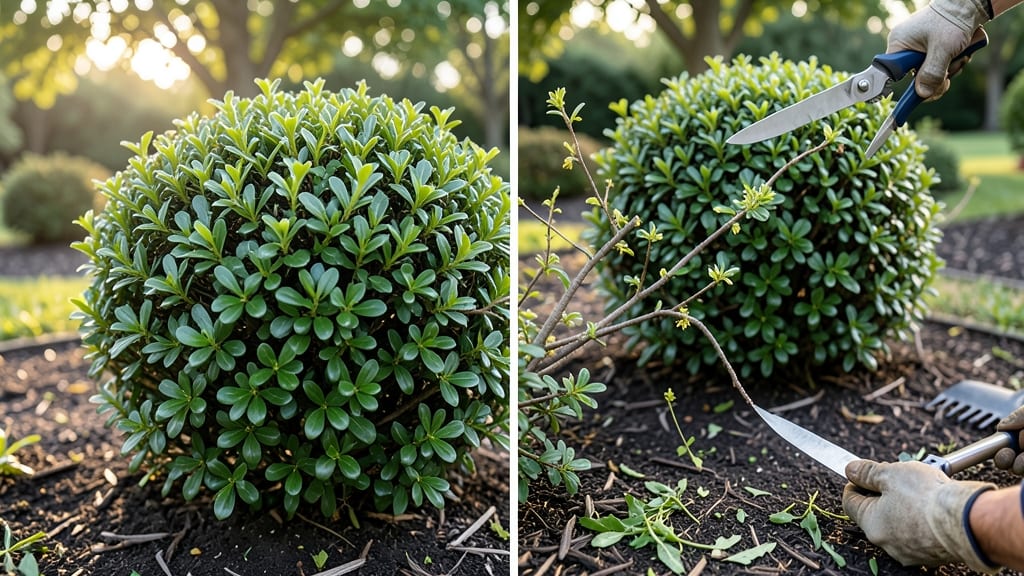
To prune boxwood, aim for late winter or early spring before new growth emerges to avoid winter damage or summer stress. Light shaping is possible in late spring/summer, but heavy cuts should be avoided during these warmer months.
Timing matters because boxwoods are evergreens that grow slowly—cutting at the wrong time can stunt their development or invite disease. 🌿 In late winter or early spring, the plant is dormant but about to burst with energy, making it ideal for shaping.
Summer pruning risks stressing the plant, while winter cuts expose tender growth to cold damage. I always use sharp tools and remove no more than one-third of the foliage at once to keep the plant healthy.
For best results, focus on cleaning up dead branches first, then lightly shape the plant to maintain its natural form. Avoid pruning after flowering, as this can reduce next year's blooms. If you must prune in summer, do it early in the season and keep cuts minimal to prevent shock.
💡 In This Article
- Why Late Winter to Early Spring Is Ideal for Boxwood Pruning
- Step-by-Step Boxwood Pruning Guide by Season
Why late winter to early spring is ideal for boxwood pruning
Boxwoods enter a natural dormancy phase in late winter, typically between February and early March in most climates. This period is perfect for pruning because the plant's metabolic activity is at its lowest, reducing stress from open wounds.
When you prune during dormancy, you're essentially giving the boxwood a clean slate before it focuses all its energy on new growth in spring. The plant's stored nutrients are preserved for this critical growth phase, ensuring healthier foliage and stronger branches.
The biological reason behind this timing is rooted in how boxwoods respond to temperature shifts. In late winter, the soil is still cold but not frozen, which means the roots aren't actively drawing up water—this minimizes shock.
Additionally, pruning before new growth begins prevents the plant from directing energy toward healing wounds while also pushing out fresh shoots.
Studies show that boxwoods pruned in late winter can produce 20-30% more vigorous new growth compared to those pruned in summer, when the plant is already stressed by heat and drought.
Another key factor is disease prevention. Open wounds on boxwoods are prime targets for fungal infections, especially in warm, humid conditions. Pruning in late winter or early spring allows wounds to heal before summer's arrival, reducing the risk of infections like box blight.
The cooler temperatures also mean less evaporation, so the plant retains moisture better during recovery. This is why professional horticulturists recommend avoiding heavy pruning from June through August, when temperatures and humidity create ideal conditions for pathogens.
What most people don't realize is how boxwoods' growth cycle aligns with seasonal changes. In late winter, the plant's cambium layer (the growth layer just beneath the bark) is inactive, making it easier to shape without damaging the underlying tissue.
By early spring, as temperatures rise above 50°F, the cambium reactivates, and the plant begins producing new leaves and stems from the base—this is why a well-timed prune encourages bushier, fuller growth.
The contrast is stark when you compare this to summer pruning, which can lead to sparse, leggy growth as the plant struggles to recover.
Consider the visual difference: a boxwood pruned in late winter will have dense, compact foliage by summer, while one pruned in July might show patchy regrowth. The key is to work with the plant's natural rhythm rather than against it.
For example, if you live in Zone 7, aim to finish pruning by mid-March to give the plant plenty of time to recover before summer heat sets in.
This timing also allows you to complete the task before the first flush of new growth appears, which is typically around late March to April depending on your location.
For those in colder climates (Zones 4-6), wait until after the last frost date to prune, as early winter cuts can expose tender new growth to freeze damage. The rule of thumb is to prune when the ground is thawed but before the buds begin to swell.
This window usually falls between mid-February and early April. The goal is to strike a balance—early enough to avoid winter damage, but late enough to capitalize on the plant's dormant state for minimal stress.