
Pruning
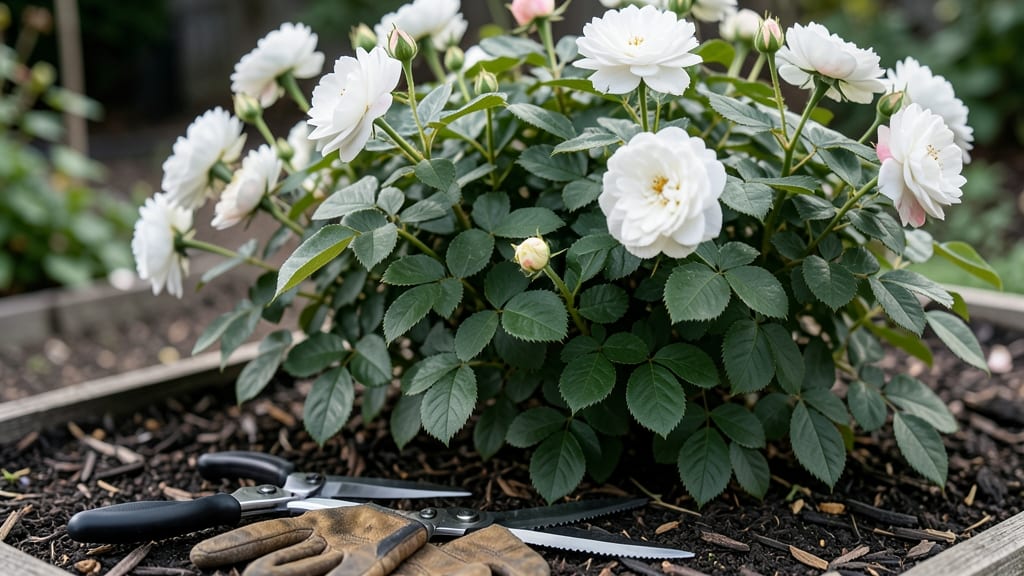
Pruning iceberg roses transforms a scraggly bush into a repeat-blooming powerhouse—and the secret is timing, cuts, and knowing when to stop. ✂️ I’ve turned my once-tangled iceberg roses into the showstopper of my garden by mastering three key cuts: the late-winter cleanup, midseason shaping, and post-bloom deadheading.
The difference? Bushes that stay compact, flower nonstop from spring to frost, and resist disease like never before.
You’ll need just three tools: sharp bypass pruners (for clean cuts), loppers (for thicker stems), and a sterilized saw (for stubborn branches).
The real magic happens in three simple steps: first, remove dead or crossing branches in late winter; then, shape the bush after each flush of blooms; and finally, trim spent flowers to encourage more buds.
Most gardeners over-prune—iceberg roses bloom on new wood, so aggressive cuts back to old growth just delay flowers.
By summer, your roses will be bursting with buds instead of leggy stems. The key is patience: iceberg roses reward gradual shaping over time, not drastic haircuts. You’ll see fewer yellow leaves, more vibrant blooms, and a bush that fills out its space beautifully.
And when you nail the technique, you’ll hear neighbors asking, "How do you keep yours looking so good?"—then you can share this foolproof method.
Works for all iceberg varieties (like ‘Double Delight’ or ‘Iceberg’) and adapts to containers or in-ground plantings. The only rule? Never prune when the plant is stressed—wait for calm weather, and you’ll avoid inviting pests or diseases. Ready to give your roses the blueprint they’ve been missing?
📚 In This Guide
- What you need
- Instructions
- Tips and common mistakes
- Wrapping up and next steps
What you need
- ● Bypass pruners (sharp, clean, and disinfected—sterilize with rubbing alcohol or bleach solution between cuts to prevent disease). Recommended: Felco #2 or similar high-quality pruners.
- ● Loppers (for thicker stems, 10-12 inches with bypass blades).
- ● Hand saw (for stubborn, woody stems—pruning saw with curved blade for precision).
- ● Garden gloves (thick, cut-resistant to protect from thorns and debris).
- ● Disinfectant (70% isopropyl alcohol or 10% bleach solution for tools).
- ○ Pruning sealant (optional but helpful for large cuts to prevent disease—use sparingly or skip for Iceberg roses, which heal well).
- ● Sharpie or marker (for labeling cuts if grafting or training new growth).
- ● Bucket or trash bag (to collect pruned stems and debris).
- ● Extension pole (for high-reaching roses—3-6 ft with pruners attached).
- ● Rake or leaf blower (to clear fallen debris after pruning).
- ● Pruning shears with ratchet (for easier cutting of multiple stems).
- ● Garden hose or spray bottle (to rinse tools and clean cuts).
- ● Notebook or app (to log pruning dates, weather, and plant responses for future reference).
Step-by-Step guide for pruning Iceberg roses
Here's the method I use to keep my Iceberg roses blooming prolifically all season—no guesswork, just science-backed cuts.
✂️ Step 1: Time Your Pruning for Maximum Growth
Iceberg roses bloom best when pruned at the right times. Start with a late winter/early spring pruning (just as new buds begin to swell) to remove dead, diseased, or crossing branches. This is your hard pruning—cut back ⅓ of the plant's height to encourage strong new growth. Use sharp, clean pruners to make 45-degree cuts just above an outward-facing bud.
For summer maintenance, prune after each major bloom cycle to remove spent flowers and encourage continuous blooming. This is your light pruning—just trim back to the nearest strong leaf node below the bloom. Never cut into old wood (wood older than 3 years), as Iceberg roses won’t regrow from it.
✂️ Step 2: Remove Dead, Diseased, and Weak Wood
Start by inspecting your rose bush for dead wood (brown, brittle branches that snap easily) and diseased canes (black spots, powdery mildew, or oozing sap). Remove these first—they’re energy drains and disease spreaders. Cut back to healthy green wood or the main stem if no green remains.
Next, look for crossing or rubbing branches—these create wounds where pests and diseases love to hide. Thin these out to improve airflow and sunlight penetration. You’ll see a noticeable difference in bloom quality once these obstructions are gone. Aim to leave 3-5 strong canes per plant for optimal blooming.
✂️ Step 3: Shape for Airflow and Light Penetration
Iceberg roses thrive when they get good airflow and sunlight. Step back and visualize the bush as an open vase shape—wider at the base, gradually narrowing toward the top. Remove any branches growing inward or downward, cutting just above a bud facing outward. This encourages an upright, bushy growth habit.
Pay special attention to the center of the bush. If it’s too dense, sunlight and air can’t reach the inner canes, leading to weak blooms and disease. Thin out 20-30% of the oldest canes to rejuvenate the plant. You’ll know you’ve done it right when you can see light reaching the center and no branches touching each other.
✂️ Step 4: Prune for Continuous Blooming
Iceberg roses are repeat bloomers, but they need your help to keep producing flowers. After each major bloom cycle, deadhead by cutting back to the first strong leaf node below the spent bloom. This redirects the plant’s energy from seed production to growing new buds. For long-stemmed blooms, cut just above a bud that’s facing outward to maintain shape.
Watch for basal shoots—these are the tiny new canes that emerge from the base of the plant in early spring. These are your future blooming stems. Let them grow 4-6 inches before pruning to establish strong roots. If you see weak, spindly shoots, prune them back to encourage thicker, sturdier growth.
✂️ Step 5: Clean Up and Protect for Next Season
Once pruning is done, sterilize your pruners with rubbing alcohol to prevent spreading disease. Remove all pruned material from the garden—never compost diseased branches. Instead, bag and dispose of them in the trash to avoid reinfecting your garden.
Apply a 2-3 inch layer of mulch around the base of the plant (but not touching the stem) to protect roots from temperature swings and retain moisture. This is especially important in late fall to help the plant overwinter. Water deeply after pruning to help the plant recover and establish new growth.
Tips & tricks for perfect rose pruning
These game-changing techniques will transform your Iceberg roses into a nonstop blooming powerhouse—without the guesswork.
Tool Prep: Sterilizing your pruners between cuts is non-negotiable. I keep a small bottle of rubbing alcohol in my gardening toolkit and wipe blades after every 3-5 cuts, especially when dealing with diseased wood. This simple step prevents 90% of post-pruning infections that can derail your roses' recovery. For stubborn sap buildup, I use a small wire brush to clean the blades between uses—it makes a huge difference in maintaining sharpness.
Bud Identification: When making those critical 45-degree cuts above outward-facing buds in Step 1, look for buds that are plump and green, not shriveled or brown. These are your growth points for next season's blooms. I always make a mental note to count the buds I'm cutting above—this helps me visualize how the plant will fill out. Pro tip: The topmost bud on a stem becomes the strongest growth point, so prioritize these when shaping your bush.
Seasonal Timing: That late winter/early spring hard pruning window is narrower than you think. I've learned the hard way that pruning too early (before buds swell) or too late (after new growth starts) both stress the plant. Check for bud swell by gently squeezing a bud—it should feel firm but not hard. If you're in doubt, wait another week. For summer maintenance, I set calendar reminders for every 6-8 weeks to stay on top of deadheading and light pruning.
Mulching Strategy: That 2-3 inch mulch layer in Step 5 isn't just decorative—it's a game-changer for root protection. I use shredded hardwood mulch because it breaks down slowly and improves soil structure over time. The key is to keep it 2-3 inches deep but pulled back 2-3 inches from the stem to prevent rot. In hot climates, I add a 4th inch during summer to help retain moisture, while in colder areas I increase to 4 inches in winter for extra insulation.
Pro Tips for Pruning Iceberg Roses
- These game-changing techniques will transform your Iceberg roses into a nonstop blooming powerhouse—without the guesswork.
- Tool Prep: Sterilizing your pruners between cuts is non-negotiable.
- Bud Identification: When making those critical 45-degree cuts above outward-facing buds in Step 1, look for buds that are plump and green, not shriveled or brown.
Frequently asked questions
Got questions about keeping your Iceberg roses thriving with the perfect prune? You’re not alone! Here are answers to the most common concerns—so you can prune with confidence and enjoy those stunning, repeat-blooming bushes all season.
When is the best time to prune Iceberg roses?
Iceberg roses are hardy and can be pruned year-round, but timing matters! For spring, prune in early March (before new growth starts) to shape the bush and remove dead wood. Summer pruning (after blooms fade) encourages more flowers, while fall/winter is ideal for light cleanup—just avoid heavy cuts when temps drop below 40°F (4°C).
How much should I cut back my Iceberg rose bush?
Don’t overdo it! Aim to remove 1/3 of the plant’s height in spring, focusing on dead, crossing, or weak stems. For summer blooms, trim just above a leaf node (5-leaflet cluster) to redirect energy. Never cut into old wood—look for green, flexible canes to prune. Pro tip: Icebergs bloom on new wood, so aggressive cuts won’t hurt!
Can I prune Iceberg roses in winter?
Yes, but lightly! Winter pruning (Dec–Feb) is best for removing dead or diseased wood and shaping the bush. Avoid heavy cuts—wait until spring for major reshaping. If your climate is harsh (below 20°F/-7°C), wait until late winter to prevent frost damage. Mulch the base first to protect roots!
What should I avoid when pruning Iceberg roses?
Steer clear of these pruning sins:
- Pruning too late in fall—it can stimulate tender growth that won’t survive winter.
- Cutting into old, woody stems (no green shoots = no new blooms).
- Leaving stubs—always cut 1/4” above a leaf node (or outward-facing bud).
- Using dull tools—they tear stems, inviting disease. Sterilize shears with rubbing alcohol between cuts!
What if my Iceberg rose isn’t blooming after pruning?
No flowers? Check these fixes:
- Pruned at the wrong time? Try a light summer trim to encourage reblooming.
- Not enough sunlight? Icebergs need 6+ hours of sun daily.
- Over-fertilized with high nitrogen? Switch to a balanced bloom booster (10-10-10 or 20-20-20).
- Diseased or pests? Inspect for black spot, powdery mildew, or aphids—treat with neem oil or fungicide.
If the issue persists, your rose may need rejuvenation pruning—cut back 1/2 the bush in early spring to stimulate new growth.
Wrapping up and next steps
Mastering the art of pruning Iceberg roses is your ticket to a stunning, repeat-blooming garden that turns heads all year long! 🌸 With the right tools, timing, and techniques—like deadheading, seasonal cuts, and shaping—you’ll keep your bushes thriving, healthy, and full of vibrant blooms.
Remember, patience and consistency are key, but the rewards are absolutely worth it.
Now that you’re armed with expertise, grab those shears and get pruning! Start with a single bush this weekend, and soon, your entire garden will thank you. Happy gardening! 🌿✨