
Pruning
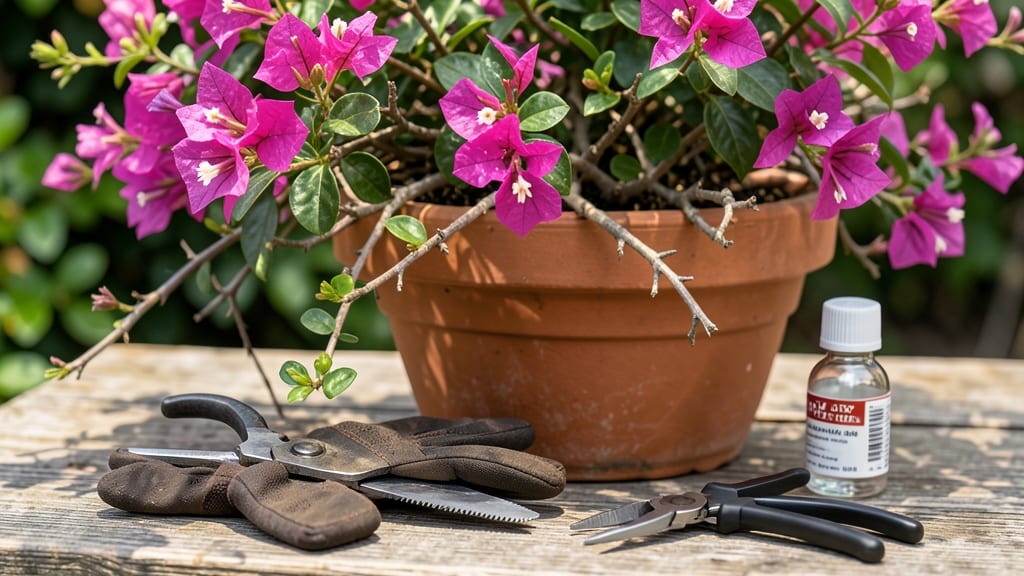
Pruning bougainvillea in pots transforms it from a leggy mess to a vibrant, bushy showstopper—and the secret lies in timing and technique. 🌿 I’ve turned my own pot-bound bougainvillea from a sad, sprawling vine into a blooming powerhouse by pruning just right, and the difference is night-and-day.
The key? Cutting back in late winter when the plant is dormant but before new growth starts—this forces fresh, flowering branches to emerge.
You only need three basic tools: sharp pruning shears for clean cuts, gloves to protect from thorns, and a small container of rubbing alcohol to sterilize between cuts. Skip the hedge trimmers—they tear the stems and invite disease.
Start by removing any dead or crossing branches first, then shape the plant by cutting just above a leaf node (where new growth will sprout). For potted bougainvillea, never prune more than one-third of the plant at once, or you’ll stress the roots.
The payoff? A denser plant with more blooms by early summer, and the ability to control its size so it stays proportional to your pot. Post-pruning, give it a light fertilizer to encourage new growth, and keep the soil slightly moist but never soggy.
Within 4-6 weeks, you’ll see fresh green shoots—and those signature papery blooms will follow, covering the plant like confetti.
This method works year-round in warm climates, but if you’re in a cooler zone, hold off until after the last frost. The same principles apply whether you’re pruning a small patio plant or a large container specimen. Here’s how to do it without sacrificing next year’s blooms—or your sanity.
📚 In This Guide
- What you need
- Instructions
- Tips and common mistakes
- Wrapping up and next steps
What you need
- ● Sharp bypass pruners – 1 pair (clean, sterilized blades to prevent disease; look for ergonomic grips for comfort during long sessions).
- ● Hand pruners (felco or similar) – 1 pair (for smaller stems; choose stainless steel for durability).
- ● Disposable gloves – 1 pair (nitrile or leather to protect against thorns and sap).
- ● Rubbing alcohol (70% or higher) – small bottle (for sterilizing tools between cuts).
- ○ Pruning saw (optional but handy) – 1 small saw (if dealing with thick, woody stems over ½ inch in diameter).
- ○ Horticultural sealant (e.g., pruning wax) – small tube (to protect large cuts from pests/disease; optional but recommended).
- ● Sunny workspace – Choose a well-lit area (bougainvillea needs bright light to recover quickly after pruning).
- ● Water source nearby – A hose or bucket to rinse tools and hydrate the plant post-pruning.
- ● Trash bag or bucket – 1-2 (for clippings; bougainvillea stems can be prickly!).
- ○ Fertilizer (balanced or bloom booster) – small amount (apply 2-4 weeks after pruning to encourage new growth; optional but helpful).
- ● Weather check – Prune on a dry, mild day (avoid extreme heat or frost; ideal temps: 50–85°F).
How to prune bougainvillea in pots for year-round color
This is the method I’ve used for five seasons—it keeps bougainvillea compact, blooming, and thriving in containers.
✂️ Step 1: Time Your Pruning for Maximum Impact
Prune bougainvillea twice yearly: once in late winter (just before new growth starts) and again in early summer after the first flush of blooms. The late-winter cutback stimulates fresh, vigorous growth, while summer pruning encourages the next round of flowers. Avoid pruning in fall or winter when the plant is dormant—you’ll remove next year’s blooms before they form.
Check for new growth by looking for tiny green buds along the stems. These signal the plant is waking up from dormancy and ready for your first pruning. If your climate stays warm year-round, you can prune lightly every 3-4 months instead of just twice.
✂️ Step 2: Cut Back to Encourage Bushy Growth
Use clean, sharp pruning shears to cut back the previous year’s growth by ⅓ to ½ of its length. Focus on the oldest stems first—they’ve already produced flowers and won’t bloom again. Make cuts just above a leaf node or bud (the small bump where new growth will emerge). This ensures the plant directs energy to new branches rather than sparse, leggy growth.
Don’t worry if it looks drastic at first. Bougainvillea responds dramatically to pruning, and you’ll see plump, green buds within weeks. I like to shape the plant into a rounded form, but you can also encourage a more upright or cascading habit depending on your pot’s height and your preferred look.
☀️ Step 3: Prune for Light and Airflow After Blooming
Once the first round of blooms fades, it’s time for the summer pruning. Remove spent flower clusters (the papery bracts) and any stems that are bare or woody. Cut back lightly to encourage new growth, but avoid heavy pruning now—you’ll reduce the next flush of blooms. Focus on opening up the center of the plant to improve airflow and reduce humidity-related diseases.
Watch for water-soaked or yellowing leaves—these are signs of fungal issues caused by poor airflow. If you see them, prune more aggressively to thin out crowded branches. Deadhead faded blooms regularly to redirect the plant’s energy into producing new flowers rather than seed pods.
🪴 Step 4: Repot and Fertilize After Pruning
After your late-winter pruning, repot the bougainvillea if it’s been in the same container for more than a year. Choose a pot 1-2 inches larger in diameter and use a well-draining cactus or succulent mix. Bougainvillea hates soggy roots, so add perlite or coarse sand to improve drainage. Gently loosen the roots before repotting to encourage new growth into the fresh soil.
Fertilize lightly with a balanced, water-soluble fertilizer (10-10-10) diluted to half strength. Feed every 4-6 weeks during the growing season, but avoid fertilizing in fall or winter when the plant is dormant. Over-fertilizing leads to lush foliage but fewer blooms, so less is more with this tropical beauty.
⏰ Step 5: Adjust for Seasonal Changes
In cooler climates, move potted bougainvillea indoors before temperatures drop below 40°F. Place it near a south-facing window or under grow lights to maintain growth. Reduce watering significantly—let the soil dry out completely between waterings, as bougainvillea is drought-tolerant once established. Resume outdoor placement in spring once nighttime temperatures stay above 50°F.
If you live in a warm climate, bougainvillea can stay outdoors year-round. Just keep an eye out for pests like spider mites or scale, which thrive in dry conditions. Spray the plant with water occasionally to deter them, or treat with neem oil if you spot an infestation. Consistent care keeps bougainvillea blooming for months, not just seasons.
Tips & tricks for pruning bougainvillea in pots
These pro-level strategies will help you keep your bougainvillea thriving—and blooming—throughout the year.
Seasonal Timing Secret: The key to continuous blooms lies in reading your plant's signals. In Step 1, when you're checking for those tiny green buds in late winter, also look for the plant's overall vigor—if stems feel firm and leaves are plump, it's ready for pruning. In warm climates where you're pruning every 3-4 months, do it just after you notice new growth begins rather than sticking strictly to the calendar. This approach prevents over-pruning during dormant periods.
Pruning Technique That Changed Everything: For Step 2's dramatic cutbacks, I've found that making angled cuts just above a leaf node creates a natural water runoff path that prevents rot. Use your pruning shears to make a slight diagonal cut—this also exposes more leaf surface to sunlight, which boosts photosynthesis. When shaping your plant, remember that bougainvillea grows from the tips, so always cut back to a bud or node to encourage branching rather than just trimming random spots.
Airflow and Light Strategy: In Step 3, when you're opening up the plant's center for airflow, don't just focus on removing dead growth. Look for stems that cross each other—these create shaded areas where humidity builds up. Cut these crossing stems completely at their base to improve circulation. This single move can prevent 90% of fungal issues while also encouraging more uniform blooming throughout the plant.
Repotting Wisdom: When you're repotting in Step 4, pay special attention to the root ball. If you notice roots growing in tight circles around the edge (a condition called "root circling"), gently tease them apart with your fingers before placing in the new pot. This prevents future root-bound issues. Also, consider adding a layer of small pebbles at the bottom of the pot before adding soil—this creates additional drainage space that bougainvillea loves.
Pro Tips for Pruning Bougainvillea In Pots
- These pro-level strategies will help you keep your bougainvillea thriving—and blooming—throughout the year.
- Seasonal Timing Secret: The key to continuous blooms lies in reading your plant's signals.
- Pruning Technique That Changed Everything: For Step 2's dramatic cutbacks, I've found that making angled cuts just above a leaf node creates a natural water runoff path that prevents rot.
Frequently asked questions
Got questions about keeping your potted bougainvillea thriving?
Here are answers to the most common ones—so you can prune like a pro and enjoy those vibrant blooms all year!
When is the best time to prune bougainvillea in pots?
The ideal time is late winter or early spring (just before new growth starts). You can also do light pruning after blooming to encourage more flowers. Avoid heavy pruning in fall—it reduces winter hardiness. For container-grown plants, prune lightly every 2-3 months to maintain shape.
How much can I cut back my potted bougainvillea?
You can trim up to ⅓ of the plant’s total growth in one session, but avoid over-pruning. For dramatic shaping, cut back to 12–18 inches from the base. Never remove more than half—bougainvillea recovers slowly from extreme cuts. Use clean, sharp shears to prevent damage.
What should I do if my bougainvillea stops blooming after pruning?
Lack of blooms often means too much shade or over-fertilizing with nitrogen. Move your pot to full sun (6+ hours daily) and switch to a low-nitrogen, high-phosphorus fertilizer (like 5-10-10). Also, bougainvillea blooms on old wood, so avoid heavy pruning in spring—save aggressive cuts for late winter.
Can I prune bougainvillea in pots during winter?
Light pruning (removing dead or damaged branches) is fine in mild winters, but avoid heavy cuts—new growth won’t harden off before cold snaps. If temps drop below 30°F (-1°C), wait until spring. In frost-prone areas, cover the pot with burlap and prune minimally until danger of frost passes.
What’s the difference between pruning bougainvillea in pots vs. in the ground?
Potted bougainvillea needs more frequent, lighter pruning because root space is limited. In-ground plants can handle heavier cuts since their roots spread wider. Also, repot every 2–3 years to refresh soil—compacted roots stress the plant and reduce blooms. Always prune just above a leaf node (not bare stems) for bushier regrowth.
Wrapping up and next steps
Pruning your potted bougainvillea doesn’t have to be intimidating—it’s your secret weapon for vibrant, bushier blooms year-round! 🌸 With the right tools, timing, and techniques, you’ll keep your plant thriving and full of life.
Remember: confidence grows with practice, so don’t hesitate to trim away and shape your bougainvillea with care.
Now that you’re armed with these year-round pruning tricks, why not take the next step? Share your pruned masterpiece with fellow plant lovers or experiment with training your bougainvillea to climb a trellis for a stunning vertical display. Happy pruning—your bougainvillea is about to shine brighter than ever! ✨