
Pruning
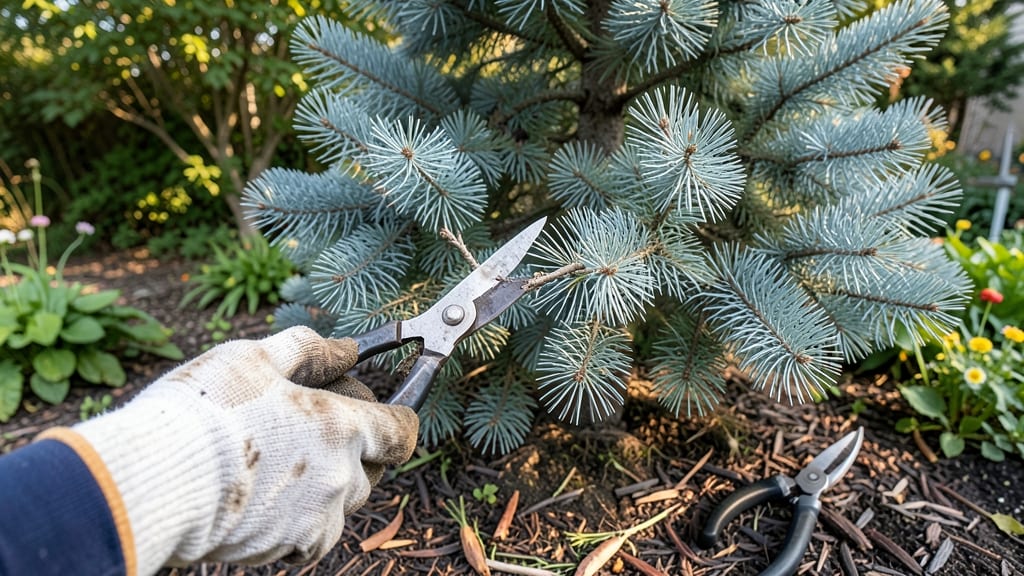
Pruning blue spruce shrubs transforms them from scraggly to showstopping in just a few hours. ✂️ I’ve spent years perfecting my technique—what works, what doesn’t—and the difference in growth density is shocking.
A well-pruned blue spruce stays full, vibrant, and healthy for decades, while neglected ones grow lopsided or lose their signature blue hue.
The key is timing and precision: late winter or early spring is ideal, before new growth starts. You’ll need sharp bypass pruners, a sturdy ladder, and a clear plan—whether you’re doing selective pruning to shape naturally or light shearing for a cleaner look.
Over-pruning is the biggest mistake; these trees recover slowly, so aim to remove no more than 25% of the foliage in one session.
What you end up with is a dense, lush canopy that blocks winter winds, stays vibrant year-round, and maintains that coveted blue-gray color. The branches fill in evenly, and the tree’s natural pyramid shape becomes even more striking.
It’s the kind of transformation that makes neighbors stop and ask, “How’d you do that?”
This method works for blue spruces of any size, from small shrubs to towering specimens. Whether you’re restoring a neglected tree or maintaining a healthy one, the principles stay the same. Let’s get those shears ready—your spruce is waiting for a makeover.
📚 In This Guide
- What you need
- Instructions
- Tips and common mistakes
- Wrapping up and next steps
What you need
- ● Pruning shears – Bypass shears (for clean cuts on small branches) or pruning saw (for thicker stems, ½"–1" diameter).
- ● Loppers – Long-handled (20–24") for reaching higher branches safely.
- ● Hand pruners – Sharp, bypass-style for precision trimming of fine branches.
- ● Safety gloves – Heavy-duty, cut-resistant (e.g., leather or reinforced fabric).
- ● Ladder or step stool – Sturdy, non-slip (if shrubs exceed 6 ft tall).
- ● Disinfectant (70% isopropyl alcohol or bleach solution) – 1 part bleach to 9 parts water to sterilize tools between cuts and prevent disease.
- ● Heavy-duty trash bags – For collecting pruned debris (2–3 bags, depending on shrub size).
- ○ Sharpie or permanent marker – To mark branches for removal (optional but helpful for planning).
- ● Pole pruner – For high branches (extendable up to 10–12 ft).
- ● Rubbing alcohol wipes – Quick tool disinfection on the go.
- ○ Pruning sealant – Optional for large cuts (e.g., Tanglefoot Tree Wound Pruning Seal) to prevent decay.
- ● Work apron with pockets – Keeps tools and gloves handy.
- ● Garden kneeler or pad – For comfort if trimming near the base.
Step-by-step guide to pruning blue spruce shrubs for year-round health
Here’s how to transform your blue spruce into a lush, dense beauty—without the guesswork.
🌿 Step 1: Identify the Right Time for Pruning
Blue spruces respond best to pruning in late winter or early spring, just as new growth begins. This timing ensures you’re not cutting into next year’s buds, which form in late summer. Avoid pruning in mid-to-late summer, as it can stress the tree and leave it vulnerable to winter dieback. I always check for fresh, bright green needles—that’s my cue the tree is ready for shaping.
If you must prune in summer, do it early and limit cuts to no more than 25% of the canopy at once. Over-pruning in warm months can expose the tree to sunburn, turning needles brown. Think of it like a haircut: a little trim is fine, but don’t go for a drastic change mid-season.
✂️ Step 2: Gather Tools and Prepare for the Cut
Use sharp, clean pruning shears for small branches and a pruning saw for thicker stems over ½ inch in diameter. Dull tools crush branches, leaving ragged cuts that invite disease. I also keep rubbing alcohol and a clean cloth handy to disinfect tools between cuts—this prevents spreading fungal spores from one branch to another.
Before you start, sketch a rough plan of your desired shape. Blue spruces grow in a natural conical form, so I focus on maintaining that silhouette while removing dead, crossing, or inward-growing branches. These are the ones causing crowding and blocking light from the inner canopy. Never remove more than ⅓ of the foliage in a single session—this keeps the tree strong and resilient.
☀️ Step 3: Prune for Density and Airflow
Begin by thinning out the interior—this is the secret to a dense, healthy canopy. Look for branches that grow straight up or inward; these rob the outer needles of sunlight. Cut them back to a healthy lateral branch or bud, making your cut just outside the branch collar (the swollen area where the branch meets the trunk). This ensures the wound heals properly and reduces the risk of rot.
For outer branches, aim to shape the tree’s natural form while removing only the tips of the longest needles. Avoid "lion’s tailing" (cutting back to bare wood)—this leaves the tree vulnerable and looks unnatural. Instead, trim just enough to encourage fuller growth at the branch tips. You’ll know you’re doing it right when you see new, vibrant growth within a few weeks.
🌱 Step 4: Clean Up and Monitor Recovery
After pruning, remove all debris from the ground beneath the tree. Leftover branches and clippings can harbor pests or fungi, which may infect the tree. I also water the base deeply to help the tree recover, especially if the weather is dry. Blue spruces are drought-tolerant, but pruning stresses them, so a good soak encourages root growth.
Watch for new growth in the spring—this is your sign the tree is healing well. If you notice yellowing needles or stunted growth, you may have pruned too aggressively. In that case, skip pruning for a year and focus on watering and fertilizing to rebuild strength. Patience is key; blue spruces grow slowly, and rushing the process can set you back years.
⏰ Step 5: Schedule Maintenance Pruning
Once your blue spruce is established, light maintenance pruning every 2-3 years keeps it looking its best. Focus on removing dead wood, shaping the canopy, and thinning the interior to prevent overcrowding. I set a reminder for late winter each year—this consistency keeps the tree healthy and prevents the need for drastic cuts later.
If your tree has brown or sparse patches, it may be suffering from bagworms or spider mites. Prune out infested branches immediately and dispose of them in the trash (not the compost). A hose blast can also dislodge pests, but do this in early spring before new growth appears. With the right care, your blue spruce will stay vibrant and full for decades.
Tips & tricks for perfect blue spruce pruning
Transforming your blue spruce into a thriving, dense beauty takes more than just a pair of shears—it’s about understanding the tree’s natural rhythms and growth patterns. Here’s how to elevate your pruning game and keep your spruce looking its best year after year.
Timing is Everything: The late winter to early spring window isn’t just ideal—it’s critical. This is when the tree’s energy is focused on preparing for new growth, making it far more resilient to pruning. I’ve seen trees stressed by summer pruning develop brown patches that took years to recover from. If you must prune in summer, stick to early months and never exceed 25% of the canopy—think of it as a light trim rather than a drastic haircut. The bright green needles you see in spring are your green light to begin.
Tool Precision Matters: Sharp tools aren’t just about clean cuts—they’re about the health of your tree. Dull pruning shears crush branches, creating jagged edges that invite disease. I keep rubbing alcohol and a clean cloth on hand to disinfect between cuts, especially when dealing with multiple branches. For thicker stems over ½ inch, switch to a pruning saw—this prevents tearing that can weaken the tree. Remember, the branch collar (that swollen area where the branch meets the trunk) is your guide for where to make the cut—never cut into it.
Interior Thinning Creates Density: The secret to a lush, full canopy lies in the interior. Look for branches growing straight up or inward—they’re stealing sunlight from the outer needles. Cut these back to a healthy lateral branch or bud, always making your cut just outside the branch collar. This technique opens up the tree’s interior, allowing sunlight to reach more needles and encouraging fuller growth at the branch tips. You’ll know you’re doing it right when you see vibrant new growth within weeks of pruning.
Recovery is Part of the Process: After pruning, don’t just walk away—monitor your tree’s recovery closely. Remove all debris from the ground beneath to prevent pests and fungi from taking hold. Give the tree a deep watering, especially in dry conditions, to encourage root growth. Watch for new growth in spring as a sign of healing. If you notice yellowing needles or stunted growth, you may have pruned too aggressively—skip pruning for a year and focus on watering and fertilizing to rebuild strength. Patience is key; blue spruces grow slowly, and rushing the process can set you back years.
Pro Tips for Pruning Blue Spruce Shrubs
- Transforming your blue spruce into a thriving, dense beauty takes more than just a pair of shears—it’s about understanding the tree’s natural rhythms and growth patterns.
- Timing is Everything: The late winter to early spring window isn’t just ideal—it’s critical.
- Tool Precision Matters: Sharp tools aren’t just about clean cuts—they’re about the health of your tree.
Frequently asked questions
Got questions about keeping your Picea pungens looking sharp? Here are answers to the most common concerns from gardeners just like you.
When is the best time to prune blue spruce shrubs?
Late winter or early spring (just before new growth starts) is ideal for structural pruning. For light shaping, you can prune anytime except mid-winter (when the plant is dormant). Avoid heavy pruning in summer—it stresses the tree and can invite pests. Pro tip: If you must prune in summer, do it on a cloudy day to reduce sunburn risk.
How much can I trim without harming my blue spruce?
Never remove more than 25-30% of the foliage in a single session. Blue spruces are slow growers, and over-pruning can stunt growth or leave them vulnerable to disease. For mature trees, stick to 10-15% annually for gradual shaping. Young trees (under 5 years) need minimal pruning—just remove dead branches or crossing limbs.
My blue spruce has brown tips after pruning. Is this normal?
Brown tips can happen due to sunburn (common after aggressive pruning) or drought stress. To fix it:
- Water deeply 2-3 times per week for 2 weeks post-pruning.
- Apply a light mulch around the base to retain moisture.
- Avoid fertilizing immediately—wait until new growth appears.
Can I prune blue spruce into a topiary shape?
Blue spruces respond well to formal topiary, but it requires patience and consistency. Start with a wire frame for support, then prune monthly in growing season to maintain shape. Use sharp shears for clean cuts, and avoid "shearing" (cutting into old wood)—this can leave ugly stubs. Pro tip: Prune just outside the wire frame to encourage outward growth.
What’s the difference between pruning and thinning blue spruce?
| Pruning | Thinning |
|---|---|
| Removes branches or sections to shape or reduce size. | Selectively removes inner branches to improve airflow and light penetration. |
| Best for external shaping (e.g., rounding, tapering). | Best for health—prevents disease by reducing humidity in dense foliage. |
| Can be done year-round (lightly). | Ideal in late winter/early spring. |
Combine both methods for a dense, vibrant canopy!
Wrapping up and next steps
Pruning your blue spruce shrubs doesn’t have to be intimidating—just a little intentional care goes a long way! 🌲 With the right tools, timing, and techniques, you’ll cultivate a lush, vibrant canopy that stands out year-round. Remember, consistency is key, whether you’re shaping for aesthetics or health.
Ready to give your spruce the TLC it deserves? Grab your pruners and start small—even a few strategic cuts can make a difference. For extra confidence, watch a quick tutorial or consult a local arborist before diving in. Happy pruning! ✂️