
Pruning
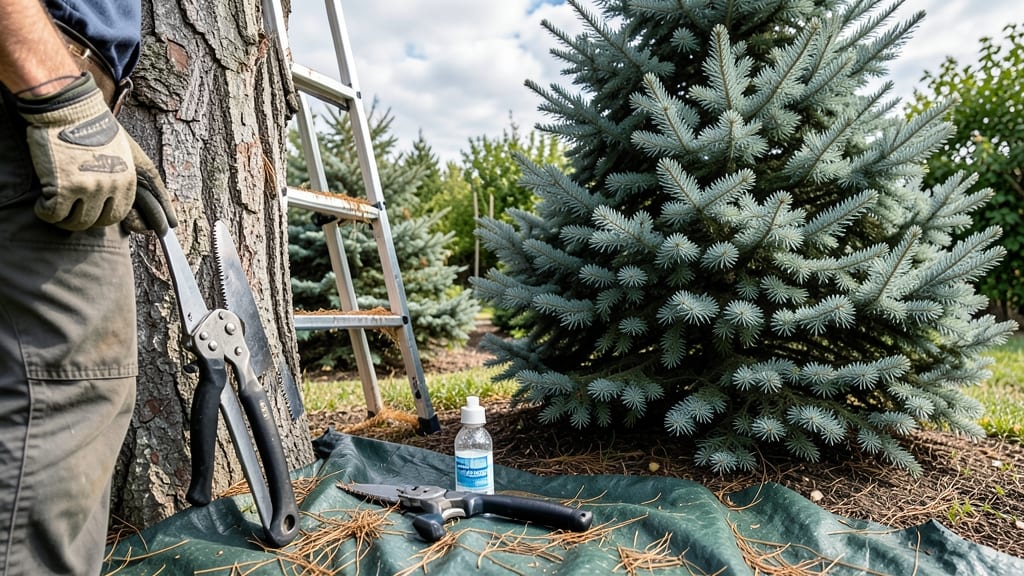
Pruning Colorado blue spruce trees transforms them from stiff, scraggly shadows into bold, healthy statement pieces that steal the show year-round. 🌲 I’ve watched my own blue spruce go from a tangled mess to a perfectly sculpted silhouette—all by following a few key rules about when and how to cut.
The difference between a pruned tree and one left to its own devices? Night and day in both looks and long-term health.
Timing is everything: late winter or early spring, when the tree is dormant but about to burst with new growth, is prime time. You’ll need sharp bypass pruners, a sturdy ladder, and safety gear—gloves to protect from sap and sharp needles, and eye protection for those high branches.
Start by removing dead or diseased branches first; they’re the tree’s weak spots and should never be ignored. Once those are gone, focus on shaping by trimming back overgrown branches to maintain that iconic blue spruce pyramid shape.
What you’ll end up with is a tree that looks neat, full, and vibrant—its signature blue needles popping against the sky. The key is patience: never remove more than 25% of the foliage in one go, or you’ll shock the tree.
After pruning, give it a deep watering to help it recover, and hold off on heavy fertilization until new growth appears in spring. The payoff? A tree that stays lush, disease-resistant, and the envy of the neighborhood for decades.
This method works for any mature Colorado blue spruce, whether it’s your front yard centerpiece or a windbreak line. The same principles apply whether you’re trimming a 10-foot sapling or a 30-foot giant—just scale up the tools and the caution.
Ready to give your spruce the makeover it deserves? Let’s get started with the right cuts for the right season.
📚 In This Guide
- What you need
- Instructions
- Tips and common mistakes
- Wrapping up and next steps
What you need
- ● Bypass pruning shears (for small branches, 6–8" blades, sharp and clean)
- ● Loppers (for medium branches, 8–10" cutting capacity, bypass or anvil type)
- ● Pruning saw (for thick branches, 8–12" curved or straight blade, with a comfortable grip)
- ● Ladder (extendable or step ladder, 12–16' height, sturdy and non-slip)
- ● Heavy-duty gloves (cut-resistant, waterproof, and long-cuffed for protection)
- ● Disposable pruning bags or bucket (for collecting debris, 5–10 gallon capacity)
- ○ Rope or extension pole (optional but helpful for high branches, 10–15' long)
- ○ Tree wound dressing (optional but recommended for large cuts, like Tanglefoot Tree Wound Pruning Sealant)
- ● Safety goggles (to protect against debris)
- ● Pole pruner (for high branches, 8–12' reach)
- ● Hose or spray bottle (to clean tools and rinse sap)
- ● Marking spray or chalk (to outline cuts for precision)
- ● First-aid kit (just in case of minor cuts or scrapes)
Step-by-Step instructions for pruning Colorado Blue spruce trees
This is the method I’ve used for years to keep my Colorado Blue Spruces thriving—bold, dense, and healthy.
✂️ Step 1: Time Your Pruning for Maximum Health
Late winter or early spring—just as new growth begins—is the best time to prune. This is when the tree is dormant but about to wake up, so it can heal quickly. Avoid pruning in late summer or fall, as new growth won’t have time to harden off before winter. If you must prune outside this window, do it in early spring rather than late fall.
Look for tight, compact growth as your signal that the tree is ready. If you see long, leggy branches stretching toward the sun, that’s a sign it’s been too long since your last pruning. I like to prune mine in February or March, just as the buds begin to swell—this ensures the tree has plenty of time to recover before summer heat arrives.
🌿 Step 2: Remove Dead, Diseased, or Crossing Branches First
Start by identifying and removing any dead, diseased, or crossing branches. Dead branches are easy to spot—they’re brown, brittle, and often snap when you bend them slightly. Diseased branches may have discolored needles, fungal growth, or oozing sap. Crossing branches rub against each other, creating wounds that invite pests and disease.
Use clean, sharp pruning shears (or a pruning saw for thicker branches) to make clean cuts just outside the branch collar—the swollen area where the branch meets the trunk. Avoid leaving stubs, as they can rot and attract insects. If you’re unsure whether a branch is dead, scratch the bark with your thumbnail. If it’s green underneath, it’s still alive and should stay.
✂️ Step 3: Thin Out the Interior for Airflow and Light
Next, focus on thinning the interior of the tree to improve airflow and light penetration. Colorado Blue Spruces can become dense, which traps moisture and encourages fungal growth. Aim to remove about 10-20% of the total foliage in one session—never take more than that in a single year, as it stresses the tree.
Look for branches growing inward or upward—these are the ones to remove. Make your cuts just above a healthy bud or lateral branch pointing in the direction you want the tree to grow. Avoid cutting back to bare wood, as this can leave unsightly scars. If you’re pruning a young tree, you can be more aggressive with shaping, but older trees respond best to gentle, gradual adjustments.
☀️ Step 4: Shape the Outer Canopy for Balance and Fullness
Now, move to the outer canopy to refine the tree’s shape. Colorado Blue Spruces naturally grow in a conical form, so your goal is to enhance that silhouette while keeping the branches evenly spaced. Start at the top of the tree and work your way down, removing branches that spoil the symmetry or grow too close together.
For a fuller look, trim the outer third of the branches by about one-third of their length. This encourages new growth at the tips, filling out the tree’s outline. Avoid cutting into old wood—focus on the newest growth for the best results. If you’re pruning a mature tree, you might only need to remove a few branches here and there to maintain its shape, but younger trees benefit from more frequent shaping.
🪴 Step 5: Clean Up and Monitor for Recovery
After pruning, remove all debris from the ground around the tree. Leaving clippings behind can harbor pests and disease. Disinfect your tools with rubbing alcohol or a 10% bleach solution to prevent spreading pathogens to other trees. Once you’re done, water the base of the tree deeply to help it recover from the stress of pruning.
Over the next few weeks, keep an eye on the tree for signs of stress, like yellowing needles or wilting branches. If you see any issues, it’s usually a sign of over-pruning or poor timing. Colorado Blue Spruces are hardy, but they do best when pruned lightly and consistently. If all goes well, you’ll see new, vibrant growth by early summer—a sure sign your pruning was successful.
Tips & tricks for pruning Colorado Blue spruce trees
Here's what nobody tells you about keeping your Colorado Blue Spruce looking its absolute best—lessons I learned after years of trial and error (and a few too many sad, lopsided trees).
Timing Secret: February or March is your sweet spot for pruning, but if you miss that window, don't panic. You can still prune in early spring—just avoid late summer or fall at all costs. The key is catching those buds as they begin to swell. I've seen trees recover beautifully when pruned in early spring, but late-season pruning often leads to weak growth that struggles to harden off before winter. Pro tip: Check for tight, compact growth as your go-ahead signal—if branches are stretching toward the sun, it's definitely time.
Branch Collar Matters: When removing branches in Step 2, focus on making clean cuts just outside the branch collar—the swollen area where the branch meets the trunk. This is where the tree's natural healing begins. I used to leave stubs, thinking it would be "cleaner," but those stubs rot and attract pests. A proper cut right outside the collar gives your tree the best chance to seal itself off. For thicker branches, use a pruning saw—your shears won't thank you for trying to cut through tough wood.
Thinning Strategy: In Step 3, when thinning the interior, think of your tree like a well-lit room—you want light to penetrate all the way to the center. Remove branches growing inward or upward first, aiming for that 10-20% foliage reduction guideline. For young trees, you can be more aggressive with shaping, but older trees need gentle adjustments. I've learned that cutting back to bare wood creates ugly scars, so always make your cuts just above a healthy bud or lateral branch pointing in the direction you want growth to continue.
Recovery Check: After pruning, monitor your tree closely for the next few weeks. Yellowing needles or wilting branches are red flags—usually signs of over-pruning or poor timing. Colorado Blue Spruces are tough, but they're not invincible. If you see these signs, don't panic! Give your tree some extra care—deep watering and maybe a light fertilizer application can help it bounce back. Healthy trees show their appreciation with vibrant new growth by early summer, and that's when you'll know you did everything right.
Pro Tips for Pruning Colorado Blue Spruce Tree
- Here's what nobody tells you about keeping your Colorado Blue Spruce looking its absolute best—lessons I learned after years of trial and error (and a few too many sad, lopsided trees).
- Timing Secret: February or March is your sweet spot for pruning, but if you miss that window, don't panic.
- Branch Collar Matters: When removing branches in Step 2, focus on making clean cuts just outside the branch collar—the swollen area where the branch meets the trunk.
Frequently asked questions
Got questions about pruning your Colorado Blue Spruce? You’re not alone! Here are answers to the most common concerns—from timing to tools and everything in between.
When is the best time to prune a Colorado Blue Spruce?
The ideal window is late winter to early spring (February–March), just before new growth begins. Avoid pruning in late summer or fall, as this can stress the tree and leave it vulnerable to winter damage. Light shaping in early summer is fine, but major cuts should wait for dormancy.
Can I prune a Colorado Blue Spruce at any age?
Yes, but timing matters. Young trees (under 5 years) need minimal pruning—just remove dead or crossing branches. Mature trees (10+ years) can handle more aggressive shaping, but avoid over-pruning, which can weaken the tree. Never remove more than 1/3 of the foliage in a single session.
What if my spruce looks "brown and sad" after pruning?
Don’t panic! Colorado Blue Spruces often shed old needles naturally, and new growth may take 4–6 weeks to appear. If browning persists, check for underwatering, disease, or pest damage. A light mulch and consistent watering can help recovery. For severe cases, consult a local arborist.
Do I need to sterilize my pruning tools between cuts?
Disease prevention
is key. Wipe blades with rubbing alcohol or a 10% bleach solution between cuts, especially if pruning multiple trees. Sharpen tools regularly to make clean cuts that heal faster. Pro tip: Store tools in a dry place to avoid rust.
Are there alternatives to traditional pruning for shaping?
Yes! For a natural look, try "selective thinning" to improve airflow and reduce weight. Avoid topping (cutting the main stem), as it encourages weak, unsightly growth. For dense trees, coppicing (cutting branches to the ground) can stimulate bushier regrowth—but use sparingly.
Wrapping up and next steps
Pruning your Colorado Blue Spruce is the secret to keeping it stunning and thriving year-round! 🌲 With the right tools, timing, and techniques, you’ll encourage bold growth and maintain that iconic blue-green beauty. Remember—patience and precision are key, whether you’re shaping it for winter charm or summer vibrancy.
Now that you’re armed with expert tips, grab those shears and get pruning! Start small, observe your tree’s response, and adjust as needed. Your spruce will thank you with lush, vibrant foliage for years to come. Happy pruning! ✂️