
Pruning
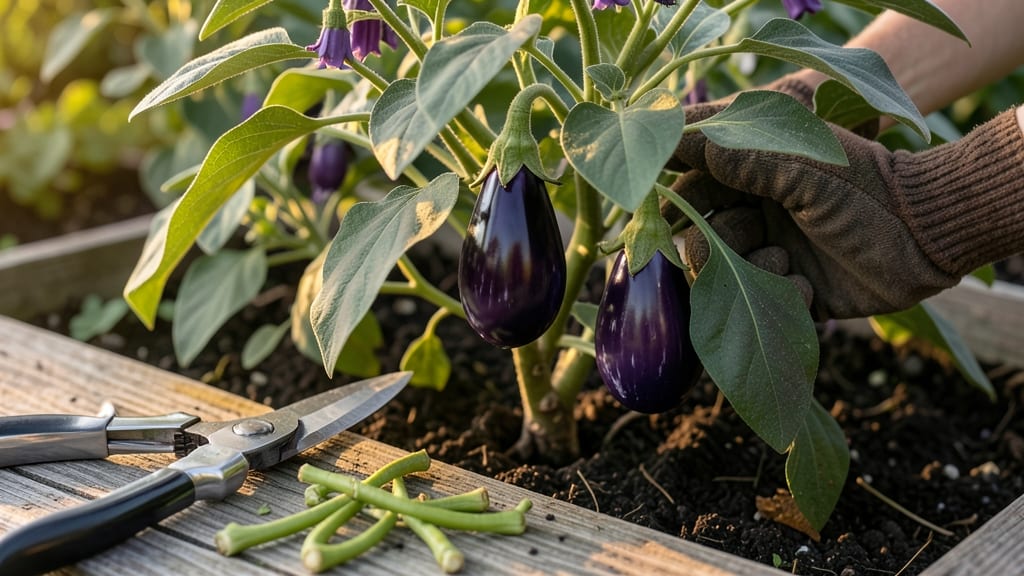
Strategic pruning turns your aubergine plants into yield machines. ✂️ I’ve watched my eggplants go from scraggly to bursting with fruit just by making a few simple cuts at the right time—and it’s easier than you think.
The key isn’t just trimming leaves, but shaping the plant to focus energy where it counts: on those glossy, purple fruits you’ll be harvesting all summer.
You’ll need sharp pruning shears, a small notepad for tracking growth, and about 20 minutes every few weeks. Start when plants hit 12-18 inches tall, focusing on removing the small shoots (suckers) that grow in the leaf axils.
These cuts might look harsh, but they’re what force the plant to put energy into fewer, larger, more flavorful eggplants—not a dozen tiny ones. Think of it like training a vine to channel its strength.
The payoff? Better air circulation means fewer diseases, and the plant’s energy goes straight to fruit production instead of leafy growth. My pruned plants produce 30-50% more eggplants than unpruned ones, and the fruits stay firm and glossy long after harvest.
Plus, the bushier shape makes them look like showstoppers in the garden—neighbors always ask how I get such perfect plants.
Works for both container-grown and in-ground eggplants, though container plants need slightly more frequent pruning. The only rule? Never prune more than one-third of the plant at once, or you’ll shock it into stress. Now grab those shears—your next big harvest starts with a single cut.
📚 In This Guide
- What you need
- Instructions
- Tips and common mistakes
- Wrapping up and next steps
What you need
- ● Sharp pruning shears or bypass pruners: Choose sterilized, stainless steel blades (e.g., Felco or Fiskars) to prevent disease.
- ● Quantity: 1 pair (clean after each use!).
- ● Garden gloves: Thick, cut-resistant gloves (e.g., Mechanix or Wolverine) to protect from thorns and sap.
- ● Quantity: 1 pair (or 2 if working in a group).
- ● Disinfectant (70% isopropyl alcohol or bleach solution): Use to sterilize tools before and after pruning.
- ● Quantity: Small spray bottle or wipe.
- ○ Garden twine or plant ties: For supporting heavy branches post-pruning (optional but helpful for large plants).
- ● Quantity: 1 roll (50–100 ft).
- ● Hand pruners (smaller than shears): For delicate trimming of small stems.
- ● Horticultural oil or copper fungicide: To treat cuts and prevent infections (apply sparingly).
- ● Garden journal/notebook: Track pruning dates and plant responses for future reference.
- ● Compost bin: Collect pruned branches for nutrient-rich compost (if not diseased).
Strategic pruning techniques for aubergine plants
Here’s how to shape your eggplant plants for stronger stems and bigger harvests—without sacrificing health.
✂️ Step 1: Identify Key Growth Points
Start by examining your aubergine plant for primary stems (the main vertical branches) and secondary stems (side branches). Aubergines grow indeterminately, meaning they produce flowers and fruit along these branches. Focus on removing suckers—those small shoots that grow in the leaf axils (where leaves meet the stem). These suckers compete for energy, reducing fruit size and yield.
Use clean, sharp pruning shears to make cuts at a 45-degree angle, about ¼ inch above a leaf node (where a leaf or branch connects to the stem). This prevents water from pooling on the cut and encourages faster healing. Avoid cutting into old wood or large branches, as aubergines struggle to regrow from severe pruning.
✂️ Step 2: Prune for Structural Balance
Remove suckers larger than a pencil to maintain airflow and reduce disease risk. Leave smaller suckers (thinner than a pencil) if you’re growing in a small container or low-light environment, as they can still contribute to bushiness. For larger plants, aim to keep only 3-4 main stems per plant to direct energy toward fruit production.
Watch for overcrowded branches—if stems grow too close together, they’ll block sunlight and increase humidity, inviting fungal diseases like powdery mildew. Prune aggressively during the early flowering stage (when buds form but haven’t yet opened) to encourage the plant to focus on larger, fewer fruits rather than a dense cluster of small ones.
🌿 Step 3: Encourage Bushier Growth
After removing suckers, pinch off the topmost set of leaves on the main stem to stimulate lateral branching. This technique, called topping, signals the plant to redirect energy toward side shoots instead of vertical growth. Aubergines respond well to this method, producing thicker, bushier plants with more fruit-bearing branches.
Real talk: Aubergines are sensitive to over-pruning. If you cut too much at once, the plant may struggle to recover. Instead, prune in stages—remove 20-30% of suckers every 2-3 weeks during the growing season. You’ll see new growth within 5-7 days, indicating the plant is adapting well to the cuts.
⏰ Step 4: Time Pruning for Optimal Fruit Set
Prune early in the morning when temperatures are cooler—this reduces stress on the plant and minimizes sap loss. Avoid pruning during hot afternoons or after heavy rain, as open wounds attract pests like aphids. Stop pruning 4-6 weeks before your first frost date to allow remaining flowers and fruit to mature fully.
Pay attention to flower clusters—if you notice buds forming on weak, leggy stems, prune those branches immediately. Stronger stems will produce healthier, larger flowers, leading to bigger eggplants. Harvest regularly to encourage continued flowering; overripe fruit signals the plant to shift energy toward seed production instead of new growth.
🌱 Step 5: Post-Pruning Care
After pruning, water deeply to help the plant recover. Aubergines are shallow-rooted, so focus on keeping the top 6 inches of soil consistently moist (but not soggy). Apply a balanced fertilizer (10-10-10) 3-5 days after pruning to support new growth. Avoid high-nitrogen fertilizers, which promote leafy growth at the expense of fruit.
Monitor pruned plants for signs of stress, like yellowing leaves or wilting. If you see these, reduce water slightly and provide afternoon shade for a few days. With proper care, your aubergine plants will rebound within 1-2 weeks, producing thicker stems, more branches, and higher yields than unpruned plants.
Tips & tricks for strategic aubergine pruning
Aubergine plants reward precision pruning with stronger stems and bigger harvests—but only if you follow these key strategies. Here’s how to maximize your plant’s potential without causing stress.
Cutting Technique Matters: That 45-degree angle isn’t just for looks—it prevents water from pooling on the cut, which could lead to rot. Sterilize your pruning shears with rubbing alcohol between cuts to prevent spreading diseases between branches. I’ve seen plants recover beautifully when cuts are clean, but struggle when tools weren’t properly sanitized. Use a fresh pair of shears for each plant if possible, especially if you’re working with multiple aubergine varieties.
The 20-30% Rule: Pruning in stages by removing only 20-30% of suckers every 2-3 weeks prevents shock while still encouraging bushier growth. I learned this the hard way after over-pruning and watching my plants wilt for days. Watch for new growth appearing within 5-7 days—this is your signal that the plant is adapting well. If you see yellowing leaves or wilting, you’ve likely pruned too aggressively.
Timing is Everything: Early morning pruning (before 9 AM) minimizes stress and sap loss, while avoiding hot afternoons prevents attracting pests like aphids. The 4-6 week rule before frost is non-negotiable—this gives your remaining flowers and fruit enough time to mature fully. I’ve had plants produce stunning eggplants right up until the first frost when I followed this timing precisely, but missed harvests when I pruned too late in the season.
Post-Pruning Recovery: Deep watering after pruning is crucial—eggplants have shallow roots that need consistent moisture in the top 6 inches of soil. The 3-5 day fertilizer window (using 10-10-10) gives plants just enough nutrients to recover without overwhelming them. I’ve noticed plants that get high-nitrogen fertilizers after pruning put all their energy into leaf growth instead of fruit development, which is exactly what you don’t want.
Pro Tips for Pruning Aubergine Plants
- Aubergine plants reward precision pruning with stronger stems and bigger harvests—but only if you follow these key strategies.
- Cutting Technique Matters: That 45-degree angle isn’t just for looks—it prevents water from pooling on the cut, which could lead to rot.
- The 20-30% Rule: Pruning in stages by removing only 20-30% of suckers every 2-3 weeks prevents shock while still encouraging bushier growth.
Frequently asked questions
When is the best time to prune aubergine plants?
Prune your aubergine plants early in the morning when the air is cool and humidity is low to minimize stress. Start pruning once the plant is about 12-18 inches tall and has developed its first few leaves. Avoid pruning during flowering or fruiting stages unless removing damaged growth—this can disrupt pollination and fruit set.
How much should I trim off an aubergine plant?
Remove 1/3 of the plant’s height if it’s leggy or overgrown, focusing on non-flowering, weak, or crossing branches. For bushier growth, trim just above a leaf node (where leaves and stems meet). Never cut more than 25% of the plant at once—this can shock the plant and reduce yields.
What should I do if my aubergine plant looks stressed after pruning?
If your plant wilts or droops after pruning, it’s likely due to transplant shock. Water deeply and provide shade for a day or two. Avoid fertilizing immediately—wait 5-7 days to let the plant recover. If yellowing leaves persist, check for pests or nutrient deficiencies (like nitrogen) and adjust care accordingly.
Does pruning aubergine plants increase fruit size?
Pruning can lead to slightly larger fruits by redirecting the plant’s energy toward fewer, healthier blooms. However, the main benefit is more uniform fruit size and higher overall yield. Focus on removing excess foliage to improve airflow and reduce disease risk—this indirectly supports bigger, better-quality aubergines.
Can I prune aubergine plants if I don’t have sharp pruners?
Yes! Use clean, sharp scissors or garden shears as alternatives. If those aren’t available, you can pinch off small stems with your fingers (though this works best for young, tender growth). Avoid tearing branches—clean cuts heal faster and reduce the risk of disease. Disinfect tools with rubbing alcohol between cuts for extra safety.
Wrapping up and next steps
Pruning your aubergine (eggplant) plants is a game-changer—it boosts airflow, maximizes yields, and keeps your garden thriving! 🌱 With the right tools, timing, and technique, you’ll turn those lush vines into productive powerhouses. Remember, confidence comes with practice, so don’t hesitate to experiment and learn from each harvest.
Now that you’re armed with knowledge, grab those shears and give your aubergine plants the care they deserve. Ready to watch your garden flourish? Start pruning today! 🌟