
Flowers
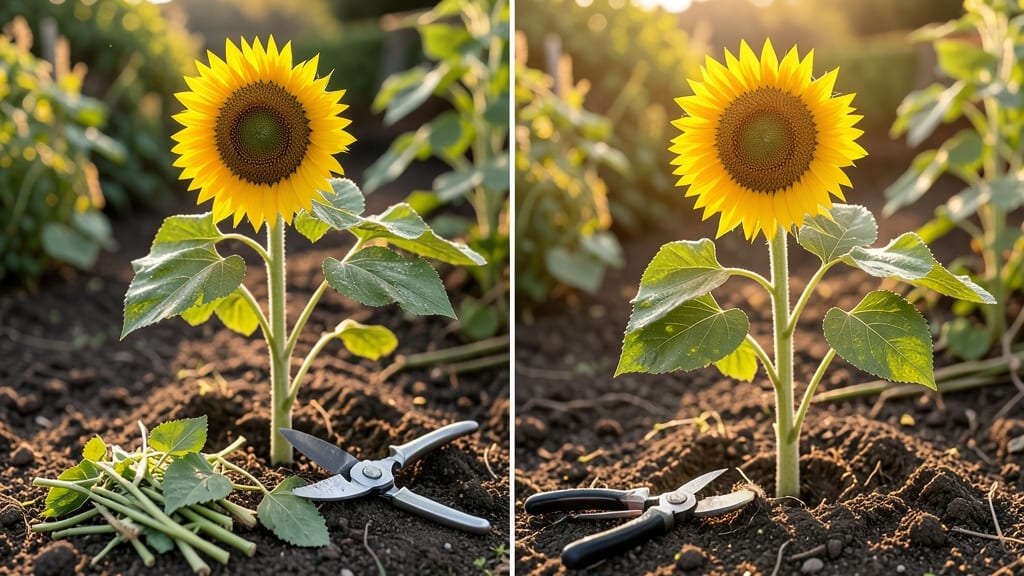
Pruning sunflowers isn't just about cutting back—it's about unlocking their full potential. 🌻 I learned the hard way that skipping this step means smaller blooms and weaker stems, but with the right cuts, you'll get taller stems and bigger flowers that turn heads at the farmer's market.
Start by removing dead or damaged stems at the base with clean pruners, then snip spent blooms just above a leaf node to redirect energy. For giant varieties, support stems with stakes early—pruning too late or too aggressively can stress plants during their critical growth phase.
Think of pruning as a conversation with your sunflowers: listen to their growth patterns and respond accordingly. The key is timing—prune in the morning when stems are firm, avoid over-trimming, and always leave at least one-third of the foliage to keep photosynthesis running.
📚 In This Guide
- What you need
- Instructions
- Tips and common mistakes
- Wrapping up and next steps
What you need
- ● Sharp pruning shears or bypass pruners – Choose a pair with clean, sharp blades (4-6 inch blades work best for precision). Disinfect with rubbing alcohol before and after use to prevent disease spread.
- ○ Gloves (optional but recommended) – Wear gardening gloves to protect your hands from thorns and sap (nitrile or leather works well).
- ● Clean, sharp scissors or a knife – For smaller stems or delicate cuts (e.g., sterilized kitchen shears in a pinch).
- ● Garden twine or plant ties – A small roll (50-100 feet) to support pruned stems if needed.
- ● Compost bin or bag – To collect pruned material for nutrient-rich compost.
- ● Hand pruners with ergonomic grips – Reduces hand fatigue for long pruning sessions.
- ● Disinfectant spray (e.g., hydrogen peroxide) – Spray cuts to prevent fungal/bacterial infections.
- ● Markers or flags – To label pruned sections if you’re experimenting with training techniques.
- ● Sunflower seed packets – Save seeds from pruned flowers for future planting!
Step-by-Step guide to pruning sunflowers for stronger growth
Here’s how I keep sunflowers thriving—whether you’re shaping them for bouquets or maximizing seed production.
🌱 Step 1: Identify the Right Time to Prune
Prune sunflowers during their active growing season, ideally when they’re 6-12 inches tall and have developed 3-5 true leaves. This timing ensures you’re cutting back new growth, not just leaves. Avoid pruning when plants are flowering or producing seeds—this stresses them unnecessarily.
Watch for new lateral branches emerging from the stem’s base. These side shoots are your pruning targets. If you see them, it’s a clear sign the plant has enough energy to recover from light trimming. Early morning is the best time to prune—before 10 AM—when temperatures are cooler and the plant’s moisture levels are highest.
✂️ Step 2: Remove Weak or Crowded Stems
Use clean, sharp pruning shears to cut back any stems that are thin, leggy, or growing at odd angles. These stems compete with the main stalk for nutrients and weaken the plant’s overall structure. I always make cuts at a 45-degree angle, about ¼ inch above a leaf node—this prevents water from pooling on the cut and reduces disease risk.
If you’re growing multiple sunflowers in a row, thin them to 12-18 inches apart once they reach 18 inches tall. This ensures each plant has enough space to develop a strong, sturdy stem. Remove the weakest stems completely at the base—don’t leave stubs, as they can harbor pests or rot.
☀️ Step 3: Encourage Bushier Growth by Pinching Back
To promote a bushier, more compact plant, pinch off the top 2-3 inches of the main stem when it reaches 3-4 feet tall. This forces the plant to redirect energy toward lateral branches instead of just vertical growth. You’ll see new side shoots emerge within 7-10 days—these are your future blooms or seed heads.
If you’re growing sunflowers for cut flowers, avoid heavy pruning once buds form. Instead, focus on removing spent blooms (deadheading) to encourage new flowers. For seed production, let the main head mature fully and prune only the weakest side branches to avoid overcrowding.
🌿 Step 4: Support and Maintain Pruned Plants
After pruning, water deeply to help the plant recover—aim for 1-1.5 inches of water per week, especially during dry spells. Sunflowers are drought-tolerant, but pruned plants need extra moisture to regenerate. I always water at the base of the plant, not the leaves, to prevent fungal issues.
Stake or cage taller varieties after pruning to prevent them from toppling. Use 3-4 foot stakes driven 6 inches deep into the soil, then loosely tie the main stem to the stake with soft plant ties. This gives the plant stability as it regrows. Avoid tying too tightly—you want room for the stem to thicken as it matures.
⏰ Step 5: Monitor for Regrowth and Adjust as Needed
Check pruned sunflowers every 5-7 days for new growth. If side shoots appear weak or sparse, consider a light fertilizer application with a balanced 10-10-10 formula to boost recovery. Over-fertilizing now can lead to soft, floppy growth—stick to half-strength applications until the plant stabilizes.
If you notice yellowing leaves after pruning, it’s usually a sign of over-pruning or stress. In this case, reduce watering slightly and avoid further trimming until the plant shows new green growth. Sunflowers are resilient, but they need time to adjust—patience is key during this phase.
Tips & tricks for pruning sunflowers like a pro
These game-changing strategies will help you transform leggy sunflowers into sturdy, show-stopping plants that thrive all season long.
Timing is Everything: The 6-12 inch height window in Step 1 is your golden opportunity—pruning at this stage ensures you're cutting back active growth, not just leaves. I've learned the hard way that pruning too early (when plants are under 6 inches) can stunt their development, while waiting too long (after flowering) stresses the plant. Look for those new lateral branches at the stem base as your clear signal to act.
Precision Cuts Prevent Problems: That 45-degree angle cut in Step 2 isn't just for show—it prevents water from pooling on the wound, which drastically reduces disease risk. I always sterilize my pruning shears with rubbing alcohol between cuts, especially when working with multiple plants. For the ¼ inch above leaf node rule, think of it like making a clean surgical incision rather than a jagged tear. This promotes faster healing and stronger regrowth.
Bushier Plants Start with the Right Technique: When you reach the 3-4 foot mark in Step 3, that 2-3 inch pinch might feel dramatic, but it's what triggers the plant's natural branching response. The key is to use your thumb and forefinger to make a clean break rather than tearing—this minimizes damage. I've found that pinching at this height gives you the best balance between encouraging bushiness without sacrificing the main stem's strength for seed production or cut flowers.
Post-Pruning Care Makes All the Difference: After your pruning work, the 1-1.5 inches of water per week becomes even more critical during the 7-10 day regrowth period mentioned in Step 3. I've seen dramatic improvements in recovery when I water at the soil base rather than overhead—this prevents fungal spores from splashing onto fresh cuts. For taller varieties, I always install stakes before pruning to avoid damaging the stem later. The 6 inch deep placement gives maximum stability without restricting root growth.
Pro Tips for Prune Sunflowers
- These game-changing strategies will help you transform leggy sunflowers into sturdy, show-stopping plants that thrive all season long.
- Timing is Everything: The 6-12 inch height window in Step 1 is your golden opportunity—pruning at this stage ensures you're cutting back active growth, not just leaves.
- Precision Cuts Prevent Problems: That 45-degree angle cut in Step 2 isn't just for show—it prevents water from pooling on the wound, which drastically reduces disease risk.
Frequently asked questions
When is the best time to prune sunflowers?
Prune sunflowers early in the morning when the plant is still hydrated and the sun isn’t too intense. For deadheading (removing spent blooms), do it immediately after flowering to encourage more blooms. If pruning for bushier growth, trim back by one-third when the plant is 12–18 inches tall. Pro tip: Avoid pruning in the heat of the day to prevent stress on the plant!
Can I prune sunflowers too much?
Yes! Over-pruning can weaken the plant or even kill it. Stick to light trimming—never remove more than one-third of the foliage at once. Sunflowers rely on their leaves for energy, so avoid aggressive cuts unless you’re shaping for aesthetics or managing disease. Remember: Less is often more with these giants!
Will pruning sunflowers make them grow taller?
Not necessarily! Pruning doesn’t directly increase height, but it can strengthen the stem and encourage bushier growth. If you want taller sunflowers, focus on removing lower leaves to reduce weight and improve airflow. For height, prioritize supportive staking and proper watering over pruning.
What should I do if my sunflower stems turn brown after pruning?
Brown stems after pruning usually mean over-trimming or bacterial/fungal stress. If only small areas are affected, trim back to healthy green tissue and avoid wetting the cut. For widespread browning, check for pests (like aphids) or disease (e.g., powdery mildew). Solution: Apply neem oil or a fungicide if needed, and keep the area well-ventilated.
Can I prune sunflowers for cut flowers, or does it harm the plant?
Pruning sunflowers for cut flowers is encouraged—just cut the stem at a 45-degree angle below a leaf node. To keep the plant productive, leave at least 3–4 strong stems per plant. For continuous blooms, deadhead regularly and harvest early in the morning when stems are hydrated.
Wrapping up and next steps
Pruning sunflowers isn’t just about keeping them tidy—it’s your secret weapon for bigger blooms, healthier plants, and a stunning garden all year long. 🌻 By following these simple steps, you’ll encourage stronger stems, prevent disease, and even extend their growing season.
Now that you’re armed with the know-how, grab those shears and get ready to transform your sunflowers into showstoppers!
Ready to take it further? Experiment with deadheading or try growing sunflowers in containers for a portable pop of color. Your green thumb is about to shine brighter than ever—happy pruning! 🌟