
Pruning
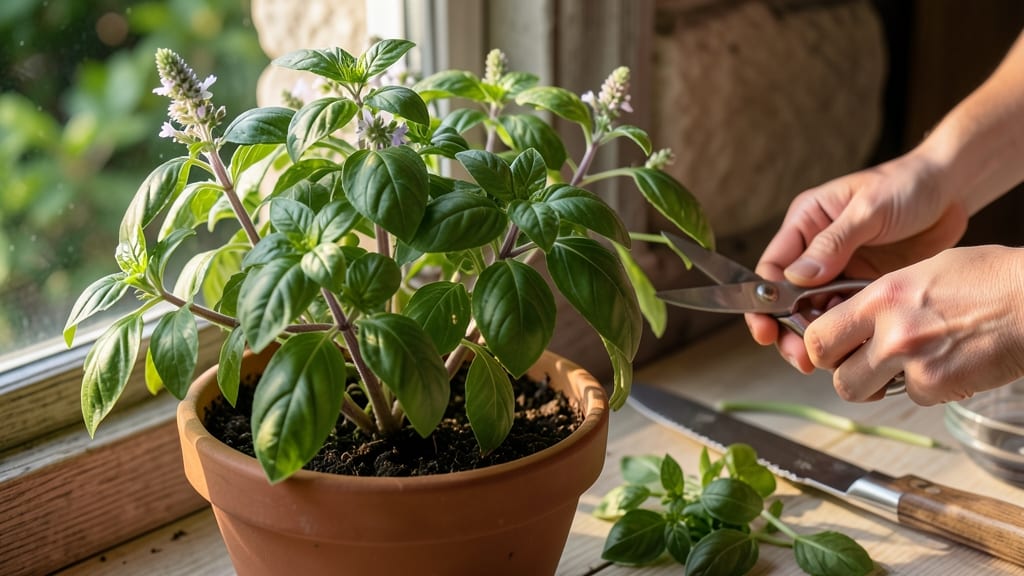
Pruning and harvesting basil isn't just about trimming—it's how you keep your plants bushier and fragrant all season long. ✂️ I learned the hard way that skipping this step leads to leggy, sparse plants that taste like nothing special.
The secret is timing: pinch back the tops when stems reach 6 inches, and always harvest before flowers appear. You only need clean scissors or pruning shears—no fancy tools required. Cut just above a leaf node (where leaves meet the stem) to encourage new growth.
This simple technique transforms your basil from a sad, sparse plant into a lush, productive bush that keeps giving you fresh leaves for months. The best part? You’ll harvest more leaves than you ever thought possible.
After pruning, your plant will branch out, creating a dense, leafy structure that stays fragrant and flavorful. Plus, you’ll avoid the common mistake of letting basil flower—those blooms signal the end of your harvest season. Here’s the trick for year-round success: harvest regularly and protect your plants from frost.
With the right care, your basil will keep producing even in cooler months, giving you fresh leaves whenever you need them for cooking or pesto.
📚 In This Guide
- What you need
- Instructions
- Tips and common mistakes
- Wrapping up and next steps
What you need
- ● Pruning shears or sharp scissors: Choose a clean, sharp pair (sterilize with rubbing alcohol before use) to avoid damaging stems or spreading disease. A bypass pruner (not an anvil type) is ideal for clean cuts.
- ○ Gloves (optional but recommended): Protect your hands from thorns (especially in Genovese or Purple basil) and sap irritation. Lightweight gardening gloves work well.
- ● Container or tray: A wide, shallow tray or bowl (preferably ceramic or plastic) to collect harvested stems and leaves. A 12-inch diameter works for small plants; larger for bigger harvests.
- ● Spray bottle with water: A 8–16 oz bottle for misting leaves post-harvest to keep them fresh (especially if storing in the fridge).
- ● Paper towels or clean kitchen towel: For patting dry leaves before storage to prevent mold.
- ● Permanent marker or labels: If harvesting multiple basil varieties, label stems to avoid mix-ups (e.g., Sweet basil vs. Thai basil).
- ● Pruning powder or cinnamon: Dust cuts with cinnamon (natural antifungal) or pruning powder to prevent bacterial infections.
- ● Food processor or knife: For chopping harvested basil into pesto or culinary use immediately after harvest.
- ● Plastic wrap or airtight container: For short-term storage (up to 5 days) if not using fresh basil right away.
- ● Grow lights or sunny windowsill: If harvesting indoors, ensure your basil gets 6–8 hours of light daily to regrow vigorously.
Step-by-step guide to pruning and harvesting basil
Here’s how I keep my basil thriving all season long—with more leaves and better flavor.
✂️ Step 1: Identify the Right Time to Prune
Prune basil when it reaches 6 inches tall—this is when the plant has enough energy to branch out. Look for the fourth set of true leaves (the first two are just cotyledons) as your cue. I always check the stems for woody texture—if they start feeling stiff, it’s past the ideal time.
Morning is best for pruning because the plant has had time to absorb moisture overnight. Avoid trimming after heavy watering—wet leaves are more prone to fungal issues. Use clean, sharp scissors to make precise cuts just above a leaf node (the small bump where leaves grow). This encourages new growth from that spot.
🌿 Step 2: Pinch for Bushier Growth
Pinching is the secret to bushy basil. Use your thumb and forefinger to gently pinch off the top set of leaves (about 1-2 inches from the stem). This may seem counterintuitive, but removing the top growth forces the plant to send out new shoots from lower nodes.
Watch for new side shoots within 5-7 days—these are your signal that the pruning worked. If your basil stays leggy, it’s either not getting enough light or needs more frequent pinching. I pinch my plants every 2-3 weeks during the growing season to keep them compact and productive.
✂️ Step 3: Harvest Leaves Correctly
Harvest basil in the morning when essential oils are at their peak for flavor. Use your fingers to pluck individual leaves from the stem, or snip whole stems just above a leaf node. Avoid cutting into the main stem—this weakens the plant and reduces future growth.
For bigger harvests, cut stems that are 4-6 inches long, leaving at least 2-3 inches on the plant. This encourages branching and keeps the plant from flowering too soon. If you notice tiny white flowers forming, trim them immediately—they signal the end of the plant’s productive life.
🌱 Step 4: Maintain After Pruning and Harvesting
After pruning or harvesting, water the soil deeply until moisture reaches 1-2 inches down. Basil roots are shallow, so consistent moisture keeps them happy. I avoid overhead watering—it can cause leaf spot diseases. Instead, water at the base and let excess drain away.
Place your basil in bright, indirect light (or 4-6 hours of morning sun) for a few days after pruning. Too much direct sun right after cutting can stress the plant. If you notice yellowing leaves, it’s usually a sign of overwatering or poor drainage. Adjust your care and watch the plant bounce back within a week.
⏰ Step 5: Extend the Season with Winter Care
When temperatures drop below 50°F, move potted basil indoors near a south-facing window or under grow lights. Reduce watering—soil stays moist longer in cooler conditions. Prune lightly every 3-4 weeks to encourage new growth during the dormant season.
If your basil starts to flower indoors, snip the blooms immediately. Flowering signals the plant to focus on seed production instead of leaf growth. With proper care, your basil can keep producing fragrant, flavorful leaves for months beyond the usual summer season.
Tips & tricks for perfect basil pruning and harvesting
These simple tricks will help you grow basil that stays lush, fragrant, and productive all season long.
The Leaf Count Trick: When counting leaves to determine pruning time, remember the first two leaves are cotyledons—not true leaves. Start counting from the third leaf upward. This helps you accurately identify when your basil has reached the ideal 6-inch height with its fourth set of true leaves. I always double-check by gently feeling the stems for stiffness—woody texture means it's past the perfect window.
Pinch Like a Pro: For bushier growth, pinch off the top set of leaves about 1-2 inches from the stem using your thumb and forefinger. This method is faster than using scissors and gives you better control. Watch for new side shoots within 5-7 days—this confirms your pruning worked. If your basil stays leggy, it might need more frequent pinching or brighter light.
Harvesting for Flavor: Morning is peak flavor time for basil. Harvest by plucking individual leaves or snipping whole stems just above a leaf node. For bigger harvests, cut stems that are 4-6 inches long, leaving 2-3 inches on the plant. This encourages branching and prevents early flowering. If you notice tiny white flowers forming, trim them immediately—they signal the end of your basil's productive life.
Winter Survival Strategy: When temperatures drop below 50°F, move your potted basil indoors near a south-facing window or under grow lights. Reduce watering since soil stays moist longer in cooler conditions. Prune lightly every 3-4 weeks to encourage new growth during the dormant season. If your basil flowers indoors, snip the blooms immediately to maintain leaf production.
Pro Tips for Prune And Harvest Basil
- These simple tricks will help you grow basil that stays lush, fragrant, and productive all season long.
- The Leaf Count Trick: When counting leaves to determine pruning time, remember the first two leaves are cotyledons—not true leaves.
- Pinch Like a Pro: For bushier growth, pinch off the top set of leaves about 1-2 inches from the stem using your thumb and forefinger.
Frequently asked questions
Got questions about keeping your basil thriving? Here are answers to the most common ones—so you can enjoy fresh, fragrant leaves all season long!
How often should I prune basil to keep it bushy?
Prune basil regularly—every 4–6 weeks—to encourage bushier growth. Pinch off the top sets of leaves (about 1/3 of the plant) when stems are 6–8 inches tall. This redirects energy to side shoots, preventing legginess. For container-grown basil, a monthly trim keeps it compact and productive.
When is the best time of day to harvest basil?
Harvest basil in the morning after the dew dries but before the heat of the day. This ensures the highest flavor and moisture content. Avoid harvesting after rain or late in the evening, as leaves may wilt faster or attract pests. A quick rinse and pat-dry keeps your harvest fresh!
Can I harvest basil leaves if the plant is flowering?
Yes, but remove flowers immediately—they signal the end of the plant’s productive life. Snip off flower buds or stems with blooms to redirect energy back to leaf growth. If you miss them, the plant will focus on seeds instead of flavorful leaves. Pro tip: Deadhead daily during peak bloom for continuous harvests!
What do I do if my basil turns yellow after pruning?
Yellowing leaves after pruning are usually normal—it’s the plant adjusting! Ensure it gets 6+ hours of sunlight, well-draining soil, and consistent water (but no soggy roots). If yellowing persists, check for overwatering or nutrient deficiencies (try a balanced fertilizer). Trim just above a leaf node to encourage new growth.
How can I use harvested basil if I can’t cook with it right away?
Store basil in the fridge for 3–5 days by wrapping stems in a damp paper towel and sealing in a plastic bag. For longer storage, blanch and freeze: Dip leaves in boiling water for 30 seconds, cool, drain, and freeze in ice cube trays with olive oil (perfect for future pasta sauces!). Drying also works—hang bundles upside down in a dark, dry place.
Wrapping up and next steps
Mastering the art of pruning and harvesting basil is your ticket to a thriving, fragrant herb garden all year long! 🌿 With just a few snips and a little care, you’ll enjoy bushier plants, richer flavors, and a steady supply of fresh basil for your favorite dishes.
Whether you’re a seasoned gardener or just starting out, these techniques make it simple—and rewarding—to keep your basil happy and productive.
Now that you’re equipped with the know-how, grab those shears and get pruning! Try experimenting with different recipes or even drying your harvest for later use—your kitchen (and taste buds) will thank you. Happy growing! 🌱