
Pruning
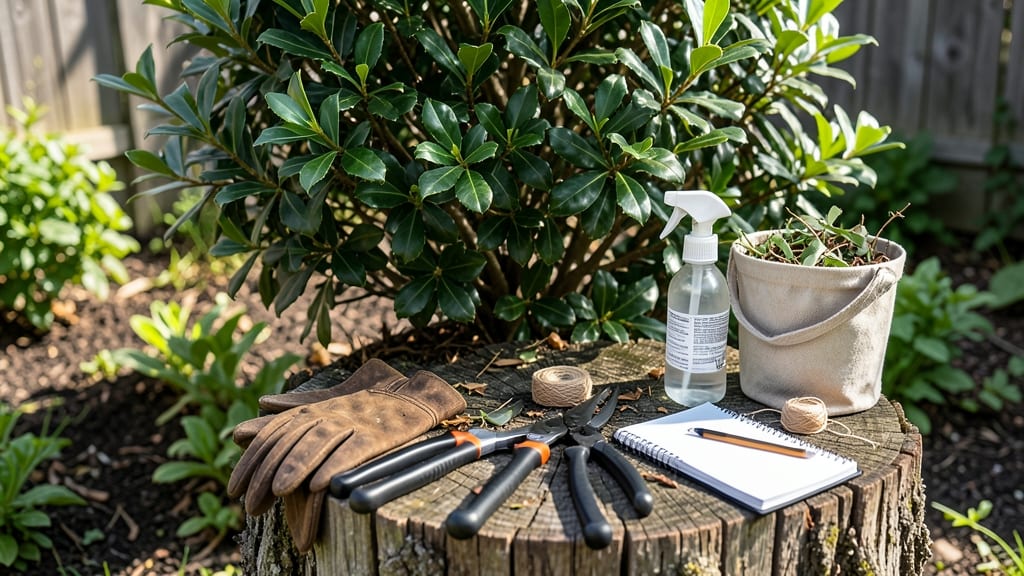
Pruning overgrown holly bushes transforms tangled messes into neat, productive shrubs that burst with glossy leaves and bright berries. ✂️ I’ve turned my own thorny jungle into a showstopping hedge by following a few key cuts—timing matters most, and dormant season is your best window for dramatic reshaping.
The right tools make all the difference: sharp bypass pruners for clean cuts, heavy-duty gloves to protect from thorns, and a sturdy ladder if your holly towers over your head.
We’re aiming for an open center and outward-facing branches to encourage airflow and sunlight penetration—critical for healthy growth and berry production.
After pruning, you’ll see fresh green shoots within weeks, with berries forming on new growth by late summer. The key is patience: holly responds slowly but steadily, and each cut you make now sets the stage for years of lush, berry-laden branches. Just avoid cutting into old wood—it won’t regrow.
This method works for any holly variety, whether you’re shaping a formal hedge or restoring a wild, unruly bush. Grab your tools and let’s bring that holly back to life—safely and with confidence.
📚 In This Guide
- What you need
- Instructions
- Tips and common mistakes
- Wrapping up and next steps
What you need
- ● Sharp, bypass pruners – Choose high-quality, bypass-style pruners (like Felco or Fiskars) for clean cuts. Opt for 4- to 6-inch blades for smaller branches.
- ● Loppers – For thicker branches (½ to 1½ inches in diameter), use loppers with 8- to 10-inch handles for leverage.
- ● Pruning saw – For branches thicker than 1½ inches, a curved-tooth pruning saw (like those from Corona) works best.
- ● Gloves – Wear cut-resistant gloves (e.g., Mechanix or garden-specific) to protect against thorns and scrapes.
- ○ Disinfectant (optional but recommended) – A 70% isopropyl alcohol spray or bleach solution (1 part bleach to 9 parts water) to sterilize tools between cuts and prevent disease.
- ● Heavy-duty trash bags or bucket – For collecting pruned branches and debris.
- ● Ladder or step stool – If your holly is tall (over 6 feet), use a stable, extendable ladder or a foldable step stool for safe reach.
- ○ Pruning sealant (optional) – A tree wound sealant (like Tanglefoot) to coat large cuts if desired (though holly often heals well without it).
- ● Hand pruners with a long reach – Extendable pruners (like those from Bahco) for hard-to-reach spots.
- ● Safety glasses – To shield your eyes from flying debris or sap.
- ● Knee pads – For comfort if you’re working on the ground.
- ● Rake or broom – To clear fallen leaves and debris after pruning.
- ● Notebook & pen – To sketch a quick map of your holly’s structure before pruning.
How to prune overgrown holly bushes: step-by-step revival for bushier growth
Reviving your holly bush starts with a sharp pair of shears and a clear plan—here's how to transform tangled growth into a lush, healthy specimen.
✂️ Step 1: Remove Dead or Diseased Branches First
Start by scanning your holly bush for any branches that are brown, brittle, or showing signs of disease like black spots or mold. These are your first targets—they won’t recover, and removing them now prevents the spread of problems to healthy growth. Use clean, sharp pruning shears to cut these branches back to the main stem or where they meet a healthy branch.
I always disinfect my shears between cuts with rubbing alcohol to avoid transferring any fungal spores. Holly bushes are tough, but they’re not immune to disease, and a little prevention goes a long way. If you’re unsure whether a branch is dead or just dormant, scratch the bark with your fingernail—if it’s green underneath, it’s still alive and should stay put for now.
✂️ Step 2: Thin Out Crowded Branches for Better Airflow
Next, focus on thinning out the interior of the bush. Holly bushes tend to grow densely, which can lead to crowded branches that compete for sunlight and nutrients. Look for branches that are rubbing against each other or growing inward toward the center. These are the ones to remove entirely, cutting them back to a strong outward-facing branch or the main stem.
Thinning isn’t about cutting back length—it’s about creating space. Aim to remove about 20-30% of the total branches in the bush’s center. This might sound drastic, but holly bushes respond well to thinning and will fill in more evenly with new growth. You’ll notice a difference in airflow almost immediately, which helps prevent future fungal issues.
✂️ Step 3: Shape the Bush by Pruning Outward and Upward
Now it’s time to shape the bush into a more manageable form. Holly bushes grow best when they have a rounded, natural shape that allows sunlight to reach all parts of the plant. Start by identifying the main framework of branches—these are the sturdy, outward-facing stems that form the bush’s structure. Prune any branches that are growing inward or downward, cutting them back to a point where they branch outward.
For a bushier look, focus on pruning just above a leaf bud or a side branch. Avoid cutting back to bare wood, as holly bushes often produce new growth from the buds along the stems. If you’re pruning to reduce the bush’s overall size, make your cuts just above a set of leaves or a bud that’s facing outward. This encourages the bush to fill in rather than grow leggy.
✂️ Step 4: Lightly Prune New Growth to Encourage Fullness
Once you’ve addressed the dead, diseased, and crowded branches, turn your attention to the newer growth. Holly bushes often produce long, leggy branches that can make the bush look sparse. To encourage a fuller shape, prune these new branches back by about one-third of their length. This might seem counterintuitive, but it triggers the bush to branch out more at the base of the cut.
I like to do this in stages if the bush is particularly overgrown. Prune about one-third of the new growth in the first year, then repeat the process the following year if needed. This gradual approach prevents shock to the plant and gives it time to adjust. You’ll start seeing new shoots forming along the remaining branches within a few weeks—this is your sign that the pruning is working.
🌿 Step 5: Clean Up and Monitor for New Growth
After you’ve finished pruning, take a step back and admire your handiwork. Remove any large clippings from the base of the bush to keep the area tidy and reduce the risk of pests or disease. Smaller clippings can be left on the ground as mulch, but avoid piling them directly against the base of the plant.
Keep an eye on your holly bush in the weeks following pruning. You should see new growth emerging from the buds you left behind, especially if you pruned just above a leaf or bud. If the bush looks stressed—leaves wilting, branches drooping—give it a deep watering and avoid any more heavy pruning for at least a month. Holly bushes are resilient, but they do best when given time to recover after a major pruning session.
Tips & tricks for reviving overgrown holly bushes
Here's what nobody tells you—these tricks will help you avoid common mistakes and get the best results from your pruning efforts.
Tool Preparation: Before you start, give your pruning shears a thorough cleaning with rubbing alcohol—especially if you've used them on other plants. I've seen fungal diseases spread between bushes because of dirty tools. Also, make sure your shears are sharp; dull blades can tear branches instead of making clean cuts, which stresses the plant. A quick test: if the blade doesn't cut cleanly through a piece of paper, it's time to sharpen it.
Timing Secret: The best time to prune holly bushes is in late winter or early spring, just as new growth begins to appear. This timing gives your bush plenty of time to recover before winter dormancy. If you must prune at other times, avoid late summer—this can stimulate new growth that won't have time to harden off before cold weather. The 20-30% thinning rule in Step 2 works best when applied during this optimal window.
Visual Cues for Pruning: When shaping your holly bush in Step 3, look for the "thickest" branches—they're the strongest and will form the best framework. These are usually the ones growing outward at a 45-degree angle from the main stem. For new growth pruning in Step 4, aim to leave about 2-3 inches of stem above your cut—this gives the plant enough energy to produce new branches while preventing shock. You'll know you've done it right when you see new shoots forming within 3-4 weeks.
Post-Pruning Care: After you've finished, give your holly bush a good deep watering to help it recover from the stress of pruning. I always add a layer of mulch around the base (but not touching the trunk) to help retain moisture and regulate soil temperature. This is particularly important if you've done a lot of thinning—your bush will need extra support as it adjusts to its new shape. Monitor for new growth, which should appear within 2-3 weeks if all went well.
Pro Tips for Prune Overgrown Holly Bushes
- Here's what nobody tells you—these tricks will help you avoid common mistakes and get the best results from your pruning efforts.
- Tool Preparation: Before you start, give your pruning shears a thorough cleaning with rubbing alcohol—especially if you've used them on other plants.
- Timing Secret: The best time to prune holly bushes is in late winter or early spring, just as new growth begins to appear.
Frequently asked questions
about pruning overgrown holly bushes—because even the pros need a little guidance! Here are answers to the most common queries to help you tackle your holly like a pro.When is the best time to prune my holly bush?
The ideal time to prune holly bushes is late winter or early spring, just before new growth begins. This timing ensures you don’t disrupt flowering (if applicable) and allows the plant to recover before summer heat. Avoid pruning in fall—it can stimulate tender growth that may be damaged by frost.
Can I prune my holly bush in summer?
While you can prune holly in summer, it’s not ideal. Summer pruning can stress the plant, especially in hot climates, and may reduce flowering the following year. If you must prune, do so early summer and keep cuts minimal. Water thoroughly after pruning to help the bush recover.
Will pruning my holly bush encourage more berries?
Pruning holly bushes can increase berry production if done correctly! Focus on removing old, dense growth and opening up the center to improve airflow and sunlight. Female holly bushes (the ones with berries) need male holly bushes nearby for pollination—so if berries are sparse, check for a pollinator in your yard!
What should I do if my holly bush looks sad after pruning?
If your holly bush appears stressed after pruning, don’t panic! It’s normal for the plant to look temporary wilted as it adjusts. Water deeply, avoid fertilizing for a few weeks, and keep an eye out for pests or disease. If yellowing leaves persist, it may signal over-pruning—next time, take smaller cuts.
Can I shape my holly bush into a tree instead of a bush?
Holly bushes can be trained into small trees with patience and proper pruning. Start by selecting a central leader (main stem) and remove competing branches. Prune side branches to encourage a tapered shape, and trim to maintain a balanced canopy. This works best with younger bushes, but older ones can adapt too!
Wrapping up and next steps
Pruning overgrown holly bushes might feel like a daunting task, but with the right tools, timing, and technique, you can transform them into healthy, lush, and vibrant plants.
Remember, patience and precision are key—your efforts will reward you with bushier growth, better airflow, and stunning berries for seasons to come. 🌿✨
Now that you’re armed with knowledge, grab those shears and take the first step—schedule your pruning session and watch your holly thrive! For extra inspiration, check out before-and-after transformations or join gardening forums to share your progress.