
Pruning
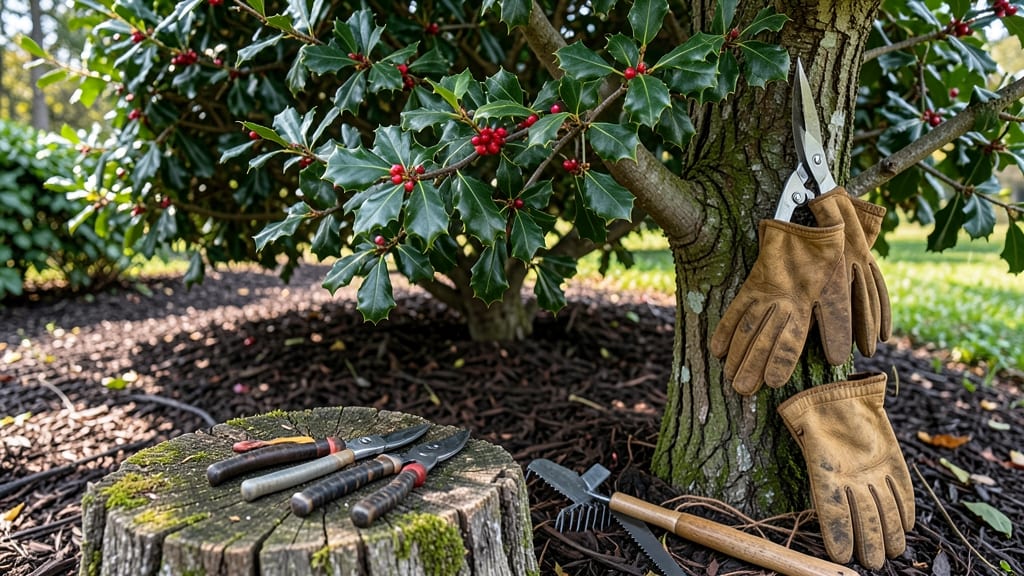
To prune holly trees, aim for late winter or early spring before new growth starts, protecting emerging buds and berry production. Avoid pruning during active growth or fall when birds depend on berries.
Timing matters because holly trees produce berries on old wood, meaning last year's growth bears fruit this year. 🌿 Pruning too late disrupts this cycle, while cutting in summer stresses the tree.
I've found that late winter (February-March) gives you the perfect window—trees are dormant, making them less vulnerable to disease, and you won't interfere with next year's berry crop.
What's interesting is how different holly varieties respond. For example, English holly (Ilex aquifolium) needs more aggressive shaping, while American holly (Ilex opaca) benefits from lighter pruning. Always use sharp, sterilized tools and make cuts just outside the branch collar to promote faster healing.
💡 In This Article
- Why Late Winter Pruning Works Best for Holly Trees
- Step-by-Step Guide to Pruning Holly Trees Safely
Why late winter pruning works best for holly trees
Holly trees produce berries on old wood—meaning last year's growth bears fruit this year. When you prune in late winter (typically February-March in most climates), you're cutting during the tree's dormant phase when it's not actively growing.
This timing minimizes stress because the tree isn't expending energy on new leaves or flowers. The cambium layer (the growth layer just under the bark) is inactive, so cuts heal cleaner and faster. 🌱
Sap flow dynamics also play a role. In winter, sap moves slowly, reducing the risk of excessive bleeding from pruning wounds. Compare this to summer pruning, where sap flows rapidly—cutting then can cause shock and invite pests.
Additionally, late winter pruning lets you see the tree's structure clearly after leaf drop, making it easier to identify dead or crossing branches. The 10-15% rule applies here: never remove more than this percentage of the canopy in one season to avoid overstressing the tree.
Berry production is another critical factor. Holly trees flower in spring, and those flowers develop into berries by fall. Pruning in late winter preserves next year's berry crop by leaving last year's branches intact.
For example, American holly (Ilex opaca) relies on these old branches for 80% of its fruit production. Cutting too late risks removing next year's potential berry-bearing wood. The 3-4 week window before bud break is ideal—watch for swollen buds as your cue to prune.
What happens if you prune at the wrong time? Summer pruning (June-August) can lead to sunscald on exposed branches and attracts borers attracted to fresh cuts. Fall pruning (September-November) harms wintering birds that rely on holly berries for food.
Even worse, pruning in late fall can stimulate new growth that won't harden off before winter, leaving tender shoots vulnerable to frost damage. The 12-15°F temperature range of late winter is perfect—cold enough for dormancy, but not so severe that the tree is stressed.
Different holly varieties have slight variations in their pruning windows. English holly (Ilex aquifolium) can tolerate slightly later pruning into early spring, while inkberry holly (Ilex glabra) prefers earlier cuts in late winter. Always research your specific variety's growth habits.
The key is to prune when the tree is fully dormant but before active growth resumes. This balance ensures you're working with a healthy, resilient plant that will reward you with lush foliage and vibrant berries. 🌿
One pro tip: If you must prune outside this window (like removing dead branches in summer), do it on a cool, overcast day to reduce stress. Always sterilize your tools with 70% isopropyl alcohol between cuts to prevent spreading disease.
The goal is to mimic natural pruning processes while minimizing harm to the tree's delicate flowering and fruiting cycles.