
Pruning
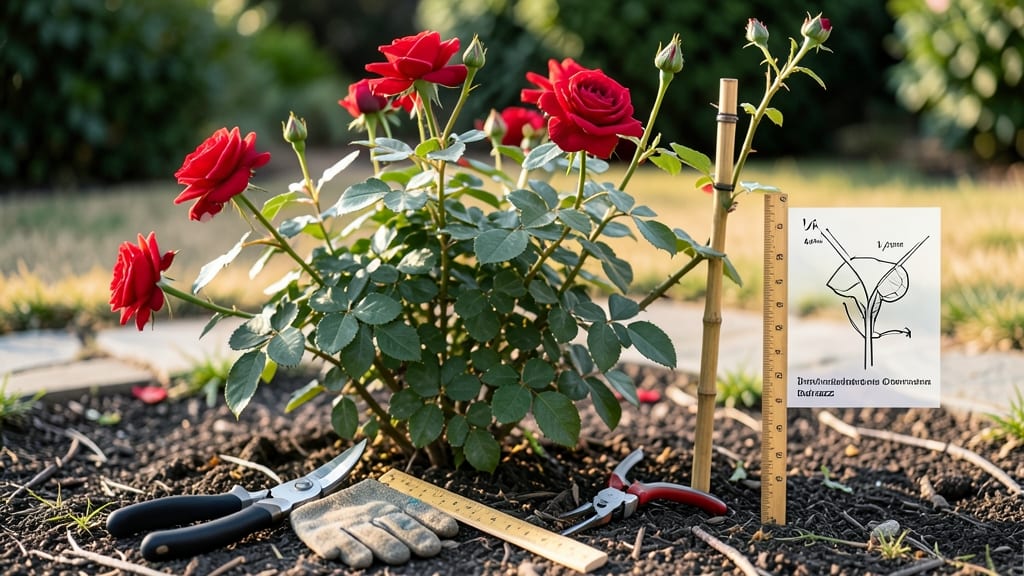
Pruning knockout roses back to 12-18 inches from the ground in late winter transforms them into blooming powerhouses by summer. ✂️ I’ve watched my own bushes go from leggy and sparse to lush, flower-covered shrubs just by following this one rule: cut just above an outward-facing bud, never into old, bare wood.
The key is timing—wait until after the worst cold snaps but before new growth starts, usually in February or March depending on your zone.
You’ll know you’ve pruned correctly when you see fresh, green shoots emerging within 2-3 weeks. The plant responds by focusing energy on new growth rather than maintaining old stems, which means more blooms and stronger stems.
Avoid the temptation to prune too aggressively—cutting back to the ground won’t give you better flowers, just a longer recovery time. Think of it like giving your rose a fresh start, not a haircut.
The payoff comes in June and July, when your bushes explode with continuous blooms instead of a few weak clusters. Proper pruning also makes the plant more resistant to diseases like black spot, since it improves airflow through the center.
Just remember: if you see bare, woody stems with no buds, you’ve gone too far—those won’t regrow.
For first-timers, grab a pair of sharp bypass pruners and a small bucket for clippings. Work in dry, sunny conditions to reduce disease spread, and always sterilize your tools with rubbing alcohol between cuts.
The first year might feel drastic, but your roses will thank you with months of nonstop color—and fewer headaches from tangled, overgrown branches.
📚 In This Guide
- What you need
- Instructions
- Tips and common mistakes
- Wrapping up and next steps
What you need
- ● Bypass pruners – Sharp, clean, and sturdy (1 pair, 5–8" blades for precision).
- ● Loppers – For thicker branches (1 pair, 8–12" reach).
- ● Hand saw – For stubborn, woody stems (1, with a fine-tooth blade).
- ● Gloves – Garden-grade, cut-resistant (1 pair, size to fit snugly).
- ● Disinfectant (70% isopropyl alcohol or bleach solution) – 1 small spray bottle (to sterilize tools between cuts).
- ○ Pruning sealant (optional) – For large cuts > ½" (1 small bottle, like Tanglefoot Tree Wound Pruning Seal).
- ● Bucket or trash bag – For pruned debris (1, 5+ gallon size).
- ● Notebook & pen – To sketch pruning cuts if needed (1 small notebook).
- ● Dormant season timing – Prune after the first hard frost but before new growth (typically late winter/early spring).
- ● Weather check – Choose a dry, calm day (no rain forecast for 24 hours).
- ● Safety gear – Long sleeves/pants, closed-toe shoes (to avoid thorns and debris).
- ● Rose identification – Confirm it’s a Knockout® rose (look for disease-resistant tags or hybrid labels).
- ● Sharpen your tools – Dull blades tear stems, inviting disease (use a sharpening stone or take them to a hardware store).
- ○ Wear a dust mask – Optional but helpful if your roses have heavy powdery mildew residue.
- ● Lay down a tarp – 1–2 yards to collect fallen leaves/debris easily.
Step-by-step guide to pruning Knockout roses in dormant season
Here's how to revive your roses and set them up for a spectacular blooming season.
✂️ Step 1: Wait for the Right Time to Prune
Prune your Knockout roses in late winter or early spring, just before new growth begins. The ideal time is when the plant is fully dormant but the soil is workable—not frozen or waterlogged. You'll know it's time when the buds haven't swollen yet, and the ground isn't muddy. Pruning too early can expose tender wood to cold damage, while waiting too long means you'll cut off new growth.
If you're unsure, check the weather forecast. Aim for a window of 3-4 weeks before your last frost date. This timing ensures the plant has enough time to recover before spring's warmer temperatures kick in. I always prune in February or March, depending on my local climate zone.
✂️ Step 2: Gather Your Tools and Safety Gear
You'll need a pair of clean, sharp pruning shears (or loppers for thicker branches) to make precise cuts without crushing the stems. Disinfect your tools with rubbing alcohol or a bleach solution before you start—this prevents spreading disease between cuts. Wearing gloves is a must, as roses can have thorns that leave painful scratches.
Have a bucket or bag ready to collect the pruned branches. You can compost these later, but avoid piling them near the base of the plant, as they can harbor pests or diseases. Grab a small brush to sweep up any debris left behind after pruning. Safety first: clear the area of tripping hazards and make sure the ground is stable before you begin.
✂️ Step 3: Identify and Remove Dead or Diseased Wood
Start by inspecting each branch for signs of damage. Dead wood is typically brown, brittle, and hollow when cut open. Diseased wood often has black spots, mold, or an unusual ooze. Snip these branches back to a healthy bud or growth point, cutting at a 45-degree angle just above an outward-facing bud. This angle helps water run off the cut and prevents it from pooling.
Don’t worry if you’re not sure about a branch—cut it back conservatively. It’s better to leave a little extra healthy wood than to accidentally remove too much. If you’re unsure, look for green tissue inside when you make a small cut. If it’s green, it’s alive; if it’s brown, it’s dead.
✂️ Step 4: Thin Out Crowded Branches for Better Airflow
Knockout roses can get leggy and overgrown, which reduces airflow and invites pests. Aim to open up the center of the plant by removing branches that cross or rub against each other. These branches compete for nutrients and can create wounds that attract disease. Cut back to a strong, outward-facing bud to encourage new growth in the right direction.
Focus on removing one-third of the oldest wood to rejuvenate the plant. You’ll see a mix of thick, mature branches and thinner, newer growth. The goal is to create a balanced shape with an open center. This step is where your rose will really transform—thinner branches mean fewer hiding spots for pests and better light penetration for blooms.
✂️ Step 5: Shape the Rose for Next Season’s Blooms
Now it’s time to shape the rose into a rounded, vase-like form. Cut back the remaining branches to 12-18 inches tall, depending on the size of your plant. Make your cuts just above a healthy, outward-facing bud. This encourages new growth to fill out the plant and creates a strong framework for next season’s flowers.
Step back occasionally to check your progress. The plant should look balanced, with no single branch dominating the shape. Avoid cutting back too aggressively—Knockout roses are resilient, but they still need some structure to support their abundant blooms. If you’re unsure, err on the side of leaving a little more length; you can always prune more later if needed.
🌱 Step 6: Clean Up and Apply Mulch
Once you’ve finished pruning, remove all the debris from the base of the plant and around the garden bed. This reduces the risk of disease and pests overwintering. Use your pruned branches for compost or dispose of them in yard waste. Sweep the area clean and apply a 2-3 inch layer of mulch around the base of the plant, keeping it 3-4 inches away from the stem to prevent rot.
Water the plant deeply after pruning to help it recover. The mulch will retain moisture and regulate soil temperature, giving your rose a strong start when new growth begins. Avoid fertilizing right after pruning—wait until you see new shoots emerging in early spring. This gives the plant time to focus on healing before putting energy into new growth.
Tips & tricks for pruning Knockout roses in dormant season
Here's what nobody tells you about pruning roses—these tricks will keep your plants healthy and blooming beautifully.
Timing is Everything: The 3-4 week window before your last frost date isn't just a suggestion—it's crucial. I learned this the hard way after pruning too early in a cold snap, which left my roses vulnerable to frost damage. Check your local frost dates and mark your calendar. If you're in a mild climate zone, early March is usually safe, but colder regions should aim for late February. The key is catching that sweet spot when buds haven't swollen yet but the ground is workable.
Cutting Technique Matters: That 45-degree angle above an outward-facing bud isn't just decorative—it's essential. This angle helps water run off the cut, preventing rot, while the outward-facing bud encourages new growth to spread outward rather than inward. I always test my angle by holding the shears at a slight diagonal before making the cut. For thicker branches, make the cut slightly above where two buds meet to ensure clean healing. Remember, you can always prune more later if needed, but you can't undo an overzealous cut.
Shape with Purpose: When shaping your rose to that 12-18 inch height, think of it as creating a vase shape. This isn't just about looks—it's about maximizing airflow and light penetration. I find it helpful to visualize the plant as a clock, with branches evenly spaced like numbers. This balanced approach prevents overcrowding and gives each branch room to grow. If you're unsure about a cut, step back and look at the overall shape—you'll notice when something feels off.
Post-Pruning Care: That 2-3 inch layer of mulch isn't just for looks—it's a game-changer. Keep it 3-4 inches away from the stem to prevent rot, but don't skimp on the coverage. The mulch acts like a blanket, regulating soil temperature and retaining moisture. I always water deeply after pruning to help the plant recover, but I wait to fertilize until I see new shoots emerging in spring. This gives the rose time to focus on healing rather than producing foliage.
Pro Tips for How Far Back Can You Prune Knockout Roses
- Here's what nobody tells you about pruning roses—these tricks will keep your plants healthy and blooming beautifully.
- Timing is Everything: The 3-4 week window before your last frost date isn't just a suggestion—it's crucial.
- Cutting Technique Matters: That 45-degree angle above an outward-facing bud isn't just decorative—it's essential.
Frequently asked questions
Got questions about pruning your Knockout roses? You’re not alone—this task can feel tricky, especially when it comes to timing and technique. Below, we’ve rounded up the most common questions (and answers!) to help you prune like a pro.
How far back should I prune Knockout roses in late winter?
For dormant-season pruning (late winter/early spring), cut back one-third to one-half of the plant’s height. Look for outward-facing buds—prune just above them to encourage bushy, healthy growth. Avoid over-pruning; Knockout roses are resilient but need some structure to bloom well!
Can I prune Knockout roses too early in the season?
Yes, but timing matters! Pruning before the last frost (when temps are consistently above 40°F) risks exposing tender new growth to cold damage. Wait until after the danger of frost but before buds swell (early to mid-spring) for the best results. Patience pays off!
What if I accidentally prune too much—will my Knockout roses die?
Knockout roses are hardy and forgiving, but severe over-pruning (cutting back more than 50%) may delay blooming. If you’ve already gone too far, don’t panic! Water deeply, fertilize lightly, and avoid pruning again until next winter. They’ll recover and bounce back stronger.
Do I need to sterilize my pruners after trimming Knockout roses?
Absolutely!
Sterilizing pruners with rubbing alcohol or bleach water (1 part bleach to 9 parts water) prevents spreading disease. Knockout roses are disease-resistant, but clean tools = healthier plants. Wipe blades before and after each use for best results.
Can I prune Knockout roses in summer to encourage more flowers?
While Knockout roses don’t need summer pruning, you can lightly trim (up to 10%) to shape the plant or remove dead blooms. Avoid heavy pruning—it stresses the plant and may reduce fall/winter blooms. Focus on deadheading spent flowers instead for continuous color!
Wrapping up and next steps
Pruning your Knockout Roses in late winter or early spring can work wonders—just remember, you can safely cut back one-third to half of the previous year’s growth without stressing the plant. The key is to avoid over-pruning and always use clean, sharp tools to promote healthy, abundant blooms.
With the right technique, your roses will reward you with vibrant flowers and robust growth all season long! 🌸
Ready to give it a try? Grab your pruners, mark those cuts, and watch your Knockout Roses thrive. For extra confidence, check out our FAQs or review your tools—then get pruning! 🌱