
Pruning
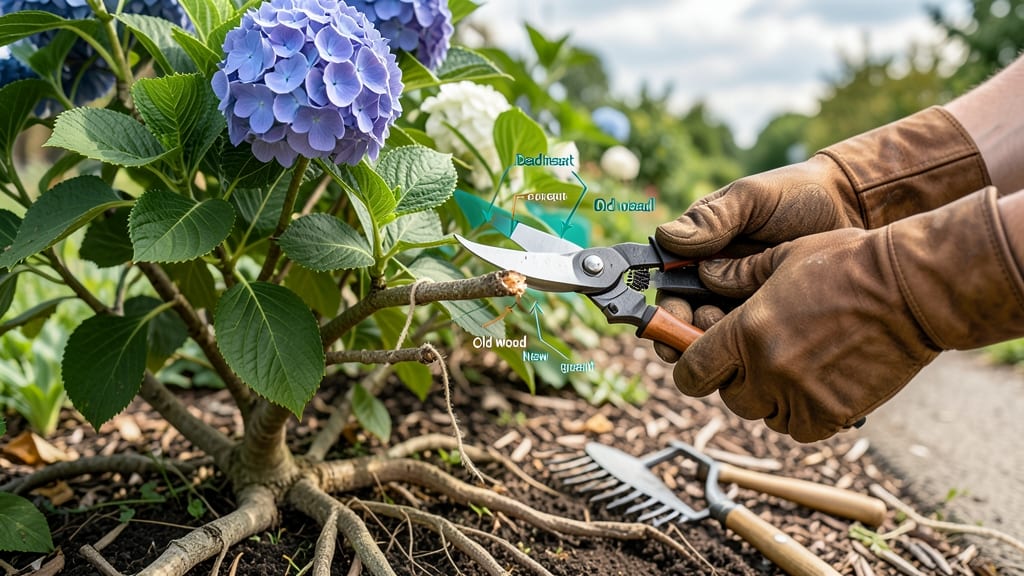
You need to prune hydrangeas to encourage healthy growth, but the timing varies by type—late summer for mophead and lacecap varieties, while panicle and oakleaf types thrive with early spring pruning. Avoid pruning if blooms emerge on last year's wood unless reshaping is necessary.
Hydrangeas respond dramatically to proper pruning, as it stimulates new growth and prevents overcrowding. 🌸 The key difference lies in bloom timing: mophead and lacecap types produce flowers on current season's growth, so pruning after blooming ensures next year's flowers.
Meanwhile, panicle and oakleaf hydrangeas bloom on old wood, making late pruning risky. I always check for flower buds before cutting—if they're already forming, wait until next season.
For best results, use clean, sharp pruners to make angled cuts just above a leaf node or bud. Remove any dead, diseased, or crossing branches first, then shape the plant by thinning out crowded stems.
After pruning, water deeply and apply a balanced fertilizer to support new growth. This approach keeps your hydrangeas lush and blooming abundantly for years.
💡 In This Article
- When and Why to Prune Different Hydrangea Varieties
- Step-by-Step Guide to Pruning Hydrangeas by Season
When and why to prune different hydrangea varieties
The science behind hydrangea pruning revolves around how each variety produces flowers. Mophead and lacecap types (like 'Endless Summer') bloom on new wood, meaning their flowers develop on current season's growth.
This is why you prune them in late summer or early fall—after blooming, but before the first hard frost. Cutting back these varieties too early removes potential flower buds, while waiting too late risks winter damage to tender new growth.
Panicle and oakleaf hydrangeas (such as 'Limelight' or 'Alice') are different—they bloom on old wood, meaning flowers form on stems from the previous year. Pruning these in late summer removes the current year's buds, leaving you with no blooms next season.
That's why they need early spring pruning, right after the last frost but before new growth begins. This timing preserves last year's flower buds while shaping the plant for the coming season.
Identifying your hydrangea type is crucial. Mophead varieties have large, rounded flower heads, while lacecaps feature flat, lacy blooms. Panicle types have cone-shaped flowers, and oakleaf varieties have unique, oak-shaped leaves. 🌿 If you're unsure, observe where flowers appear: on current growth (new wood) or last year's stems (old wood).
This visual cue determines your pruning window.
Improper timing can drastically reduce blooms. For example, pruning a panicle hydrangea in late summer removes its flower buds entirely, leaving you with a plant that produces no blooms the following year. Conversely, pruning a mophead variety too late risks exposing tender growth to winter cold, potentially killing the plant.
The key is matching your pruning schedule to your hydrangea's natural growth cycle and bloom timing.
Consider this: a mophead hydrangea pruned in late August will have 6-8 weeks of new growth before winter, while one pruned in October may have only 2-4 weeks of growth before cold sets in. This shorter window increases frost damage risk.
For panicle types, pruning in early March gives the plant 3-4 months of growth before blooming season, while late spring pruning might delay blooms or reduce flower quantity.