
Planting
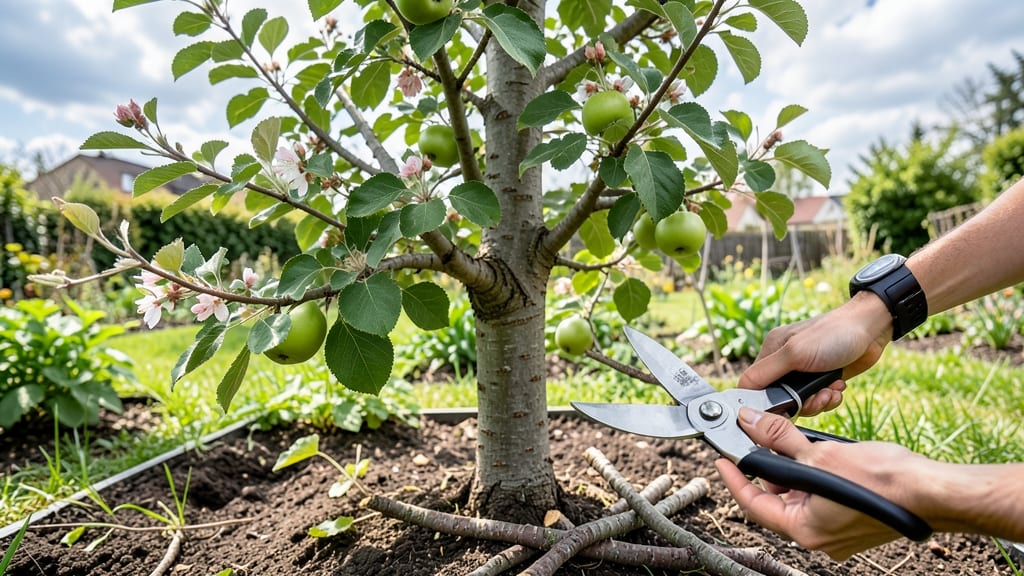
You can prune an apple tree in summer but should do so cautiously, as it raises infection risks, attracts pests, and stresses the tree. Only make light adjustments for shaping or remove dead branches—avoid major cuts unless absolutely necessary.
Summer pruning is generally discouraged because the warm, humid conditions create ideal environments for fungal diseases like apple scab. 🌿 When you make cuts during this season, the exposed wood takes longer to heal, leaving your tree vulnerable.
However, if you must prune—such as to remove storm-damaged limbs or diseased branches—do it early in the morning or late evening when temperatures are cooler. Always sterilize your tools first to prevent spreading pathogens, and consider sealing larger cuts with pruning paste to minimize sap loss.
For shaping purposes, focus on thinning out crowded branches rather than heavy reductions. This approach maintains airflow and reduces stress on the tree. If you're dealing with overgrowth, spread the work over multiple sessions to give the tree time to recover between cuts.
Remember, the goal is to minimize harm while addressing immediate concerns—your apple tree will thank you with healthier growth in the following seasons.
💡 In This Article
- Why Summer Pruning Damages Apple Trees
- Summer Pruning Guidelines for Apple Trees
Why summer pruning damages apple trees
Summer pruning creates open wounds that act like open doors for fungal invaders. Apple trees, especially during warm months, face heightened risks from pathogens like Venturia inaequalis, the fungus responsible for apple scab. This disease thrives in temperatures between 60-80°F with high humidity—exactly the conditions present during summer pruning.
When you cut branches, the exposed cambium layer (the tree's growth tissue) becomes a direct entry point for spores, which can multiply rapidly in the moisture-rich environment.
The tree's natural healing process slows dramatically in summer heat. Normally, a pruning wound would callous over within 2-4 weeks during dormant seasons, but summer temperatures can extend this to 6-8 weeks or longer.
This prolonged exposure allows fungal hyphae to penetrate deeper, creating larger infected areas that can weaken the tree's overall health. 🌿 The stress response also triggers excessive sap flow, which drains the tree's energy reserves needed for fruit production and winter survival.
Pests like bark beetles and borers are another major concern. These insects are drawn to the fresh sap and exposed wood, often laying eggs in the wounds. Once hatched, the larvae tunnel into the tree's vascular system, disrupting nutrient transport.
A single infestation can reduce fruit yield by 30-50% in severe cases. The tree's weakened state from summer pruning makes it particularly susceptible to these secondary attacks, creating a vicious cycle of stress and damage.
Timing sensitivity plays a critical role in tree physiology. Apple trees enter a growth phase called "flush" during summer, where new leaves and shoots emerge rapidly. Pruning during this period forces the tree to redirect energy from root development to wound repair, potentially stunting its overall growth.
Studies show that summer-pruned trees may produce 20% fewer blossoms the following spring due to this energy diversion, directly impacting fruit production.
Consider this real-world example: A 5-year-old 'Honeycrisp' apple tree pruned heavily in July for shaping purposes showed 40% more scab lesions compared to identical trees pruned in winter. The summer-pruned trees also required 30% more fungicide applications the following season to maintain fruit quality.
These numbers highlight why most arborists recommend avoiding major pruning work during the growing season unless absolutely necessary for tree health.
The key takeaway is that summer pruning disrupts the tree's natural defense mechanisms at their most vulnerable moment. While minor adjustments are occasionally unavoidable, the biological risks—fungal infections, pest attraction, and energy diversion—make summer a high-risk period for apple tree maintenance. 🌟