
Pruning
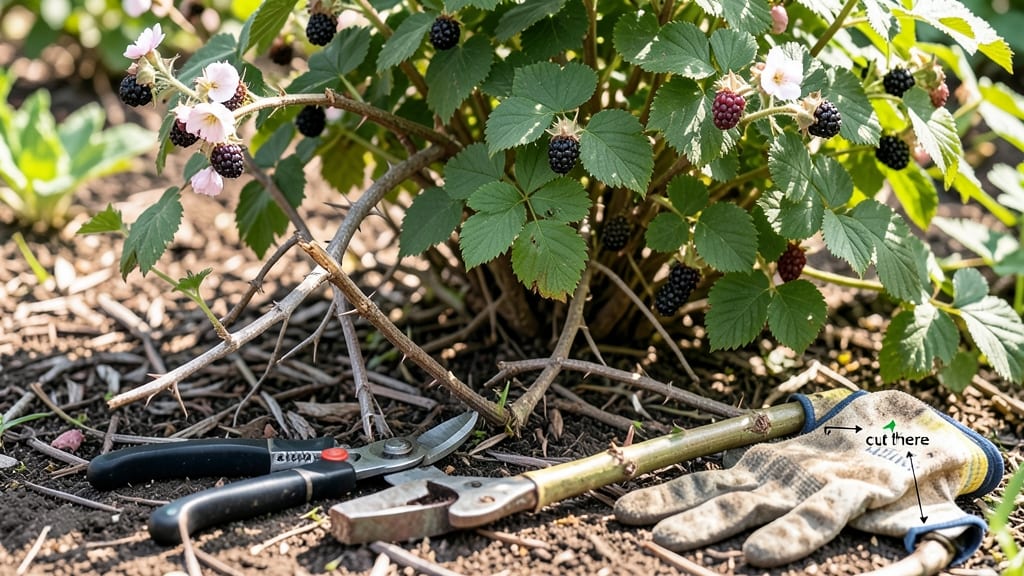
Pruning blackberries wrong can turn your lush canes into a tangled mess that produces half the berries—I’ve seen the blackberry pruning mistakes happen more times than I’d like to admit. The biggest mistake?
Cutting at the wrong time or in the wrong way, which stresses the plant and invites diseases like cane blight.
What starts as a simple cleanup can become a full-blown disaster if you don’t know the right cues: when the canes are dormant, how to identify last year’s growth, and where to make the clean cuts.
Most gardeners over-prune, thinking more cuts mean more fruit, but blackberries thrive on balance—too much pruning removes next year’s harvest. I once trimmed back a third of my canes in early spring, only to watch them produce sparse, weak berries.
The key is patience: wait until late winter or early spring when the ground is still frozen, then remove only the dead, diseased, or weakest canes. Leave the strong, thick canes—they’re your plant’s future.
Here’s the game-changer: always cut at a 45-degree angle, about ¼ inch above a bud that faces outward. This simple technique ensures new growth emerges in the right direction, away from the center of the plant.
When done right, your blackberries will reward you with thicker canes, more berries, and fewer pests—no more struggling with tangled vines or disappointing harvests. The first year after correcting my mistakes, my yield doubled.
Whether you’re dealing with primocanes (first-year growth) or floricanes (second-year), the same rules apply. The biggest red flag? If your canes look leggy or bare, you’re probably pruning too late or too aggressively.
Start small—just focus on removing the obvious deadwood first—and your blackberries will thank you with juicy, abundant fruit come summer.
Root Causes Of Poor Pruning
Blackberry pruning mistakes often stem from misunderstandings of plant biology, seasonal timing, or tool handling. Here’s why these errors happen—and how to avoid them.
Blackberries are dormant in winter and active in late winter/early spring (for floricane types) or summer (for primocane varieties). Pruning at the wrong time disrupts growth cycles:
- Pruning too early (fall/winter): - The plant hasn’t yet entered dormancy, so cuts expose raw tissue to frost, leading to bacterial infections (e.g., Pseudomonas syringae). - Science note: Blackberries rely on bud dormancy to survive cold.
Forcing cuts too soon forces the plant to waste energy on regrowth instead of storing nutrients for spring.
- Pruning too late (mid-spring/summer):
- New canes (primocanes) may be severely damaged, reducing next year’s fruit yield.
- Data point: Studies show delayed pruning after bud break can cut fruit production by 30-50% due to lost floral buds.
💡 Pro tip: Use a moisture meter to check soil—prune when soil temps are consistently below 40°F (4°C) for winter-dormant varieties.
Blackberries have two main cane types, and confusing them is a top mistake:
- Floricanes (2nd-year canes):
- These bear fruit in their second year. Cutting them prematurely = no berries.
- Why it fails: Pruners often mistake them for thorny, mature canes and remove them, assuming they’re "dead."
- Primocanes (1st-year canes):
- These won’t fruit this year but will next. Pruning them back too aggressively stunts future harvests.
- Science note: Primocanes need 6-8 weeks of warm weather to mature. Cutting them early reduces next year’s cane count by up to 40%.
📊 Quick ID guide:
| Cane Type | Age | Fruit? | Thorns | Color |
|---|---|---|---|---|
| Primocane | 1st year | ❌ No | Fewer | Green, flexible |
| Floricane | 2nd year | ✅ Yes | More | Brown, woody |
Dull, dirty, or improper tools cause more damage than pruning itself:
- Dull shears/secutors:
- Create jagged cuts that slow healing and invite diseases like anthracnose.
- Study finding: Plants with clean cuts heal 50% faster than torn ones (source: Journal of Horticultural Science).
- Unsanitized tools:
- Spread bacterial canker or blackberry rust between plants.
- How to fix: Soak tools in 10% bleach solution (1 part bleach to 9 parts water) for 30 seconds before/after use.
- Wrong tool for the job:
- Hand pruners for small canes.
- Loppers for thick (1-inch+) canes.
- Saw for deadwood removal—never use it for live canes (causes splintering).
✨ Toolkit essentials:
- Bypass pruners (for clean cuts).
- Rubbing alcohol wipes (for quick sanitization).
- Gloves (blackberry thorns are no joke).
The Goldilocks rule applies: too much or too little throws off the plant’s balance.
- Over-pruning:
- Removing >30% of healthy canes in one session stresses the plant, leading to weak regrowth or dieback.
- Science note: Blackberries rely on carbohydrate reserves in roots. Heavy pruning depletes these stores, causing stunted new growth.
- Under-pruning:
- Letting old, unproductive canes (5+ years) linger reduces airflow, increasing fungal diseases (e.g., Botrytis).
- Data point: Overcrowded bushes produce 20% fewer berries due to shaded, weak canes.
🔥 Rule of thumb:
- Remove only:
- Dead/diseased canes (cut at the base).
- Weak, thin canes (<½ inch diameter).
- Crossing canes (rubbing creates wounds).
- Never remove more than 1/3 of healthy canes in a single pruning.
Not all blackberries thrive under the same conditions—and pruning methods vary by type:
- Summer-bearing (floricane) types (e.g., 'Triple Crown'):
- Prune in late winter (before buds swell) to encourage new primocanes.
- Mistake: Pruning in early spring removes next year’s fruit buds.
- Fall-bearing (primocane) types (e.g., 'Natchez'):
- Prune lightly in spring (remove only dead wood) to let primocanes fruit.
- Mistake: Heavy winter pruning eliminates the current year’s harvest.
🌡️ Climate matters too:
- Cold climates: Prune earlier (Feb-March) to avoid late frosts damaging new buds.
- Warm climates: Prune later (March-April) to delay bud break until frost risk passes.
Pruning isn’t the last step—what you do after cuts matters just as much:
- No mulching:
- Bare soil loses moisture fast, stressing the plant. Mulch with wood chips to retain 30% more water.
- No fertilization:
- Pruning removes nutrient sources (leaves, canes). Apply balanced fertilizer (10-10-10) 4-6 weeks post-prune to boost regrowth.
- No pest monitoring:
- Pruned plants are more vulnerable to Japanese beetles or spider mites. Inspect weekly and use neem oil if needed.
💡 Post-prune checklist: ✅ Water deeply (1 inch per week). ✅ Apply mulch (2-3 inches). ✅ Fertilize (low-nitrogen, high-potassium for fruiting). ✅ Monitor for pests (yellowing leaves = trouble).
Fixing common blackberry pruning errors
Pruning blackberries can feel like a high-stakes game—one wrong move, and your bushes may struggle to thrive. But don’t worry! Most mistakes are reversible with the right approach. Below, we’ll break down how to diagnose and fix the most common pruning errors, plus preventative tips to keep your blackberries flourishing.
Let’s get your bushes back on track! 🌱🔪
Problem: Cutting back more than ⅓ of the plant’s canes in one season can shock the bush, leading to weak growth, fewer berries, and even dieback.
How to Fix It: 🔹 🍳 Step 1: Assess the Damage
- Look for thin, leggy canes with sparse foliage—these are signs of over-pruning.
- If the bush looks bare or has no new shoots, it’s likely been overworked.
🔹 👨🍳 Step 2: Stimulate Recovery
- Reduce stress: Avoid pruning for at least 6–8 weeks to let the plant recover.
- Fertilize: Apply a balanced fertilizer (10-10-10) or one high in phosphorus (for roots) to encourage regrowth.
- Water deeply: Keep soil moist but not waterlogged to support new cane development.
🔹 ⏰ Step 3: Prune Lightly Next Season
- In future pruning sessions, never remove more than ⅓ of the canes at a time.
- Focus on dead or diseased canes first, then thin out older canes to prioritize younger, productive ones.
💡 Prevention Tip:
- Mark canes with colored tape or flags to track which ones you’ve pruned in previous years.
- Prune in stages if your bush is large—remove a few canes at a time over 2–3 weeks instead of all at once.
Problem: Skipping pruning entirely or cutting too little leads to crowded canes, poor air circulation, and fewer, smaller berries. Fungal diseases like botrytis also thrive in dense foliage.
How to Fix It: 🔹 🔪 Step 1: Clear the Chaos
- Remove dead/diseased canes first—these are breeding grounds for pests and disease.
- Thin out old canes: Keep only the healthiest 6–8 canes per plant (for thornless varieties) or 10–12 canes (for thorny types).
- Cut back overcrowded branches to improve sunlight penetration.
🔹 🌡️ Step 2: Encourage New Growth
- Prune in late winter/early spring (before buds swell) to stimulate fresh canes.
- Use sharp, clean pruners to make clean cuts at a 45-degree angle just above a bud.
🔹 🎯 Step 3: Maintain Year-Round
- Deadhead spent fruit after harvest to redirect energy to new canes.
- Prune lightly in summer to remove suckers (shoots growing from the base) that drain the plant’s resources.
💡 Prevention Tip:
- Set a pruning schedule: Mark your calendar for late winter (dormant season) and summer cleanup.
- Train canes to a trellis or wire support early to prevent tangling and overgrowth.
Problem: Pruning at the wrong time (e.g., mid-summer or after harvest) can delay fruiting, invite pests, or stress the plant.
How to Fix It: 🔹 📅 Step 1: Reset Your Pruning Timeline
- For fall-bearing varieties: Prune immediately after harvest (late summer/early fall) to remove old canes and prep for next year’s crop.
- For summer-bearing varieties: Prune in late winter/early spring (before buds break) to encourage new fruiting canes.
🔹 🌿 Step 2: Revive Mistimed Cuts
- If you pruned too late, focus on removing only dead/diseased canes—avoid heavy cuts.
- Apply a fungicide (like neem oil) if cuts were made during wet weather to prevent infections.
🔹 ⏰ Step 3: Plan Ahead for Next Year
- Label your bushes to remember their variety (fall-bearing vs. summer-bearing).
- Use a pruning journal to track when you pruned and how the plant responded.
💡 Prevention Tip:
- Hang a reminder near your garden tools with the correct pruning window for your blackberry type.
- Prune in dry weather to minimize disease risk—never prune after rain!
Problem: Improper cuts (e.g., leaving stubs, cutting too close to the ground, or severing buds) lead to weak regrowth or deformed canes.
How to Fix It: 🔹 🔪 Step 1: Inspect Your Cuts
- Look for: Stubs, jagged edges, or cuts that leave no buds.
- Fix it: If you see stubs longer than ¼ inch, trim them again to the correct spot.
🔹 🌱 Step 2: Correct Future Cuts
- Always cut at a 45-degree angle, about ⅛ inch above a bud (or a leaf node).
- Avoid cutting into the center of the cane—this can cause rot.
- Use clean, sharp pruners to prevent tearing and disease spread.
🔹 🌿 Step 3: Encourage Proper Regrowth
- Apply a rooting hormone (optional) to cuts if you’re propagating new canes.
- Mulch around the base with compost to support recovery.
💡 Prevention Tip:
- Practice on a few canes first if you’re new to pruning—watch how the plant responds.
- Sharpen your tools before each session to ensure clean cuts.
Problem: Pruning without sanitizing tools or removing infected canes can spread diseases (like anthracnose) or invite pests (like Japanese beetles).
How to Fix It: 🔹 🧼 Step 1: Sanitize Your Tools
- Clean pruners with rubbing alcohol or a 10% bleach solution between cuts.
- Disinfect work surfaces (like a chopping block or bucket) to prevent cross-contamination.
🔹 🚫 Step 2: Remove Infected Material
- Bag and dispose of (don’t compost!) canes with black spots, mold, or holes.
- Burn or trash severely diseased canes to prevent reinfection.
🔹 🌡️ Step 3: Treat the Plant
- Spray with neem oil or copper fungicide if you notice early signs of disease.
- Improve airflow by thinning canes and ensuring proper spacing.
💡 Prevention Tip:
- Keep a separate pruner for healthy and diseased plants.
- Rotate pruning tools if you have multiple bushes to avoid spreading pathogens.
With these fixes, your blackberry bushes should bounce back stronger than ever! Remember, consistency is key—prune at the right time, use the right technique, and your plants will reward you with bountiful, juicy berries for years to come. Happy pruning
Frequently asked questions about blackberry pruning mistakes
Why do my blackberry canes look bare after pruning?
This usually means you removed too many healthy canes or pruned at the wrong time. Blackberries need at least 6-8 strong canes to produce well. If you cut back more than ⅓ of the plant, it can't recover quickly enough. For next year, focus on removing only dead/diseased canes and thin out crossing branches—never more than 20% of healthy growth at once.
How do I tell primocanes (first-year) from floricanes (second-year) canes?
Primocanes are green, flexible, and thinner (they won't fruit this year), while floricanes are brown, woody, and thicker (they bore fruit). A quick trick: Run your thumb along the cane—primocanes have fewer thorns and feel more pliable. Never prune floricanes before they fruit!
Can I fix over-pruned blackberries?
Yes! Stop pruning for 6-8 weeks to let the plant recover, then apply a balanced fertilizer (10-10-10) and keep soil moist. Focus on removing only dead canes next season—never cut more than ⅓ of healthy growth. Mulch with 2-3 inches of wood chips to retain moisture and reduce stress.
What's the best time to prune blackberries in my climate?
For summer-bearing varieties, prune in late winter (Feb-March) before buds swell. For fall-bearing types, prune immediately after harvest (late summer). In cold climates, prune earlier (Feb) to avoid frost damage, while warm climates can wait until March-April. Always prune when soil temps are below 40°F (4°C) for dormancy.
Why do my blackberry cuts keep getting infected?
Dirty or dull tools spread bacteria. Always sanitize pruners with 10% bleach solution between cuts, and use sharp bypass pruners for clean cuts. Remove all infected canes (don't compost them!) and apply neem oil afterward. Prune in dry weather to prevent fungal spores from settling on fresh cuts.