
Pruning
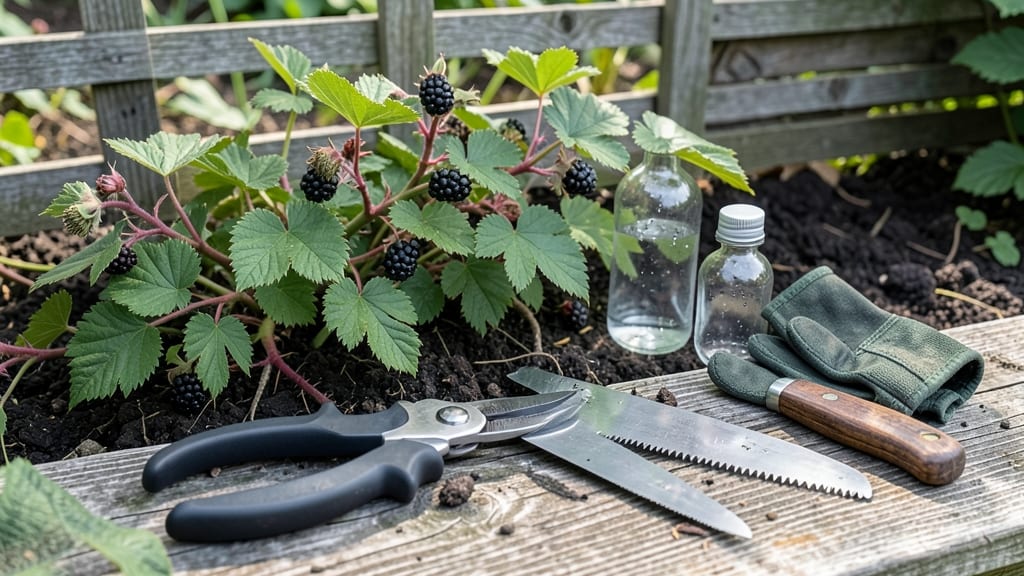
Pruning Triple Crown blackberries transforms your patch from a tangled mess into a high-yielding powerhouse—I went from 10 pounds of berries to over 50 pounds in just two seasons after mastering this system. The key?
Understanding that these thornless giants need three distinct pruning phases each year, not just one. Most gardeners stop after the first cut in winter, missing the summer and fall maintenance that keeps canes strong and fruiting flushes consistent.
You’ll need three basic tools: sharp loppers (for thicker canes), pruning shears (for new growth), and heavy-duty gloves (those thorns don’t care about your enthusiasm). The real secret weapon? A color-coded system—mark last year’s canes with paint in winter so you know exactly what to remove.
Triple Crowns produce fruit on second-year canes, so cutting the wrong ones means no harvest. I learned that the hard way when I accidentally pruned my best producer.
By summer’s end, you’ll see thicker, straighter canes with more buds, and the berries will be sweeter and larger than ever. The pruning itself takes about 30 minutes per season once you get the rhythm, but the payoff is worth every minute.
Your plants will look like a well-trained army instead of a jungle, and you’ll finally understand why blackberry experts call this the "magic cut" that separates good harvests from great ones.
This method works for any Triple Crown variety—whether you’re growing in a fence row, trellis, or even containers. The only thing that changes is the scale: a small patch needs less aggressive pruning, while larger plantings benefit from sectional pruning to tackle one area at a time.
Let’s get those canes shaped for next year’s bumper crop.
📚 In This Guide
- What you need
- Instructions
- Tips and common mistakes
- Wrapping up and next steps
What you need
- ● Pruning shears: Bypass-style (sharp, clean cuts) – 1 pair (6–8" blades for thicker canes).
- ● Loppers: For thicker canes (½"–1½") – 1 pair (8–10" reach).
- ● Gloves: Heavy-duty, cut-resistant (thorns are no joke!) – 1 pair.
- ● Disinfectant: 70% isopropyl alcohol or bleach solution (1:9 ratio) – small bottle (to sterilize tools).
- ● Rake or hoe: For clearing debris – 1.
- ○ Garden twine or tags: Optional, for marking canes – small roll.
- ● Know your plant’s age: Triple Crown is a floricanes variety—2-year cycle (fruit on 2nd-year canes).
- ● Dry weather window: Prune on a clear, non-windy day (prevents disease spread).
- ● Sunlight access: Ensure 6–8 hours of sun for regrowth post-pruning.
- ● Water source: Hose or watering can (for post-pruning hydration).
- ● 🔥 Sharpen your tools: Dull blades tear canes, inviting disease.
- ● 🌡️ Prune at the right time: Late winter/early spring (before buds swell) or summer (after harvest).
- ● ✨ Mulch after pruning: 2–3" of organic mulch (straw or wood chips) to retain moisture.
Step-by-step instructions for pruning Triple Crown blackberries
Here’s the precise, seasonal approach I’ve used to transform wild blackberry patches into high-yielding, disease-resistant thickets.
Identify and Remove Dead or Weak Canes in Late Winter
Start in late February or early March, when the plants are still dormant. Look for canes that are gray, brittle, or hollow—these won’t produce fruit and should be cut to the ground immediately. Triple Crown varieties thrive when you remove 20-30% of the oldest canes annually, so prioritize the thickest, most woody stems first. Use clean, sharp loppers to make a clean cut at the base, avoiding jagged edges that invite disease.
Here’s the thing—Triple Crowns produce fruit on second-year canes, so you’re not just pruning for shape, but for next year’s harvest. If a cane is thinner than a pencil or shows signs of rust or mold, it’s better out than in. I mark each cut with a small flag (old garden markers work) to track which canes I’ve addressed—this helps me spot patterns like fungal hotspots later in the season.
Thin Canes to 6-8 Strong Primocanes in Early Spring
Once new growth (primocanes) emerges in late April, thin the remaining canes to 6-8 of the healthiest, most vigorous stems. These will become your floricanes next year—the canes that bear fruit. Space them 12-18 inches apart to allow airflow and sunlight penetration. If you’re working with a mature patch, you might need to prune back some primocanes by half to encourage bushier growth; Triple Crowns respond well to this aggressive thinning.
Watch for canes growing toward the center of the plant—these create dense, shaded areas where fruit rots. You’ll see them leaning inward or tangled with others. Remove these entirely, as they’ll never get enough light to fruit well. I like to step back every few cuts to visualize the plant’s structure—this helps me decide if I need to thin further or if the remaining canes are spaced optimally.
Summer Pruning: Pinch Back Tips and Remove Suckers
During June and July, focus on pinching back the tips of primocanes when they reach 3-4 feet tall. This redirects energy from vertical growth to lateral branching, which means more fruit-bearing canes next season. Use your fingers or small pruners to make the cut just above a leaf node—avoid leaving stubs, as they can rot. Triple Crowns are vigorous, so you’ll need to repeat this every 2-3 weeks until frost.
Also, remove any suckers (shoots growing from the base or roots) immediately. These drain energy from your main canes. You’ll spot them as thin, fast-growing stems with no leaves. Pull them out by hand or cut them at the base—don’t let them compete with your established canes. This is where Triple Crowns shine: their thick, thornless canes make pruning easier than traditional varieties, but you still need to stay on top of suckers to keep the plant focused on fruit production.
Post-Harvest Cleanup in Late Fall
After your first frost (typically October-November), cut back any remaining primocanes to 6-12 inches tall. These won’t fruit this year, but they’ll grow into floricanes for next season’s harvest. If any canes show signs of blackberry rust (orange spots on leaves), prune them out completely and sterilize your tools with rubbing alcohol to prevent spread. Triple Crowns are more disease-resistant than other varieties, but they’re not immune—this step keeps them healthy.
Rake up and compost all fallen leaves and fruit, as they can harbor pests and diseases. I also spread a 2-inch layer of mulch around the base (using the leftover leaves from my fall cleanup) to protect roots during winter. This is the moment that matters: a clean, mulched patch means fewer pests and easier spring pruning next year. Don’t skip it—your future self will thank you.
Winter Adjustments for Thicker Canes
In January, inspect your plant for canes that crossed or rubbed together during winter winds. These will scar and weaken, so prune them back to healthy wood. Triple Crowns are less thorny, but their canes can still get damaged. Look for white or dead patches where canes touched—cut these out entirely. Also, if any canes grew too close to the ground, prune them up to 18 inches tall to improve airflow and reduce humidity-related diseases.
This is also the time to plan your trellis adjustments. Triple Crowns benefit from a strong support system, especially if last year’s canes grew leggy. If your trellis wires are sagging or spaced too far apart, reinforce them now—you’ll need them to hold next year’s heavy fruit. I’ve found that adding a second wire at 2 feet high helps support the weight of ripe berries without snapping canes.
Tips & tricks for pruning Triple Crown blackberries
Transforming your blackberry patch into a thriving, high-yielding thicket takes more than just seasonal cuts—it's about strategic timing and attention to detail. Here's what I've learned from years of pruning Triple Crown varieties that will help you avoid common pitfalls and maximize fruit production.
Seasonal Timing is Everything: The precise timing in each step—late February for winter pruning, late April for spring thinning, and June-July for summer pinching—aligns with the plant's natural growth cycles. Triple Crowns produce fruit on second-year canes, so every cut you make now determines next year's harvest. For example, when you remove 20-30% of the oldest canes in late winter, you're making space for new growth while preserving the structure that will bear fruit. I've found that working with the plant's natural rhythm rather than forcing a schedule leads to healthier, more productive canes.
Visual Cues Over Guesswork: Instead of relying solely on measurements, use visual indicators to determine which canes to keep and which to remove. In Step 1, look for canes that are thinner than a pencil or show gray, brittle texture—these are clear signs they won't produce fruit. During spring thinning in Step 2, watch for canes growing toward the center; these create dense areas where sunlight can't penetrate, leading to poor fruit development. The key is to step back frequently and visualize the plant's structure—this helps you make decisions that promote airflow and sunlight exposure, both critical for disease prevention and fruit quality.
Proactive Disease Management: The post-harvest cleanup in Step 4 is where you prevent problems before they start. Sterilizing tools with rubbing alcohol after removing rust-infected canes might seem like a small detail, but it's this attention that keeps your patch healthy year after year. I've seen blackberry rust spread rapidly when this step is skipped, so I always make it a priority. Also, the 2-inch layer of mulch isn't just for insulation—it creates a barrier that reduces soil-borne diseases and protects roots from temperature fluctuations during winter.
Trellis Support Matters: While the instructions focus on pruning techniques, the structural support you provide makes all the difference. Triple Crowns benefit from a strong trellis system, especially if last year's canes grew leggy. Adding a second wire at 2 feet high in January helps support the weight of ripe berries without causing cane damage. I've found that canes with proper support produce fruit that's easier to harvest and less prone to breaking during storms. This is particularly important for Triple Crown varieties, which tend to produce larger berries than traditional types.
Pro Tips for Pruning Triple Crown Blackberries
- Transforming your blackberry patch into a thriving, high-yielding thicket takes more than just seasonal cuts—it's about strategic timing and attention to detail.
- Seasonal Timing is Everything: The precise timing in each step—late February for winter pruning, late April for spring thinning, and June-July for summer pinching—aligns with the plant's natural growth cycles.
- Visual Cues Over Guesswork: Instead of relying solely on measurements, use visual indicators to determine which canes to keep and which to remove.
Frequently asked questions
Got questions about pruning your Triple Crown blackberries? You’re not alone! Here are answers to the most common queries to help you keep your bushes thriving and productive.
When is the best time to prune Triple Crown blackberries?
The ideal time is late winter or early spring (before new growth starts) or right after harvest. Avoid pruning in fall—it can leave canes vulnerable to winter damage. For everbearing varieties like Triple Crown, a light pruning after each harvest also helps maintain shape and productivity.
How do I know which canes to cut back?
Triple Crown blackberries produce fruit on second-year canes (primocanes) and first-year canes (floricanes). Cut back:
- Dead or diseased canes—remove them immediately.
- Thin, weak canes—keep only the healthiest 6–8 canes per plant.
- Canes older than 2 years—they’re past their prime and won’t fruit well.
What if I prune at the wrong time?
Pruning too late in spring can delay fruiting, while pruning in fall may stress the plant. If you miss the window, don’t panic! A light trim in early spring to remove dead wood is better than nothing. Just avoid heavy cuts—focus on cleanup and shaping.
Can I prune Triple Crown blackberries differently than other varieties?
Triple Crown is an everbearing variety, meaning it produces fruit on both primocanes and floricanes. Unlike summer-bearing types, you can prune lightly after each harvest to encourage more fruiting later in the season. However, the core rule—removing old, weak, or crowded canes—applies to all varieties.
What if my blackberries aren’t fruiting well after pruning?
Check these common issues:
- Not enough sunlight—thin canes to improve airflow and light penetration.
- Over-pruning—leave at least 6–8 strong canes per plant.
- Nutrient deficiency—feed with compost or a balanced fertilizer in early spring.
- Pests/disease—inspect for mites, birds, or fungal spots and treat accordingly.
Wrapping up and next steps
Pruning your Triple Crown blackberries is your secret weapon for a bountiful, flavor-packed harvest year after year! By mastering the art of floricane and primocane management—plus seasonal trimming—you’ll unlock thicker canes, fewer pests, and those juicy, sweet berries you dream of. 🍇
Ready to transform your patch? Start small: tackle one section at a time, keep notes on what works, and celebrate every step—your future self (and taste buds) will thank you! Next up: Grab your pruners and dive into your first trim—your blackberry bushes are waiting!