
Pruning
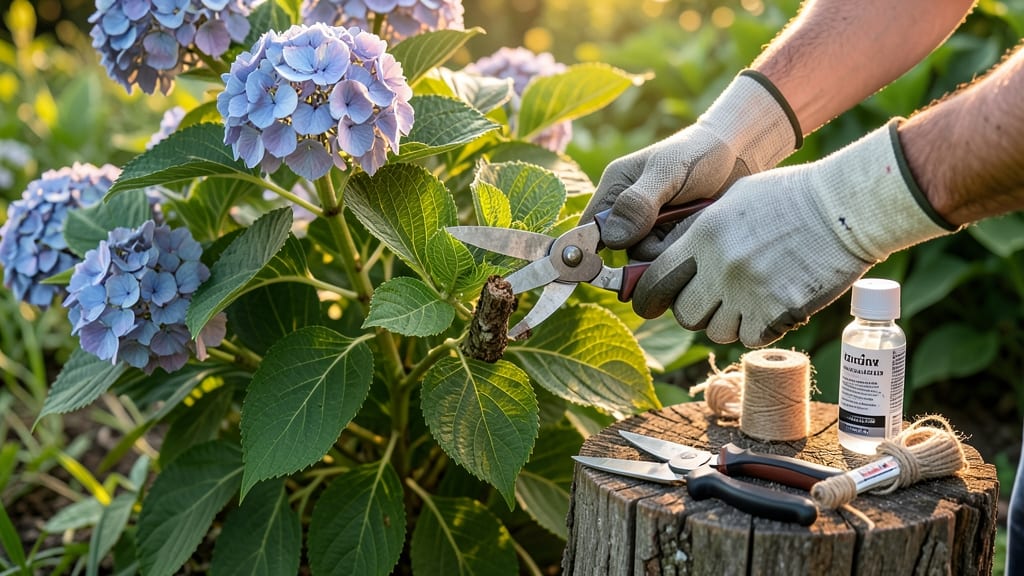
Late-winter pruning turns your bigleaf hydrangea from a tangle of branches into a blooming powerhouse by summer. ✂️ I’ve pruned these beauties for years, and the difference between a pruned bush and one left to its own devices is like night and day—think football-sized blooms instead of golf-ball clusters.
The key? Timing, technique, and knowing which stems to keep (and which to snip). Most gardeners mess this up by pruning too late or too aggressively, which means fewer flowers.
But when you do it right—just as buds begin to swell—you encourage the plant to focus its energy on strong, vibrant blooms rather than struggling with overgrowth. I’ll walk you through the exact steps, from tools to cuts, so you end up with a bush that’s both healthy and showstopping.
You’ll leave this with a pruning plan that works for your climate, whether you’re in a humid Southeast garden or a cooler Pacific Northwest yard. The best part? Your hydrangea will reward you with longer-lasting blooms that keep the color going from June through frost.
Ready to transform your hydrangea from "meh" to "wow"? Let’s get those shears sharp and those stems trimmed—your future bouquets will thank you.
📚 In This Guide
- What you need
- Instructions
- Tips and common mistakes
- Wrapping up and next steps
What you need
- ● Bypass pruners: Sharp, clean bypass pruners (not anvil-type) for precise cuts. Choose ergonomic handles for comfort during long sessions.
- ● Loppers: Bypass loppers (18–24 inches) for thicker stems (½ inch or larger). Look for ratcheting models for extra leverage.
- ● Hand saw: A pruning saw with a curved blade for stubborn, woody stems. 8–10-inch blades work best.
- ● Disinfectant: 70% isopropyl alcohol or a pruning sealant (like Pruning Wax) to sterilize tools and prevent disease spread.
- ● Gloves: Heavy-duty gardening gloves (waterproof, with grip) to protect hands from thorns and sap.
- ● Bucket or bag: A 5-gallon bucket or pruning bag to collect clippings and debris.
- ● Marking twine or flags: Colored twine or plant markers to tag stems you plan to prune (helps avoid mistakes!).
- ● Extension pole: A pruning saw or loppers with a pole for high-reaching branches (great for large shrubs!).
- ● Step stool: A foldable garden stool (12–18 inches tall) for better reach and stability.
- ● Pruning shears (for fine-tuning): Concave-cut shears for shaping smaller stems after major cuts.
- ● Safety glasses: Protect your eyes from flying debris, especially when sawing thick stems.
- ● Notebook & pen: To jot down notes on your hydrangea’s structure or pruning goals.
Step-by-step instructions for bigleaf hydrangea pruning
Here’s how to prune your bigleaf hydrangea like a pro—no guesswork, just bigger blooms.
✂️ Step 1: Time It Right for Maximum Blooms
Prune your bigleaf hydrangea in late winter, just as new growth begins but before buds swell. This is usually February or March in most climates, but check your last frost date—you want to avoid pruning when temperatures dip below 20°F. Bigleaf hydrangeas bloom on old wood, so cutting back too early removes next year’s flowers.
Look for dormant stems with no leaves or buds. If you see tiny green tips peeking through the soil, wait a week. The goal is to shape the plant while preserving next year’s blooms. I always prune on a dry, sunny day—wet wood is harder to clean cuts and invites disease.
✂️ Step 2: Remove Dead, Weak, or Crossing Branches
Start by cutting out dead, diseased, or damaged stems at the base with clean, sharp pruners. These branches won’t produce blooms and can harbor pests. Next, remove any weak or spindly growth—these stems won’t support heavy flower clusters. I like to make my first pass with the pruners angled 45 degrees just above a healthy bud or node.
Watch for crossing branches rubbing against each other. These create wounds that invite rot and weak growth. If two stems compete for space, remove the smaller one. Leave 3-4 strong stems per plant to encourage larger blooms—overcrowding leads to smaller, weaker flowers. Step back often to visualize the plant’s shape.
✂️ Step 3: Thin and Shape for Airflow and Size Control
Now, thin the remaining stems to open up the center of the plant. Bigleaf hydrangeas need good airflow to prevent fungal issues like powdery mildew. Aim to remove about 25% of the oldest stems—these are the ones that produce the most blooms but can become woody and unproductive. Cut them back to the ground if they’re thick and overgrown.
Shape the plant by shortening the longest stems to maintain a rounded, balanced form. You’re not trying to make it look like a topiary—just encourage a natural, bushy shape. For each stem you shorten, leave 3-5 buds near the base. This ensures next year’s blooms will be plentiful and positioned for maximum impact. Avoid heavy pruning in one spot—distribute cuts evenly.
✂️ Step 4: Clean Up and Protect the Plant
After pruning, sterilize your tools with rubbing alcohol to prevent spreading disease. Rake up and dispose of all clippings—don’t leave them near the plant, as they can harbor pests. If your hydrangea is in a windy or exposed area, consider wrapping the stems in burlap to protect them from late frosts.
Water deeply right after pruning to help the plant recover. Bigleaf hydrangeas are thirsty, so keep the soil evenly moist (but not soggy) for the next 4-6 weeks. Avoid fertilizing immediately—wait until new growth appears in spring. A light layer of 2-3 inches of mulch will help retain moisture and regulate soil temperature.
🌿 Step 5: Monitor and Adjust for Next Year’s Blooms
Watch your hydrangea closely in early spring as new growth emerges. If you see weak, leggy stems, it’s a sign of over-pruning or too much shade. Adjust by thinning further or moving the plant to a sunnier spot (but not hot afternoon sun, which can scorch leaves). Bigleaf hydrangeas thrive in partial shade with morning sun.
By mid-summer, you’ll see flower buds forming. If your blooms are small or sparse, it might mean you pruned too late or too aggressively. Next year, aim to prune just as buds begin to swell—this is the sweet spot for larger, longer-lasting blooms. Keep notes on what worked (or didn’t) so you can refine your approach each year.
Tips & tricks for perfect bigleaf hydrangea pruning
These simple tricks will help you get the most out of your late-winter pruning session—and keep your hydrangea thriving for years to come.
Timing is Everything: The late-winter window (February-March) is your sweet spot for pruning bigleaf hydrangeas. Look for those tiny green tips just peeking through the soil—that's your cue to wait a week. I've made the mistake of pruning too early, and you end up sacrificing next year's blooms because bigleaf hydrangeas bloom on old wood. If you're unsure, check your local frost dates and avoid pruning when temperatures dip below 20°F—cold stress can weaken the plant's recovery.
Tool Prep Prevents Problems: Sterilizing your pruners with rubbing alcohol between cuts is non-negotiable. I learned this the hard way when my hydrangea developed a fungal infection after using the same tools on infected branches. A 45-degree angle cut just above a healthy bud or node promotes better regrowth. And here's a pro move: sharpen your pruners first—dull blades tear wood, creating larger wounds that invite disease.
Visual Cues for Perfect Pruning: When shaping your hydrangea, step back often to visualize the plant's form. You're aiming for a natural, bushy shape—not a topiary. For each stem you shorten, leave 3-5 buds near the base. These buds are your promise for next year's blooms. I use this trick: if you can see sunlight reaching the center of the plant, you've done it right—good airflow prevents fungal issues like powdery mildew.
Post-Pruning Care: The work doesn't end when you put down the pruners. Water deeply right after pruning to help the plant recover, then maintain evenly moist soil (but not soggy) for the next 4-6 weeks. I've found that adding a 2-3 inch layer of mulch right after pruning helps regulate soil temperature and retain moisture. Avoid fertilizing immediately—wait until you see new growth in spring to give your hydrangea the energy it needs for recovery.
Pro Tips for Bigleaf Hydrangea Pruning
- These simple tricks will help you get the most out of your late-winter pruning session—and keep your hydrangea thriving for years to come.
- Timing is Everything: The late-winter window (February-March) is your sweet spot for pruning bigleaf hydrangeas.
- Tool Prep Prevents Problems: Sterilizing your pruners with rubbing alcohol between cuts is non-negotiable.
Frequently asked questions
Got questions about pruning your bigleaf hydrangea?
You’re not alone! Here are answers to the most common concerns—so you can confidently shape your plant for stunning blooms.
When is the best time to prune bigleaf hydrangeas?
Late winter (just before new growth starts) is ideal for bigleaf hydrangeas. This timing ensures you don’t cut off next year’s blooms, which form on old wood. Aim for February or early March in most climates—just after the worst frost has passed.
How much can I cut back my bigleaf hydrangea?
For healthy, vigorous growth, prune back 1/3 to 1/2 of the plant’s height. Avoid over-pruning—bigleaf hydrangeas bloom on last year’s stems, so never trim more than necessary. Focus on removing dead, weak, or crossing branches first.
What if I prune at the wrong time?
Pruning too late (spring/summer) risks cutting off flower buds already forming. If you accidentally prune in spring, don’t panic—just avoid heavy cuts and focus on shaping. Bigleaf hydrangeas are forgiving, but timing matters for optimal blooms!
Do I need special tools for pruning?
Basic tools work: bypass pruners for small branches and loppers for thicker stems. Sterilize tools with rubbing alcohol to prevent disease. A sharp blade ensures clean cuts—no jagged edges that invite pests.
Why aren’t my hydrangeas blooming after pruning?
Bigleaf hydrangeas need sunlight and balanced fertilizer (like 10-10-10) to thrive. If blooms are sparse, check for:
- Over-pruning (cutting too much old wood)
- Shady location (they need at least 6 hours of sun)
- Underwatering or poor soil drainage
Wrapping up and next steps
Mastering the art of bigleaf hydrangea pruning in late winter is your ticket to showstopping blooms all season long! 🌸 By timing your cuts, using the right tools, and understanding your plant’s growth habits, you’re not just pruning—you’re shaping a lush, vibrant centerpiece for your garden.
Now that you’re armed with the know-how, grab those shears and get pruning—your hydrangeas will thank you with bigger, bolder flowers than ever before!
💡 Next step: Mark your calendar for late winter (just before buds swell) and start observing your hydrangea’s growth now. The sooner you begin, the more confident you’ll feel when pruning day arrives!