
Pruning
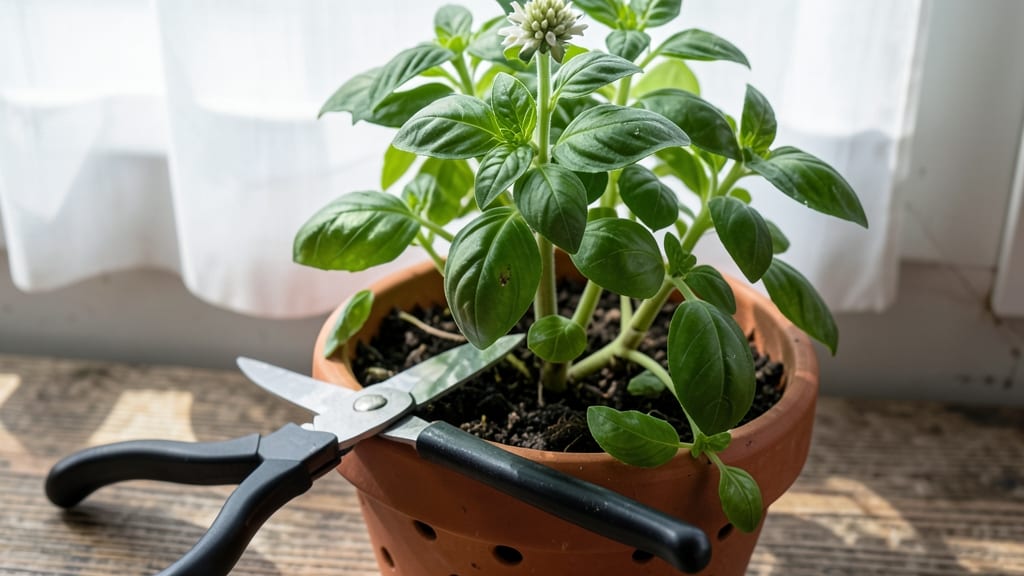
Start pruning basil when it reaches 6–8 inches tall and has 4–6 true leaves—this is the sweet spot for bushier growth and maximum flavor.
Skip this step and you risk leggy stems or bitter-tasting leaves. Get it wrong, and your basil could bolt into flower, turning your kitchen herb into a decorative plant with zero harvest potential.
Timing matters because basil grows in phases: early pinching encourages dense foliage, while later cuts keep it productive through summer. In Zone 6a, that means starting prunes in early June after the last frost.
Below, I break down the 3 key growth stages for pruning, plus how to spot over-pruned plants and when to stop cutting before flowering steals your harvest.
3 Critical growth stages for pruning basil (with exact timing)
Pruning basil isn't just about trimming—it's about harnessing its growth cycle to produce flavorful, abundant leaves. The key lies in understanding three distinct stages, each with a precise window for pruning.
Miss these moments, and you risk leggy stems or bitter-tasting leaves. Let's dive into the science-backed timing that transforms basil from scraggly to spectacular.
Your basil plant undergoes dramatic changes as it matures, and each phase demands a different pruning approach. Stage 1 focuses on seedlings, Stage 2 targets bushy growth, and Stage 3 handles flowering.
Recognizing these stages by leaf count, stem height, and flower buds ensures you prune at the optimal moment—never too early or too late.
| Growth Stage | Visual Cues | Pruning Time | Action |
|---|---|---|---|
| Seedling Stage | 4-6 true leaves, 4-6 inches tall | 4-6 weeks after planting | Pinch top set of leaves |
| Bushy Growth Stage | 8-12 inches tall, 8+ leaves per stem | Every 3-4 weeks | Cut 2-3 inches above leaf node |
| Flowering Stage | Flower buds appear, stems woody | Immediate removal | Prune flowers + 1 inch above |
At the seedling stage, your basil is just 4-6 inches tall with 4-6 true leaves. This is when you pinch the top set of leaves to encourage branching. Think of it as giving your plant a gentle nudge to grow wider instead of taller.
This stage typically occurs 4-6 weeks after planting, right when your seedlings look strong enough to handle the stress of pruning.
Once your basil reaches the bushy growth stage, it’s ready for more aggressive pruning. Look for 8-12 inches of height and 8+ leaves per stem. Here, you’ll cut 2-3 inches above a leaf node to promote new growth.
This stage is your golden window for maximizing leaf production, and it repeats every 3-4 weeks throughout the growing season.
If you spot flower buds on your basil, it’s already past its prime for flavor. Flowering signals the third and final stage, where you must prune immediately to redirect energy back to the leaves.
Cut the flowers off 1 inch above the stem to prevent bitterness from spreading. This stage is a last-ditch effort to salvage your harvest before the plant shifts focus to reproduction.
Timing your pruning to these stages isn’t just about leaf yield—it’s about flavor preservation. Basil left to flower becomes bitter and woody, while over-pruned seedlings may struggle to recover.
By following these exact cues, you’ll ensure your basil stays tender, aromatic, and ready for your kitchen all season long.
Pro tip: Use clean, sharp scissors or pruners to avoid damaging stems. Always prune in the morning when leaves are dry, reducing the risk of disease transmission. This simple habit keeps your basil healthy and your harvests abundant.
Regional differences matter too. In warmer climates (Zones 8-10), basil grows faster and may reach the bushy stage sooner—prune every 2-3 weeks instead. In cooler regions (Zones 5-7), extend the interval to 4-5 weeks to match slower growth.
Adapt these timelines to your local last frost date and summer heat for best results.
Remember: Pruning isn’t optional—it’s essential for basil’s health and productivity. When done correctly, each cut encourages more leaves, stronger stems, and richer flavor. Start with these three stages, and you’ll transform your basil from a struggling sapling into a flavor powerhouse.
Now grab those pruners and get ready to harvest like a pro—your basil (and your pesto) will thank you! 🌿✂️
How to prune basil at each stage: step-by-step techniques
Pruning basil isn't just about trimming—it's about encouraging bushier growth and maximizing leaf production. The key is to prune at the right time using the correct techniques. Whether you're a beginner or seasoned gardener, understanding the three critical stages of basil growth will transform your harvests.
Start by recognizing when your plant is ready for each step, and always use clean, sharp pruners to avoid damaging stems.
Basil responds best to regular pruning every 3–4 weeks once it reaches maturity. The goal is to pinch back new growth to promote side shoots and prevent legginess. Avoid pruning too aggressively, as this can stress the plant and reduce flavor.
Instead, focus on removing the top sets of leaves to redirect energy into leaf production. Always prune in the morning to allow wounds to heal before evening humidity sets in.
- 🌱 Seedling Stage (4–6 true leaves): Begin by pinching off the top set of leaves once the plant has 4–6 true leaves and is about 6 inches tall. This encourages bushier growth from the start.
- 🌿 Bushy Growth Stage (6+ weeks): Once the plant is established and has multiple sets of branches, prune 1/3 of the top growth to stimulate new side shoots. Do this every 3–4 weeks during the growing season.
- 🌸 Flowering Stage (Late Summer): If flower buds appear, prune them immediately to preserve leaf production and flavor. Flowering signals the plant is nearing the end of its productive cycle.
For the seedling stage, use your fingers or clean scissors to pinch off the top set of leaves just above a pair of leaves. This simple action tells the plant to branch out instead of growing tall and leggy.
Avoid cutting into the main stem, as this can weaken the plant. If you notice yellowing leaves or stunted growth, you may have pruned too early or too harshly.
During the bushy growth stage, focus on removing the top 2–3 inches of each stem. Always cut just above a leaf node to encourage new growth. Use sterilized pruners to prevent disease transmission between plants.
If your basil starts to flower, prune the flower buds immediately—they drain energy from leaf production and reduce flavor.
One of the most common mistakes is pruning too late in the season, especially when frost is approaching. Basil is an annual plant, so once temperatures drop below 40°F, it’s time to harvest and enjoy your bounty.
If you live in a warm climate, you can extend the season by pruning lightly and protecting plants from cold snaps. Always harvest leaves before flowering for the best flavor.
To keep your basil thriving, fertilize lightly after pruning with a balanced 10-10-10 fertilizer. This supports rapid regrowth and ensures your plant stays lush and productive. Water deeply after pruning to reduce stress and help the plant recover.
With the right timing and techniques, your basil will reward you with abundant, flavorful leaves all season long.