
Pruning
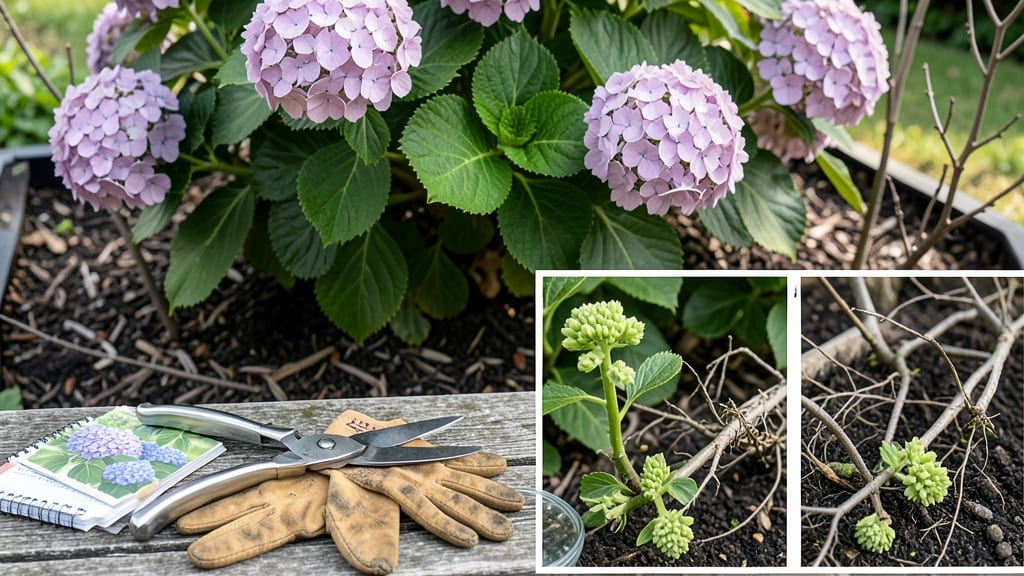
To prune hydrangea blooms correctly, time it by plant type: trim old wood varieties (like Bigleaf and Oakleaf) immediately after their summer blooms fade, while new wood types (such as Panicle and Smooth) need pruning in late winter or early spring before buds form. Never cut back during fall dormancy.
Hydrangeas bloom on different growth cycles, which is why timing matters so much. Old wood varieties produce flowers on stems from the previous year, so pruning too early removes next season's blooms.
New wood types, however, grow flowers on current season's growth, making late winter or early spring the ideal window. 🌸 I recommend marking your calendar for late August (old wood) or February (new wood) to avoid common mistakes like over-pruning or missing the bloom cycle entirely.
For old wood types, wait until after the flowers have fully faded and turned brown—this ensures you're not cutting off next year's buds. With new wood varieties, prune just before new growth starts, typically when you see buds swelling.
This approach maximizes flower production while maintaining plant health. Always use clean, sharp pruners and sterilize them between cuts to prevent disease spread.
💡 In This Article
- Old Wood vs New Wood Hydrangeas: Pruning Timing Explained
- Step-by-Step Pruning Guide for Hydrangea Bloom Types
Old wood vs new wood hydrangeas: pruning timing explained
The fundamental difference between old wood and new wood hydrangeas lies in their flower production cycles. Old wood varieties—like the iconic Bigleaf hydrangea (Hydrangea macrophylla)—develop flower buds on stems that grew the previous year.
These buds form in late summer and remain dormant through winter, blooming in spring or early summer. When you prune these stems, you're removing next year's flowers. That's why you must wait until after the blooms fade completely, typically in late August to September. 🌿
New wood types, such as Panicle hydrangeas (Hydrangea paniculata) or Smooth hydrangeas (Hydrangea arborescens), produce flowers on current season's growth. Their buds form in late winter or early spring, making late February to March the perfect pruning window.
This timing allows the plant to develop new stems that will bear flowers later in the season. The key biological difference is that new wood varieties can rebloom on both old and new wood, but proper pruning encourages stronger growth on current season's stems.
Seasonal growth patterns play a critical role in this timing. Old wood varieties enter dormancy in late fall, and their flower buds are already formed by winter. Pruning too early disrupts this cycle.
New wood types, however, rely on warm temperatures to stimulate new growth—pruning too late in spring delays their flowering. The optimal pruning window for new wood is when you see 2-3 inch buds swelling on the stems, but before any green growth appears. 🌱
Dormancy periods are another critical factor. Pruning during dormancy (late fall to early winter) stresses the plant and can lead to dieback. For old wood types, this means avoiding pruning from October through February.
New wood types can tolerate light pruning during dormancy, but heavy cutting should wait until spring. The plant's natural growth rhythm dictates that pruning must align with these biological cycles to avoid stunted growth or reduced flowering.
Consider the example of a Bigleaf hydrangea that blooms in June. If you prune it in May, you're removing next year's flower buds that formed in September of the previous year.
In contrast, a Panicle hydrangea that blooms in August can be pruned in March without affecting its current season's flowers, as new buds will form on this year's growth. This biological distinction explains why timing is everything in hydrangea pruning. 🌸
What most gardeners don't realize is that improper pruning can lead to a 30-50% reduction in blooms the following year. Old wood varieties may take 1-2 years to recover from incorrect pruning, while new wood types are more forgiving but still benefit from proper timing.
Understanding these growth patterns allows you to maximize your hydrangea's flowering potential while maintaining plant health.