
Pruning
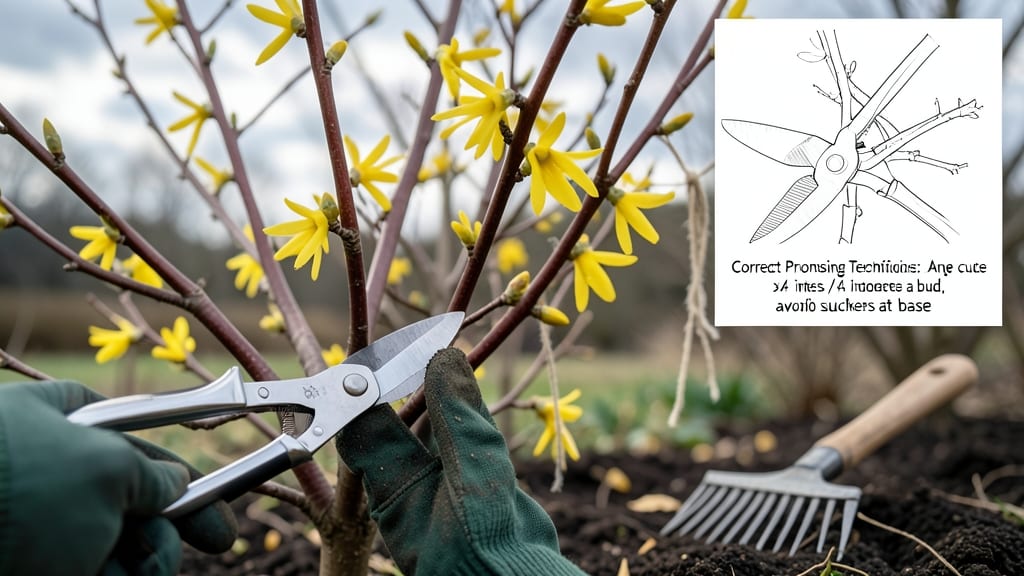
To prune forsythia shrubs, wait until immediately after their spring flowering—between late April and early May—to preserve next year's blooms. Avoid pruning in fall or winter, as this cuts off flower buds needed for spring growth.
Forsythia shrubs bloom on old wood, meaning their flowers develop on branches from the previous year.
Pruning after flowering lets the plant focus its energy on next season's blooms rather than new growth. 🌸 The late April to early May window also avoids damaging the plant's winter dormancy period, which runs from November through March.
If you prune too late in the season, you risk exposing the shrub to diseases or stress before it can recover.
For overgrown shrubs, you can prune back up to one-third of the plant in stages over two years to avoid shock. Always use clean, sharp pruners to make cuts just above a leaf bud or branch collar.
After pruning, water deeply and apply a balanced fertilizer to support new growth. This timing ensures your forsythia stays healthy and vibrant for years to come.
💡 In This Article
- Why Late Spring Is the Best Time to Prune Forsythia
- Step-by-Step Forsythia Pruning Guide for Healthy Growth
Why late spring is the best time to prune forsythia
Forsythia shrubs bloom on old wood, meaning their flowers develop on branches that grew during the previous year's growing season. The flower buds actually form in late summer and fall, but they remain dormant through winter.
When you prune in late spring—right after the vibrant yellow blooms fade—you're preserving those buds for next year's display. Cutting too early risks removing flower buds before they've fully developed, while waiting too long can stress the plant as it prepares for dormancy.
The ideal pruning window, late April to early May, aligns with the plant's natural growth cycle. At this time, forsythia has already completed its primary flowering and is shifting focus to new growth.
This timing also avoids the dormant season (November-March), when pruning can expose the shrub to diseases like powdery mildew or stress from winter cold. The plant's energy is already directed toward next year's blooms, so pruning after flowering lets it channel resources efficiently.
What happens if you prune at the wrong time? Fall or winter pruning removes the flower buds that formed over summer, leaving your shrub with no blooms for the following spring. This is because forsythia doesn't produce new flower buds on current season's growth—only on last year's branches.
Even light pruning during dormancy can disrupt the plant's natural cycle, leading to sparse or absent flowering. The late spring window is the only safe period to shape your forsythia without sacrificing its signature blooms. 🌿
Another critical factor is the plant's vascular system activity. In late spring, forsythia's sap flow is strong, helping it heal quickly from pruning cuts. This rapid recovery reduces the risk of infection compared to pruning during cooler months when the plant is less active.
The increased sunlight and warmth during this period also promote vigorous new growth, which is essential for maintaining the shrub's health and structure.
For visual identification, look for the bright yellow flowers that signal the end of the blooming cycle. Once about 70-80% of the flowers have dropped, it's time to prune. This typically occurs within 2-3 weeks after peak bloom, depending on your climate zone.
Waiting too long risks encouraging excessive new growth that may not have time to harden off before winter, leaving it vulnerable to frost damage.
Consider this comparison: Pruning forsythia in late spring is like trimming a haircut after it's grown out—you're shaping what's already there without sacrificing future growth. In contrast, fall pruning is like cutting your hair before it's fully grown, leaving you with less to work with next time.
The late spring approach preserves the plant's natural rhythm while giving you control over its shape and size. 🌸