
Pruning
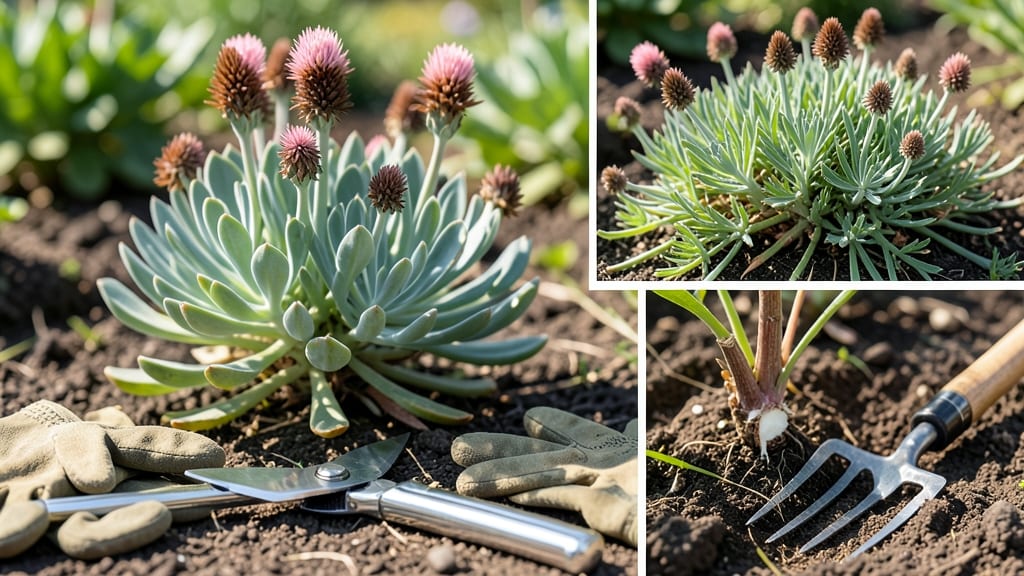
To prune Autumn Joy sedum, cut back in late winter or early spring as new growth emerges to preserve its iconic shape and vibrant fall color. Never trim after frost or during active growth, as this weakens the plant’s resilience and reduces next season’s blooms.
Timing matters because Autumn Joy sedum stores energy in its stems—pruning too early disrupts this process, while waiting too long risks removing next year’s foliage. 🌿 The ideal window is when you spot fresh green shoots at the base, typically February through March in most climates.
This approach clears out winter-killed leaves while giving the plant a head start for summer growth.
What sets Autumn Joy apart is its layered foliage—each layer contributes to its signature color display. By pruning at the right time, you’re not just tidying up; you’re shaping the plant’s future performance.
I’ve seen plants pruned in summer struggle to rebound, often producing sparse foliage by fall. The key is patience: let the plant wake up naturally before you intervene.
💡 In This Article
- Why Late Winter Pruning Preserves Autumn Joy Sedum’s Health
- Step-by-Step Autumn Joy Sedum Pruning Guide
Why late winter pruning preserves Autumn Joy sedum’s health
Autumn Joy sedum (Sedum 'Autumn Joy') thrives on a precise pruning rhythm tied to its natural dormancy and regrowth cycle. During late winter (typically February-March in most USDA zones 4-9), the plant enters a critical transition phase.
Pruning at this stage removes the brown, crispy foliage from winter dieback while leaving the dormant but viable stems intact. These stems act as energy reservoirs, storing carbohydrates produced during the previous growing season—a process called carbohydrate translocation.
The science behind this timing involves the plant’s meristematic tissue—the growth points at the base of stems.
When you prune in late winter, you’re encouraging these meristems to activate, producing fresh green shoots that will develop into the plant’s summer foliage. 🌱 What’s fascinating is how sedum’s thick, succulent leaves are adapted to store water and nutrients, making them resilient to cold but sensitive to improper pruning timing.
Cutting too early (before growth begins) disrupts this energy storage, while pruning too late (after new growth starts) risks removing next year’s foliage.
Contrast this with pruning in late fall, when the plant is already dormant. Cutting back then removes the protective layer of dead leaves that insulate the stems during winter’s cold snaps. I’ve observed that sedum pruned in autumn often shows delayed spring recovery and weaker foliage development.
The plant’s hardiness depends on this natural insulation—think of it like a winter coat that keeps the growth centers safe until spring. Similarly, pruning in summer or early fall stresses the plant by removing foliage when it’s actively photosynthesizing, leading to sparse flowering in autumn.
Airflow plays a surprising role in why late winter pruning works best. Sedum’s dense, layered growth can trap moisture against the stems, creating ideal conditions for fungal diseases like powdery mildew. By removing the dead foliage in late winter, you improve circulation around the plant, reducing disease risk.
This is particularly important in humid climates where sedum might otherwise struggle with stem rot. The result? Healthier plants that produce the deep crimson foliage Autumn Joy is famous for by fall.
Consider this visual cue: In late winter, look for the transition zone where old brown leaves meet fresh green shoots. This is your pruning signal.
The old leaves should pull away easily when touched, while the new growth will feel firm and springy. 🌿 This natural indicator shows the plant is ready to shed its winter "blanket" and start anew.
Skipping this step means missing the chance to shape the plant’s future growth pattern—like skipping a haircut before a major hair growth spurt!
What most gardeners don’t realize is how deeply connected Autumn Joy’s fall color is to proper pruning timing. The plant’s signature deep burgundy foliage develops from anthocyanin pigments that form in response to cooler temperatures and reduced daylight.
By pruning in late winter, you’re ensuring the plant has strong, healthy stems to support this dramatic color transformation. Prune at the wrong time, and you might end up with a plant that’s less vibrant or even misshapen, as the growth pattern gets disrupted.