
Pruning
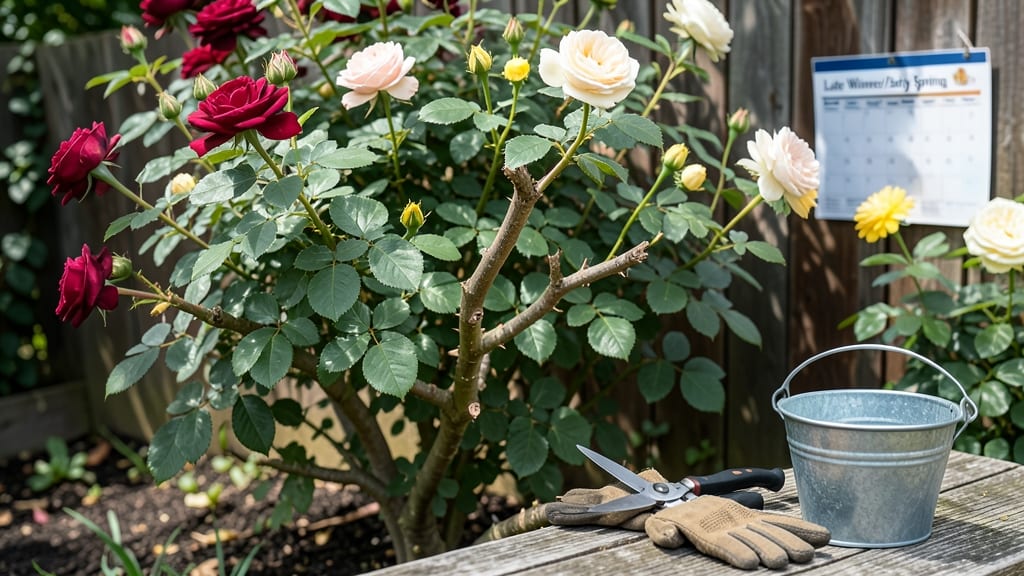
When should rose bushes be pruned? Aim for late winter or early spring (before new buds emerge) for most varieties, or right after the first flush of blooms for repeat-flowering types. Your local hardiness zone and rose type determine the exact timing—evergreen roses may need late-winter cuts, while hybrid teas respond best to early spring pruning.
Timing matters because roses grow differently based on climate and variety.
In colder zones (USDA 3-6), prune after the last frost when the plant is still dormant but before spring growth begins. 🌸 Warmer zones (USDA 7-10) can prune slightly later, as frost is less of a risk.
Repeat-bloomers like floribundas need a second light trim after their first bloom to encourage more flowers later in the season.
For hybrid teas and grandifloras, early spring pruning (just as buds swell) promotes stronger stems and larger blooms. Climbing roses, however, benefit from a more gradual approach—prune lightly in late winter, then again after each bloom cycle.
This prevents over-stressing the plant, which can reduce flowering. Always use sharp bypass pruners and sterilize them with rubbing alcohol between cuts to prevent disease.
💡 In This Article
- Pruning Rose Bushes by Climate Zone and Hardiness
- Step-by-Step Pruning Guide for Different Rose Types
Pruning rose bushes by climate zone and hardiness
The exact timing for pruning roses depends on your USDA hardiness zone, which determines when the plant enters dormancy and when new growth begins. In zones 3-6, where winters are harsh, prune roses in late winter (February-March), just before the last expected frost.
This timing ensures the plant is still dormant, reducing stress and preventing frost damage to fresh cuts. In warmer zones (7-10), where frost is rare or non-existent, you can prune slightly later (January-February) since the plant won't face sudden temperature drops. 🌱
Here's why this matters: roses in colder zones need protection from late frosts, which can kill tender new growth. Pruning too early in these areas exposes the plant to frost damage, while waiting too long means the plant starts growing before you've shaped it.
For example, in zone 5, where average winter lows reach -20°F, pruning in late February gives the plant time to harden off before spring's unpredictable temperature swings. In contrast, zone 9 roses (with mild winters) can handle pruning in January because they won't face freezing temperatures.
For repeat-blooming varieties like floribundas and grandifloras, timing becomes even more nuanced.
These roses produce two or more flower cycles per season, so they benefit from a two-step pruning approach: the main prune in late winter/early spring, followed by a light trim after the first bloom to encourage a second flush.
This second trim removes spent blooms and promotes new growth from lower buds, which are stronger and more disease-resistant. The key is to never remove more than one-third of the plant's foliage in a single session to avoid shocking the rose.
Evergreen roses, like Rosa 'Knock Out' or Rosa 'Dr. Huey', have different needs because they retain leaves year-round. These varieties should be pruned in late winter (February) in most zones, but the focus shifts to shaping rather than drastic cutting.
Unlike deciduous roses, evergreens don't rely on dormant buds for next year's growth, so you can prune more aggressively if needed. However, avoid heavy pruning in zone 8 and below during late winter, as these roses may still be semi-dormant and vulnerable to cold snaps.
Climbing roses require the most patience. These roses bloom on old wood (last year's growth), so pruning too early removes potential flower buds. Instead, prune climbing roses in early spring (March-April), focusing on removing dead, diseased, or crossing branches while preserving the structure.
The goal is to maintain an open center that allows sunlight and air circulation—critical for preventing fungal diseases like black spot. For climbers in zone 7 and below, wait until after the last frost to prune, as early cuts can expose the plant to late-season freezes.
What most gardeners overlook is how soil temperature affects pruning success. Roses won't respond well to pruning if the ground is still frozen, as the roots can't absorb water efficiently. A simple test: push a 6-inch screwdriver into the soil.
If it goes in easily, the roots are active enough for pruning. If it meets resistance, wait another 2-3 weeks. This rule applies universally across all rose types and climates. 🌿