
Pruning
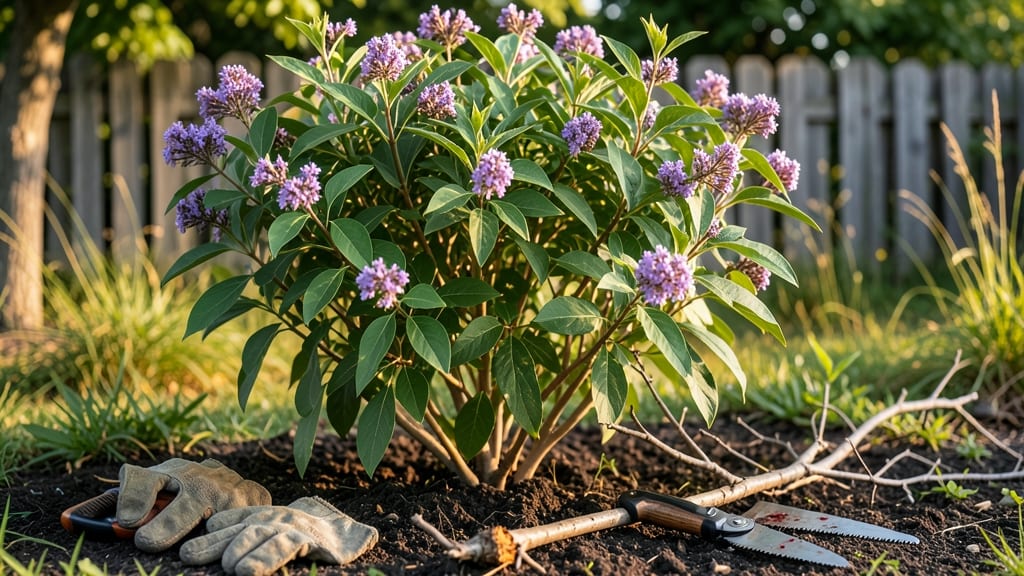
Strategic vitex plant pruning turns a leggy shrub into a blooming powerhouse. ✂️ I’ve watched my vitex go from sparse and scraggly to covered in lavender-blue flowers—all because I learned the right cuts, timing, and technique.
Most gardeners over-prune or wait too late, but the secret is in the structure: prune for shape and airflow, and you’ll get bushier growth and more blooms every season.
The best time is right after flowering, when the plant has finished its spring display but before new growth hardens. You’ll need sharp bypass pruners and a clean saw for thicker stems—never use dull tools, or you’ll tear the bark.
Start by removing dead or crossing branches, then cut back one-third of the oldest canes to encourage new growth. The goal is to open up the center so light and air reach all parts of the plant.
What you’ll end up with is a denser, more vibrant vitex that blooms longer and handles winter better. The new growth you encourage will be stronger, and those lavender-blue flower clusters will appear earlier and last weeks longer.
Just avoid cutting into old wood—if you see no green rings inside a stem, it’s too late to revive it.
This method works for both young plants (to establish shape) and mature vitex (to rejuvenate). The key is consistency—prune the same way every year, and you’ll have a showstopper shrub that neighbors will envy. Ready to transform yours?
📚 In This Guide
- What you need
- Instructions
- Tips and common mistakes
- Wrapping up and next steps
What you need
- ● Pruning shears: Bypass pruners (sharp, 5-7 inch blades) – 1 pair (for small to medium stems)
- ● Loppers: Heavy-duty, bypass or anvil type (8-12 inch blades) – 1 pair (for thicker canes, ½ inch or larger)
- ○ Pruning saw: Curved-tooth or folding saw (for stubborn, woody stems) – 1 (optional but helpful for mature Vitex)
- ● Disinfectant: Rubbing alcohol (70% or higher) or a garden disinfectant spray – Small bottle
- ● Garden gloves: Heavy-duty, cut-resistant (to protect from thorns and sap) – 1 pair
- ● Garden twine or zip ties: For securing branches during pruning (if needed) – Small roll
- ● Trash bags or compost bin: For collecting pruned debris – 1-2 bags
- ○ Sharpie or marker: For labeling new growth (optional but useful for tracking) – 1
- ● Hand pruners: Compact, for precision cuts on small branches
- ● Extension pole pruners: For high-reaching branches (6+ feet)
- ● Plant growth hormone: Rooting powder or gel (if propagating from cuttings)
- ● Mulch: Organic mulch (e.g., shredded bark) to protect roots post-pruning
- ● Safety glasses: To shield eyes from debris
Step-by-Step guide to pruning vitex for healthier growth and abundant flowers
Here's the method I've used for years to keep my vitex (chaste tree) thriving—producing lush foliage and dramatic summer blooms.
✂️ Step 1: Time Your Pruning for Maximum Impact
Prune vitex immediately after its spring flush of new growth but before buds form for summer blooms. This typically falls in late February to early March in most climates. The key is cutting when you see fresh 1-inch-long leaves emerging—this signals the plant has broken winter dormancy and is ready to respond to shaping.
If you miss this window, you can do a light cleanup prune in early spring (February), but avoid heavy cuts after mid-March—you'll sacrifice that season's flowers. I always mark my calendar with a reminder because vitex grows so fast you'll forget it needs attention.
✂️ Step 2: Remove Dead, Weak, or Crossing Branches First
Start by eliminating any dead wood (branches that snap easily or have no green bark) and weak stems (thin, spindly growth with few leaves). Use sharp pruning shears to make clean cuts just above a leaf node or outward-facing bud. This prevents unsightly stubs and encourages outward growth.
Next, remove branches that cross or rub against others—these create wounds that invite disease. I look for branches growing straight into the center of the plant and cut them back to the main trunk or a strong lateral branch. This opens up the center for better airflow and sunlight penetration, which prevents fungal issues.
✂️ Step 3: Shape the Plant for Bushier Growth
Step back and visualize your ideal shape—most vitex benefit from a rounded, multi-branched form. Start by cutting back the tallest stems by one-third to one-half their length. Make cuts just above a leaf node facing outward to encourage branches to fill in the space.
For older plants, you can remove up to 25% of the oldest wood to rejuvenate growth. I like to leave a few strong, mature branches for structure while promoting new shoots from lower nodes. Avoid cutting into old, woody stems—these won't regrow, and you'll leave ugly scars.
✂️ Step 4: Thin Out Overcrowded Areas
Vitex naturally grows dense, so focus on thinning out the interior to improve airflow. Remove every other branch in crowded areas, cutting back to a strong lateral branch or the main trunk. This prevents a "mop-top" effect where branches grow only at the top.
Watch for "water sprouts"—thin, upright shoots growing from the trunk or lower branches. These compete with the main structure for energy. Snip them off at the base immediately. You'll see a noticeable difference in the plant's openness within weeks, and the remaining branches will thicken and bloom more heavily.
⏰ Step 5: Post-Pruning Care for Recovery
After pruning, water deeply to help the plant recover. Vitex has deep roots, so a slow soak at the base encourages new growth without wasting water. Avoid fertilizing immediately—wait 4-6 weeks until new shoots appear before applying a balanced, slow-release fertilizer.
Monitor the plant closely for 3-4 weeks after pruning. You should see fresh green shoots emerging from the cut nodes within 2-3 weeks if conditions are right. If you notice yellowing leaves or slow regrowth, the cuts may have been too severe—scale back next year.
Tips & tricks for perfect vitex pruning
These strategic insights will help you transform your vitex into a thriving, blooming powerhouse—without the guesswork.
Timing is Everything: That late February to early March window is critical because vitex blooms on new wood formed after pruning. If you prune too early, you risk cutting back growth that hasn't emerged yet. I've learned the hard way—wait until you see those fresh 1-inch leaves before making any cuts. This visual cue ensures you're pruning at the perfect moment for maximum regrowth and flowering potential.
The 45-Degree Angle Secret: When making cuts in Step 2 and Step 3, angle your pruners at about 45 degrees just above a leaf node. This creates a natural water runoff path that prevents water from pooling on the cut, which could lead to rot. I've noticed that angled cuts also heal faster than straight cuts, giving your vitex a better chance to recover quickly after pruning.
Shape Matters More Than You Think: The rounded, multi-branched form mentioned in Step 3 isn't just aesthetic—it's functional. This shape allows sunlight to penetrate all the way to the center of the plant, which is crucial for vitex. I've seen plants with dense, bushy centers that never bloom well because the interior branches get shaded out. After pruning, step back and visualize how light will move through your plant—this simple exercise makes all the difference.
Post-Pruning Recovery Hack: That 4-6 week wait before fertilizing in Step 5 is non-negotiable. Vitex needs time to establish new root growth before it can utilize nutrients effectively. I've found that applying a thin layer of compost around the base during this period provides gentle, natural nutrients without overwhelming the plant. Just avoid anything heavy or nitrogen-rich—vitex prefers balanced, slow-release options once it's ready.
Pro Tips for Vitex Plant Pruning
- These strategic insights will help you transform your vitex into a thriving, blooming powerhouse—without the guesswork.
- Timing is Everything: That late February to early March window is critical because vitex blooms on new wood formed after pruning.
- The 45-Degree Angle Secret: When making cuts in Step 2 and Step 3, angle your pruners at about 45 degrees just above a leaf node.
Frequently asked questions
Got questions about pruning your vitex (Vitex agnus-castus)? You’re not alone! Whether you're a first-time pruner or a seasoned gardener fine-tuning your technique, these FAQs will help you keep your vitex thriving with confidence. Let’s dive in:
When is the best time to prune vitex for maximum blooms?
The ideal window is late winter or early spring, just as new growth begins but before buds swell. This timing encourages vigorous spring regrowth and ensures robust flowering. Avoid pruning in fall—vitex needs time to harden off before winter. For light shaping, you can also trim lightly after blooming to maintain shape, but avoid heavy cuts then.
How much can I cut back vitex without harming it?
Vitex is highly resilient—you can safely remove up to ⅓ of the plant’s height in a single pruning session. For older, leggy canes, cut back to healthy buds or lateral branches to stimulate bushier growth. If your vitex looks overgrown, don’t panic: gradual pruning over 2–3 years works best to avoid shocking the plant.
What should I do if my vitex doesn’t bloom after pruning?
Lack of blooms often stems from over-pruning or cutting too late in the season. Ensure you’re pruning in late winter/early spring and leaving at least 3–5 mature canes (older wood blooms best). If blooms still don’t appear, check for nutrient deficiencies (add compost or a balanced fertilizer) or poor sunlight—vitex thrives in full sun (6+ hours/day).
Can I prune vitex into a tree shape, or should I keep it bushy?
Yes! Vitex adapts well to both shapes. For a tree form, select 1–3 central leaders and remove lower branches to create a trunk. For a bushier look, prune to encourage multiple branches from the base. Just avoid leaving large, bare stems—vitex blooms on current and older wood, so regular light pruning keeps it lush.
What do I do if my vitex has dead or diseased branches after pruning?
Act fast! Sterilize your tools with rubbing alcohol before cutting, then remove any blackened, mushy, or oozing branches down to healthy tissue. Dispose of diseased material immediately (don’t compost it). After pruning, apply a copper fungicide as a precaution. Vitex rarely suffers from pests, but aphids or spider mites may appear—treat with neem oil if needed.
Still unsure? Snap a photo of your vitex’s current state and compare it to pruning guides—sometimes seeing the structure helps! With the right cuts, your vitex will reward you with fragrant, purple blooms for years to come.
Wrapping up and next steps
Pruning your vitex plant isn’t just about tidying up—it’s your secret weapon for vibrant blooms and sturdy canes that last for years! By mastering the right timing, tools, and techniques, you’ll encourage a bushier, healthier shrub that rewards you with season-after-season color.
Now that you’re armed with the know-how, grab those shears and get pruning—your vitex is ready for its glow-up! 🌿✂️
Ready to take it further? Document your progress with before-and-after photos or share your tips with fellow gardeners—every cut counts toward a thriving garden! 📸🌸