
Pruning
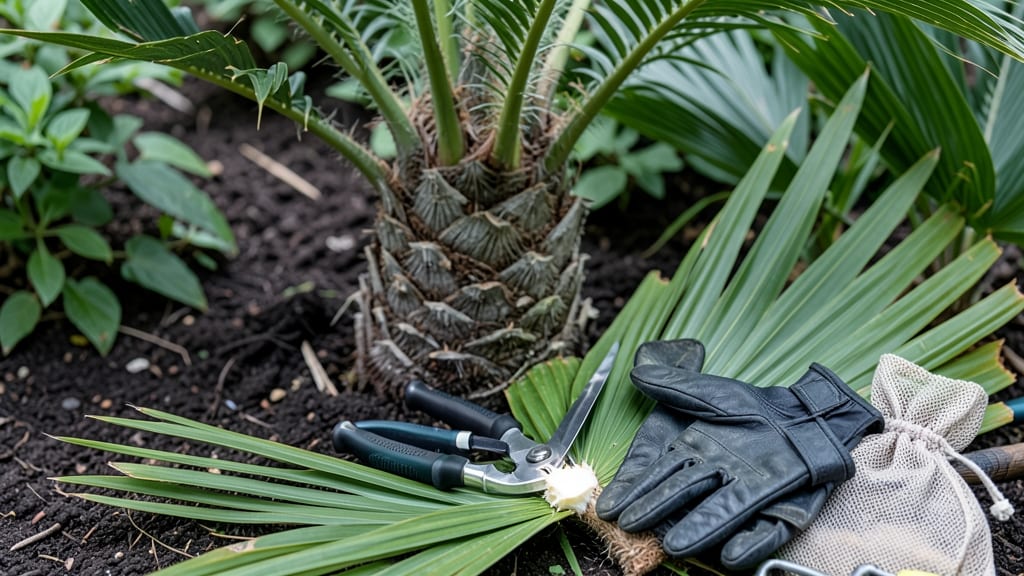
Pruning your Trachycarpus fortunei in late winter reveals its hidden potential—thicker trunks and lush, symmetrical fronds. 🌿 I’ve learned that the key is timing: dormant season cuts heal faster and encourage stronger regrowth than summer pruning ever could.
Most gardeners skip this step entirely, missing out on a palm that looks like it belongs in a botanical garden instead of their backyard.
The right tools make all the difference: a sharp bypass pruner for clean cuts, gloves to avoid sap irritation, and a ladder if your palm towers over you. I’ve made the mistake of using dull shears—it tears the fibers and invites disease.
Aim to remove no more than one-third of the oldest fronds at a time, always cutting just above the joint where the frond meets the trunk. This simple rule keeps your palm thriving for decades.
What you’ll end up with is a palm that looks intentionally sculpted, not neglected—denser foliage, fewer brown fronds, and a trunk that thickens noticeably each year. The best part? You’ll spend less time cleaning up debris because you’re removing only the dead or damaged fronds.
Even in harsh winters, my pruned palms bounce back faster than their unpruned neighbors.
This method works for both container-grown palms and in-ground specimens, though container palms need slightly more frequent pruning to prevent root-bound stress. Start small if you’re new to palm care—just remove a few fronds the first year to see how your plant responds.
Confidence comes with practice, and your Trachycarpus fortunei will thank you for it.
📚 In This Guide
- What you need
- Instructions
- Tips and common mistakes
- Wrapping up and next steps
What you need
- ● Pruning shears or loppers: Choose bypass pruners (for small fronds) or loppers (for thicker stems). Opt for sharp, sterilized tools to prevent disease. Example: Felco F-2 or Corona bypass pruners.
- ● Heavy-duty gloves: Wear cut-resistant, waterproof gloves (e.g., Mechanix or Weldone) to protect against sharp frond edges and sap.
- ● Disinfectant solution: Mix 1 part bleach with 9 parts water (or use 70% isopropyl alcohol) to sterilize tools before and after pruning.
- ● Heavy-duty trash bags or compost bin: Collect 5–10 gallons of pruned fronds, depending on your palm’s size. Pro tip: Fronds can be composted, but avoid overloading with diseased material.
- ● Ladder or step stool: Ensure stability for reaching higher fronds. A 4–6 ft. ladder works for most mature palms.
- ● Safety goggles: Protect your eyes from debris, especially when removing dry, brittle fronds.
- ● Pruning saw: For very thick stems or deadwood (e.g., Fiskars X27 pruning saw).
- ● Hose or water spray: Dampen fronds slightly to reduce dust and make cutting easier.
- ● Hand sanitizer or soap: Keep on hand for post-pruning clean-up.
- ● Labeling tags (if composting): Mark bags with “Palm Fronds – Compost” to avoid confusion.
Step-by-step instructions for Trachycarpus fortunei pruning
Here's my go-to method for pruning windmill palms during dormancy—it's how I've kept mine thriving for years.
🌱 Step 1: Time Your Pruning for Dormant Season
Prune your Trachycarpus Fortunei in late winter or early spring, just as new growth begins but before active shoot emergence. I aim for February to March in most climates—this timing lets the palm recover before summer heat stress. Look for dormant fronds that are completely brown and dry; these are ready for removal.
If you're in a warmer zone where dormancy isn't as pronounced, wait until you see new green growth at the base—this signals the palm is waking up. Never prune during active growth periods; you'll stress the plant and invite disease. I always check the local frost dates as a backup—pruning after the last frost date is safest.
✂️ Step 2: Remove Dead and Damaged Fronds
Start with the dead fronds—they're the easiest to spot. Use clean, sharp pruners or a palm saw to cut them at the base of the petiole, where it meets the trunk. I make a clean cut at a 45-degree angle to prevent water from pooling and rotting the trunk. Remove any fronds that are more than 50% brown, even if they still have some green.
For partially damaged fronds, examine each one carefully. If the damage is limited to the outer third of the frond, leave it—healthy tissue can still photosynthesize. But if the damage extends to the midrib or central vein, remove the entire frond. I always wear gloves for this step; palm fronds can be surprisingly sharp, and the sap can irritate skin.
🌿 Step 3: Thin the Canopy for Better Airflow
Next, focus on thinning the canopy to improve airflow and light penetration. Remove every other frond from the outer layer, starting with the oldest ones. This creates space for new growth and reduces the risk of fungal diseases. I work my way around the palm in a circular pattern, ensuring I don't leave large gaps on one side—this can cause uneven growth.
Pay special attention to fronds that are crowding the center of the palm. These can block light from reaching the heart and slow down new growth. Use your pruners to make precise cuts, and avoid tearing the fronds—this can damage the underlying tissue. If you encounter any fronds that are yellow or mushy, this is a sign of rot, and you should remove them immediately, even if it's not dormancy season.
☀️ Step 4: Clean Up and Protect the Palm
After pruning, remove all debris from the base of the palm and surrounding area. I use a small rake to gather up the fronds and dispose of them in the trash—not the compost, as diseased material can spread pathogens. Wipe down the trunk with a 10% bleach solution (1 part bleach to 9 parts water) to kill any lingering spores or bacteria.
Apply a balanced palm fertilizer (low nitrogen, high potassium) around the base of the plant, following the package instructions. Water deeply to help the roots absorb the nutrients. I always prune in the early morning to give the palm time to recover before the heat of the day. Avoid pruning on windy days—flying debris can damage the trunk and new growth.
⏰ Step 5: Monitor for New Growth
Over the next 4-6 weeks, keep an eye out for new fronds emerging from the center of the palm. Healthy new growth should be bright green and upright. If you notice any yellowing or wilting, it could be a sign of over-pruning or stress. In this case, reduce watering slightly and provide some shade until the palm stabilizes.
I like to take a "before and after" photo after pruning to track progress. You'll be amazed at how much more open and airy the palm looks. If you're happy with the results, you can repeat this process next dormant season. For large palms, you might need to prune in stages over a few years to avoid shocking the plant. Always remember: less is more when it comes to palm pruning.
Tips & tricks for perfect Trachycarpus fortunei pruning
Here's what I've learned after years of pruning these palms—these little details make all the difference for a healthy, thriving plant.
Timing is Everything: The February to March window is critical because it gives your palm time to recover before summer heat stress. I've learned the hard way that pruning too early can expose the plant to cold snaps, while waiting too long risks stressing it before it's ready for new growth. If you're unsure about your local frost dates, check your average last frost date—pruning after this is your safest bet.
The 45-Degree Angle Secret: When you make that clean cut at the base of the petiole, the 45-degree angle isn't just for looks—it prevents water from pooling and rotting the trunk. I've seen too many palms develop trunk rot because of straight-across cuts that create little water traps. Take your time with this step; a slightly uneven cut is better than a clean but damaging one.
Canopy Thinning Strategy: Removing every other frond from the outer layer might seem drastic, but it's the best way to improve airflow and light penetration. I've noticed that palms with dense canopies often develop fungal issues because moisture gets trapped. Work in a circular pattern to avoid creating uneven gaps—this keeps the palm balanced and encourages even new growth.
Safety First: Palm fronds might look harmless, but they're actually quite sharp, and the sap can irritate skin. Always wear gloves when pruning, and consider wearing safety goggles if you're working with large fronds. I also recommend using a small rake to gather up debris—those fronds can be surprisingly heavy, and lifting them can strain your back.
Pro Tips for Trachycarpus Fortunei Pruning
- Here's what I've learned after years of pruning these palms—these little details make all the difference for a healthy, thriving plant.
- Timing is Everything: The February to March window is critical because it gives your palm time to recover before summer heat stress.
- The 45-Degree Angle Secret: When you make that clean cut at the base of the petiole, the 45-degree angle isn't just for looks—it prevents water from pooling and rotting the trunk.
Frequently asked questions
Got questions about pruning your Trachycarpus fortunei? Here are some common ones—and their answers—to help you keep your windmill palm looking its best!
When is the best time to prune my Trachycarpus fortunei?
The ideal time to prune is late winter or early spring, just before new growth begins. This aligns with the plant’s dormant season (typically February–March in most climates). Avoid pruning in fall or during active growth—it can stress the palm and leave it vulnerable to pests or disease. Pro tip: If you spot dead fronds mid-season, remove them immediately, but wait for dormancy for major shaping!
How do I know which fronds to cut?
Focus on removing only the fronds that are completely brown and dry—these are dead and won’t recover. Healthy fronds (green or yellowing at the edges) should stay put. Use clean, sharp tools to make cuts 1–2 inches above the palm’s base or where the frond meets the trunk. Warning: Never remove more than one-third of the fronds at once—this can shock the plant!
Can I prune my Trachycarpus fortunei in summer?
Pruning in summer is not recommended unless it’s an emergency (like storm damage). The heat and humidity can slow healing, increasing the risk of fungal infections or pest infestations. If you must prune in summer, do it on a cool, overcast day and sterilize your tools with rubbing alcohol. For routine pruning, always wait for dormancy!
What if my palm looks bare after pruning?
A sparse appearance is normal after pruning—your Trachycarpus fortunei stores energy in its trunk and will regrow fronds from the center. Avoid over-pruning; focus on dead fronds only. If the palm still looks weak, fertilize lightly with a balanced palm fertilizer (like 6-6-6) in early spring. Patience is key! New fronds may take 2–4 weeks to emerge.
Are there alternatives to traditional pruning?
Yes! If you’re uncomfortable with sharp tools, try thinning instead of full removal—cut fronds at their base to reduce density without stripping the palm. For a natural look, leave a few older fronds to decompose; they’ll eventually fall on their own. Just avoid topping (cutting the crown)—this harms the palm’s growth center and can kill it!
Wrapping up and next steps
Pruning your Trachycarpus fortunei during the dormant season is a game-changer for a healthier, more vibrant palm! By removing dead fronds, thinning crowded foliage, and shaping strategically, you’ll encourage stronger canopy growth and prevent pests or disease.
With the right tools, timing, and technique, this task becomes simple—and your palm will thank you with lush, resilient fronds for years to come.
Ready to give your windmill palm the care it deserves? Grab your pruners, follow your notes, and schedule that next pruning session before spring awakens! 🌿✨