
Pruning
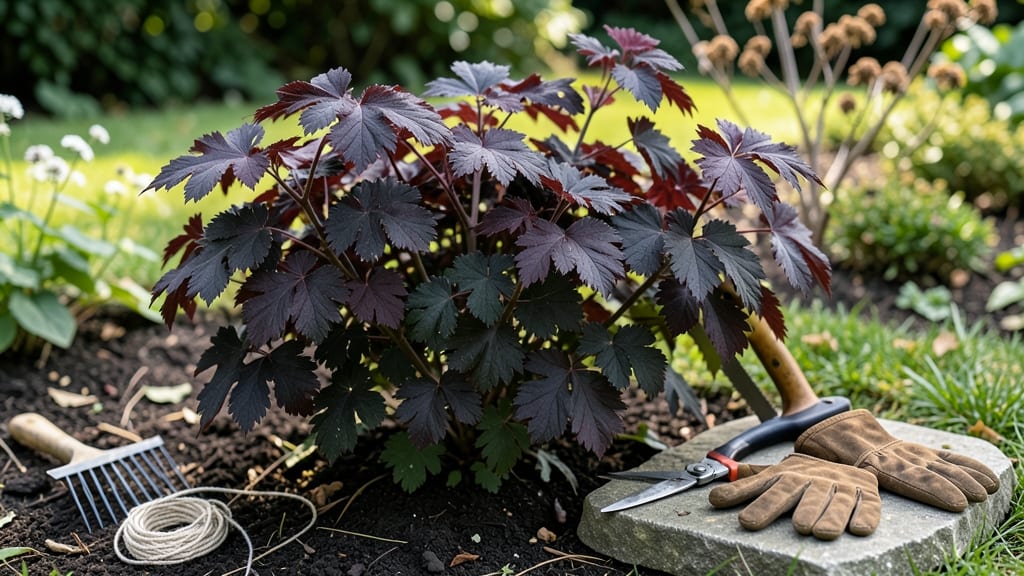
Pruning Sambucus 'Black Lace' transforms it from a wild tangle into a showstopping summer shrub with dark foliage and fragrant blooms. ✂️ I learned the hard way—skipping dormant-season pruning means leggy growth and fewer flowers. The key is timing, technique, and knowing where to cut to encourage dense, lush foliage.
You’ll need just three tools: sharp pruning shears, loppers for thicker stems, and a clean rag to wipe tools between cuts. The real work happens in late winter or early spring before new growth starts.
This is when you remove dead, crossing, or weak branches—cutting them back to an outward-facing bud or strong stem.
For shaping, aim for an open center that lets light reach all branches. Every 2-3 years, do a rejuvenation cut: prune back one-third of the oldest stems to the ground.
This keeps the plant vigorous and prevents it from getting too woody. The payoff? A dense, dark canopy by summer that’s perfect for hedges or dramatic focal points.
Warning: Over-pruning in one season can shock the plant. Start small, and always leave at least half the branches intact. With the right cuts, your 'Black Lace' will reward you with richer foliage, more flowers, and fewer pests—all while staying compact and manageable.
📚 In This Guide
- What you need
- Instructions
- Tips and common mistakes
- Wrapping up and next steps
What you need
- ● Pruning shears or loppers – Choose bypass pruners (for clean cuts) or anvil pruners (for thicker branches). Ensure they’re sharp and sanitized with 70% isopropyl alcohol or a 10% bleach solution to prevent disease spread.
- ● Hand pruners – For smaller branches (up to ½ inch in diameter). Opt for ergonomic handles to reduce hand fatigue.
- ● Pruning saw – A bow saw or pruning saw with a curved blade for branches thicker than 2 inches.
- ● Gloves – Heavy-duty gardening gloves (preferably with reinforced palms) to protect against thorns and sap.
- ○ Disposable pruning bags or bucket – To collect and dispose of pruned branches (optional but helpful for cleanup).
- ● Ladder or step stool – If your shrub exceeds 6 feet in height, a stable, extendable ladder (with non-slip feet) is a must for safety.
- ● Marking twine or paint – For tagging branches to prune (useful for large or complex shrubs).
- ● Rake or leaf blower – To clear debris after pruning.
- ● Pruning sealant – A tree wound sealant (like Tanglefoot Tree Wound Pruning Seal) to coat large cuts (though many experts debate its necessity for Sambucus).
- ● Safety glasses – To shield eyes from debris, especially when using a pruning saw.
- ● Knee pads or cushion – For comfort during prolonged pruning sessions.
- ● Notebook or app – To sketch your shrub’s structure or track pruning progress (e.g., iNaturalist or a simple garden journal).
Step-by-Step guide to pruning Sambucus 'Black Lace'
Dormant season is your chance to sculpt this dramatic shrub into a showstopper—here's how to do it right.
✂️ Step 1: Time It Perfectly for Dormant Pruning
Prune late winter to early spring, just as buds begin to swell but before new growth starts. This timing ensures you remove dead wood while preserving next year's blooms. I always check the buds—if they're still tight and dormant, I wait a few more days. The goal is to work before sap flow intensifies, which makes pruning cleaner and less stressful on the plant.
If you miss the dormant window, you can do light shaping in summer after flowering, but avoid heavy pruning then. Summer cuts stimulate vigorous new growth that won't harden off before frost. Think of this as your one big annual reset—get it right now, and your 'Black Lace' will reward you with a lush, velvety canopy all season.
🌿 Step 2: Remove Dead, Diseased, and Weak Wood First
Start by scanning the entire shrub for branches that are completely dead (no green beneath the bark when scratched) or showing signs of disease (mushrooms at the base, oozing cankers, or blackened stems). Cut these out at the base using clean, sharp pruners. I like to sterilize my tools with rubbing alcohol between cuts to prevent spreading any pathogens.
Next, identify weak or crossing branches—these compete for energy and create entry points for pests. Remove any that grow inward or rub against others. You'll know you're on the right track when you can see light filtering through the center of the shrub. This open structure prevents fungal issues and encourages better air circulation, which is crucial for 'Black Lace's' health.
✂️ Step 3: Shape for Structure and Airflow
Step back and visualize your shrub as a multi-tiered vase shape, wider at the base and gradually narrowing toward the top. Start by cutting back last year's flowered stems to just above a strong outward-facing bud. These stems produce the year's blooms, and cutting them back now encourages vigorous new growth from the base.
For the overall shape, remove up to one-third of the oldest stems at ground level to rejuvenate the plant. Focus on thinning out the center first—this prevents a dense, impenetrable mass that blocks light and air. I like to leave a few skeletal branches for structure, then fill in with younger growth. The key is to maintain that natural, slightly arching habit that makes 'Black Lace' so striking.
🌱 Step 4: Refine for Summer Impact
After the major cuts, do a final pass to clean up any uneven growth or straggly branches. Look for stems that grow straight up or lean too much—these can be lightly trimmed to encourage a more balanced shape. Make cuts just above a leaf node or outward-facing bud, and always cut at a 45-degree angle to prevent water from pooling on the wound.
This is also the time to remove any suckers or water sprouts that appear at the base. These compete with your main structure and rarely contribute to the plant's ornamental value. A quick tug or clean cut at the base removes them completely. Finish by raking up and disposing of all pruned material—never leave it on the ground where it can harbor pests or diseases.
⏰ Step 5: Post-Pruning Care for Strong Recovery
Water the base thoroughly after pruning to help the plant recover. The extensive cuts create new wound surfaces that need moisture to heal properly. I like to add a 2-inch layer of mulch around the base (but not touching the stems) to retain moisture and protect roots from temperature swings. This is especially important if your winter was particularly harsh.
Monitor the plant closely for the first few weeks of new growth. If you see any signs of stress—yellowing leaves, wilting, or slow recovery—apply a balanced fertilizer to give it a boost. The goal now is to support vigorous regrowth, so keep the soil consistently moist but never soggy. With proper care, your 'Black Lace' will burst into growth by spring, setting you up for that stunning summer display of dark foliage and fragrant flowers.
Tips & tricks for perfect Sambucus 'Black Lace' pruning
Transforming your 'Black Lace' into a thriving summer centerpiece starts with these essential techniques you won't find in basic guides.
Bud Inspection Technique: The key to perfect timing in Step 1 isn't just about the calendar—it's about the buds. Scratch a few buds with your fingernail: if you see green beneath the bark, they're ready for pruning. I've learned the hard way that waiting until buds are visibly swollen but still firm gives the best results. This ensures you're cutting at the optimal moment when the plant is ready to rebound. The difference between a plant that struggles and one that thrives often comes down to this single, seemingly insignificant check.
Disease Prevention Strategy: In Step 2, when removing diseased branches, don't just cut—the sterilize. I keep a small bottle of rubbing alcohol in my pruning kit and wipe my tools between each cut, especially when dealing with cankers or mushrooms. This simple step prevents spreading pathogens to healthy parts of your shrub. I've seen entire sections of 'Black Lace' saved by this one habit, while neglected plants develop recurring infections. Think of it as your insurance policy against fungal spread.
Structural Vision: Before making any cuts in Step 3, step back and visualize the final shape. I use a simple trick: hold a small mirror at different angles to see how the branches will look from various perspectives. This helps me identify which branches need thinning to create that perfect multi-tiered vase shape. The goal is to create a silhouette that catches the eye from every angle—something basic pruning guides often overlook. This attention to visual balance makes all the difference in your shrub's ornamental value.
Recovery Boost: After completing all your cuts in Step 5, don't just water and walk away. The real secret to strong recovery lies in the details: water deeply but not so much that the soil becomes soggy, and apply that 2-inch layer of mulch immediately. I've found that adding a handful of compost to the mulch mix gives an extra nutrient boost to help the plant heal faster. This post-pruning care is what separates a shrub that merely survives from one that thrives and puts on a spectacular summer show.
Pro Tips for Sambucus Black Lace Pruning
- Transforming your 'Black Lace' into a thriving summer centerpiece starts with these essential techniques you won't find in basic guides.
- Bud Inspection Technique: The key to perfect timing in Step 1 isn't just about the calendar—it's about the buds.
- Disease Prevention Strategy: In Step 2, when removing diseased branches, don't just cut—the sterilize.
Frequently asked questions
Got questions about pruning your Sambucus 'Black Lace'? You’re not alone!
Here are answers to the most common concerns—from timing to tools—to keep your shrub thriving.
When is the best time to prune Sambucus 'Black Lace'?
Prune Sambucus 'Black Lace' in late winter or early spring (dormant season)—before new growth starts. This ensures you remove dead wood while encouraging vibrant summer foliage. Avoid pruning in fall, as it can stimulate tender new growth vulnerable to frost.
How much can I trim back my Sambucus 'Black Lace?
You can prune up to one-third of the shrub’s height without stressing it. Focus on removing dead, diseased, or crossing branches first, then shape lightly. Over-pruning may reduce flowering or berry production, so err on the side of caution.
What if I prune at the wrong time?
Pruning in summer or fall can stress the plant, leading to weak growth or frost damage. If you must prune outside dormant season, do it lightly and avoid removing more than 10% of the foliage. Always sterilize tools to prevent disease spread.
Can I prune Sambucus 'Black Lace' for hedges or topiary?
Yes! This shrub responds well to regular shaping but requires annual pruning to maintain dense growth. Use hand pruners or shears for clean cuts, and prune after flowering to encourage bushier habits. For formal shapes, prune lightly every 4–6 weeks during the growing season.
What if my Sambucus 'Black Lace' isn’t recovering after pruning?
If the plant looks leggy, sparse, or declines post-pruning, it may need nutrient support (like compost or balanced fertilizer) or better sunlight. Avoid heavy pruning in the first year after planting—let it establish first! If issues persist, check for pests or disease.
Wrapping up and next steps
Pruning your Sambucus Black Lace during the dormant season is your golden ticket to a stunning, healthy bush bursting with summer blooms!
By following this blueprint—timing, tools, and techniques—you’ll encourage vibrant growth, prevent disease, and keep your shrub looking its best. Remember: patience and precision pay off in lush, dark foliage and fragrant flowers. 🌿✨
Ready to transform your garden? Grab your pruners, mark your calendar for late winter, and get pruning! For extra confidence, watch a quick tutorial or join a local gardening group to swap tips. Your Black Lace will thank you with a showstopping display!