
Pruning
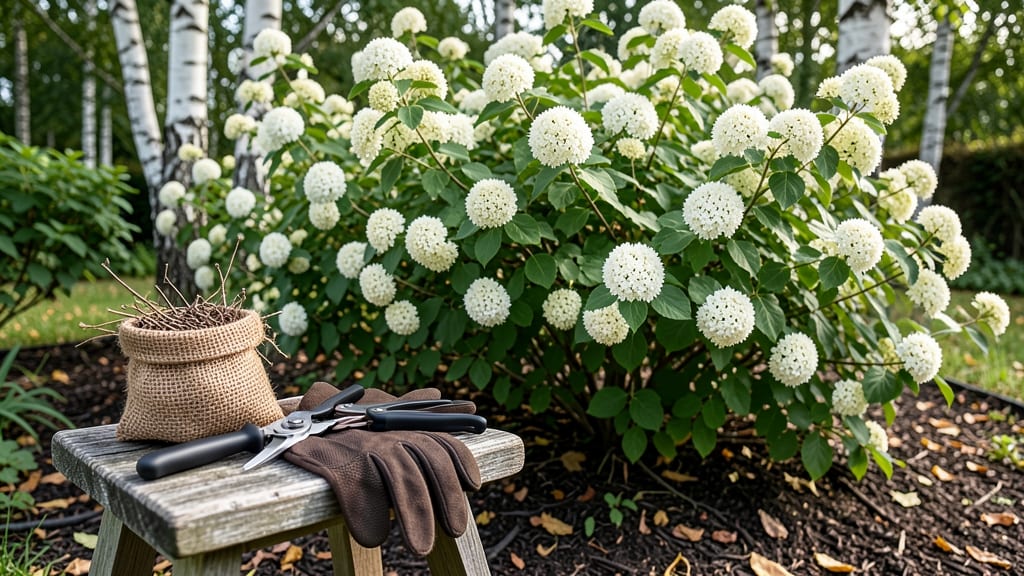
Pruning your viburnum snowball tree transforms it from a thorny tangle into a lush, bloom-covered showpiece. ✨ I learned the hard way—skipping pruning turns those round white clusters into sparse, leggy messes. The right cuts unlock three distinct seasonal shapes, from winter's bare branches to summer's dense foliage.
Start with the basics: sharp pruners, sanitizer, and gloves. You'll focus on three key cuts—deadheading after blooms, shaping in late winter, and rejuvenation for older branches. Most gardeners overdo it, but these precise techniques work even if you're new to shrub pruning.
By mid-spring, you'll see fresh green growth where bare stems once stood, and those iconic snowball blooms will multiply. The tree stays compact, thorns reduce, and you avoid the common mistake of cutting into old wood that never regenerates.
Works for both young plants and mature shrubs—just adjust the timing and intensity. Let's get those branches looking intentional!
📚 In This Guide
- What you need
- Instructions
- Tips and common mistakes
- Wrapping up and next steps
What you need
- ● Bypass pruning shears – Sharp, high-quality shears (5-7 inch blades) for clean cuts on small branches.
- ● Loppers – For thicker branches (1-2 inches in diameter). Choose bypass loppers for precision.
- ● Pruning saw – A bow saw or pruning saw for branches thicker than 2 inches.
- ● Gloves – Heavy-duty, thorn-resistant gloves (Viburnum has tiny but sharp thorns!).
- ○ Disinfectant (optional but recommended) – Rubbing alcohol or a 70% isopropyl solution to sterilize tools between cuts and prevent disease spread.
- ○ Pruning sealant – A tree wound sealant (like Tanglefoot or a natural beeswax-based product) for large cuts (optional but helpful for fast healing).
- ● Trash bags or buckets – For collecting pruned branches and debris.
- ● Ladder or step stool – If your tree is taller than 6 feet (ensure it’s stable and safe!).
- ● Marking twine or flags – To tag branches for removal if planning a major reshaping.
- ● Safety goggles – Protects your eyes from flying debris (especially when using a pruning saw).
- ● Know your tree’s age and health – Young trees (under 3 years) need minimal pruning; mature trees may require structural adjustments.
- ● Check the weather – Prune on a dry, overcast day to reduce stress on the tree and prevent fungal infections.
- ● Review your pruning goals – Decide if you’re shaping for spring blooms, summer foliage, or winter structure before starting.
Step-by-Step guide to pruning viburnum snowball trees
Here's how I transform my viburnum snowball bushes into thriving, thorn-free showpieces year after year.
✂️ Step 1: Prune Immediately After Flowering
This is the most critical time—waiting too long risks cutting off next year's blooms. Use clean, sharp pruners to remove dead or crossing branches first. I look for branches that rub against each other or grow inward, as these create weak points and invite disease. Cut at a 45-degree angle just outside the branch collar where it meets the main stem.
Next, thin out 10-20% of the oldest stems at ground level. These are usually thicker, woody branches that no longer produce vibrant flowers. I always make these cuts on a dry day when the plant isn't stressed—this helps it recover faster. You'll notice the center of the bush opens up, allowing better airflow and sunlight penetration.
✂️ Step 2: Shape in Late Summer for Winter Structure
About 6-8 weeks before your first frost, I give my viburnums a light shaping trim. The goal here is to create a balanced, rounded form that will hold up under snow. Use your hand as a guide—any branch thicker than your wrist should be reduced. Thin out 1-2 inches of growth from the tips of remaining branches to encourage bushier growth next spring.
Watch for branches that grow too upright or downward. These create weak structural points. I make small cuts to redirect growth outward, which helps the plant maintain its natural shape. Avoid heavy pruning now—you want to preserve the plant's energy for winter survival. The key is subtle shaping, not aggressive cutting.
✂️ Step 3: Light Maintenance Pruning in Early Spring
As soon as you see new growth buds swell in early spring, do a final light pruning pass. Remove any dead, diseased, or damaged branches you missed last fall. I also look for any branches that grew too close together during winter and thin them out to prevent future rubbing.
This is also when I clean up any suckers that appear at the base. Viburnums often produce these vigorous shoots that drain energy from the main plant. Cut them off at ground level immediately. The goal here is to give your plant a fresh start before the growing season begins. You'll see new, vibrant growth within 2-3 weeks if done correctly.
✂️ Step 4: Clean Up and Prevent Thorns Year-Round
After each pruning session, I gather all the clippings and dispose of them properly. Viburnum branches can harbor pests and diseases, so I never leave them on the ground. I also disinfect my pruners with rubbing alcohol between cuts to prevent spreading any potential infections.
To minimize thorns, I focus on maintaining an open center. Thorns develop when branches grow too tightly together. By keeping the center open through regular thinning, you'll find your viburnum develops fewer thorns over time. The result is a lush, flowering bush that's much easier to enjoy—and maintain—throughout the seasons.
Tips & tricks for pruning viburnum snowball trees
Transforming your viburnum snowball into a thriving, thorn-free beauty takes a few key insights—here's what I've learned after years of pruning mine.
Timing is Everything: The post-bloom pruning in Step 1 is non-negotiable for next year's flowers. I mark my calendar right after the white snowball blooms fade completely—usually around early June in my zone. If you wait too long, you risk cutting off next spring's flower buds, which form on last year's growth. The 6-8 week window before frost in Step 2 is equally critical; I calculate this by counting back from my average first frost date (usually mid-October for me).
Branch Selection Strategy: When thinning those 10-20% oldest stems in Step 1, I look for branches that are at least pencil-thick or larger. These are the ones that no longer produce vibrant flowers. Pro tip: Make your cuts just above a leaf node or outward-facing bud to encourage new growth in the direction you want. I always step back and visualize the bush's shape after each cut—this helps me maintain that natural, rounded form.
Tool Maintenance Secret: Between cuts in any step, I wipe my pruners with rubbing alcohol and a clean cloth. This prevents spreading any potential infections between branches. I also sharpen my pruners annually—dull blades crush stems instead of making clean cuts, which stresses the plant. A quick test: If your pruners don't cut cleanly through a piece of newspaper, it's time to sharpen them.
Seasonal Shape Check: After your late summer shaping in Step 2, I recommend doing a "snow test" visualization. Imagine how snow will settle on your bush—any branches growing too upright will collect heavy snow loads that can break them. The subtle cuts you make to redirect growth outward now will pay off when winter arrives, keeping your bush intact and beautiful.
Pro Tips for Pruning Viburnum Snowball Tree
- Transforming your viburnum snowball into a thriving, thorn-free beauty takes a few key insights—here's what I've learned after years of pruning mine.
- Timing is Everything: The post-bloom pruning in Step 1 is non-negotiable for next year's flowers.
- Branch Selection Strategy: When thinning those 10-20% oldest stems in Step 1, I look for branches that are at least pencil-thick or larger.
Frequently asked questions
When is the best time to prune a Viburnum Snowball tree?
The ideal time to prune is late winter or early spring (just before new growth starts). This helps shape the tree while avoiding late-season cuts that could stimulate tender new growth vulnerable to frost. If needed, light shaping can also be done after flowering, but avoid heavy pruning then—it may reduce next year’s blooms!
How much can I trim back my Viburnum Snowball?
You can safely remove up to one-third of the tree’s growth in a single season, but avoid over-pruning. For mature trees, focus on thinning out crowded branches and removing dead wood. Never cut more than 25% of the canopy in one go—this can stress the plant and reduce flowering.
Why aren’t my Viburnum Snowball blooms as full as they used to be?
Over-pruning, especially after flowering, is the most common culprit. Blooms form on old wood, so avoid heavy cuts in late summer or fall. If your tree is struggling, check for pests (like spider mites) or disease (like powdery mildew) and prune only to remove affected areas.
Can I prune a Viburnum Snowball into a different shape?
This versatile shrub responds well to shaping—whether you prefer a rounded mound, hedge, or even a small tree. Use hand pruners for fine details and loppers for thicker branches. Just remember: prune gradually to avoid shocking the plant.
Should I prune in winter if it’s still cold?
Wait until after the last hard frost (typically late winter) to prune. Cold snaps can weaken the plant, and fresh cuts may not heal properly. If you must prune in winter, do so on a mild day and avoid excessive trimming.
What if I accidentally prune too much?
Don’t panic! Viburnum Snowball is resilient. Water deeply after pruning and avoid fertilizing for a few weeks to let the tree recover. If the damage is severe, focus on light maintenance pruning next season to encourage regrowth.
Wrapping up and next steps
Pruning your Viburnum Snowball tree isn’t just about shaping—it’s about unlocking its full potential for stunning blooms, healthier growth, and a thorn-free haven. 🌸 With the right tools, timing, and techniques, you can transform this versatile shrub into a seasonal showstopper, whether you prefer a lush rounded form, a sleek modern silhouette, or a cascading masterpiece.
The key? Consistency and confidence—your tree will reward you with vibrant blooms and lush foliage year after year!
Ready to take the next step? Grab your pruners, mark your calendar for late winter or early spring, and start shaping your Snowball tree today! Your future garden (and your neighbors!) will thank you. 🌿✨