
Pruning
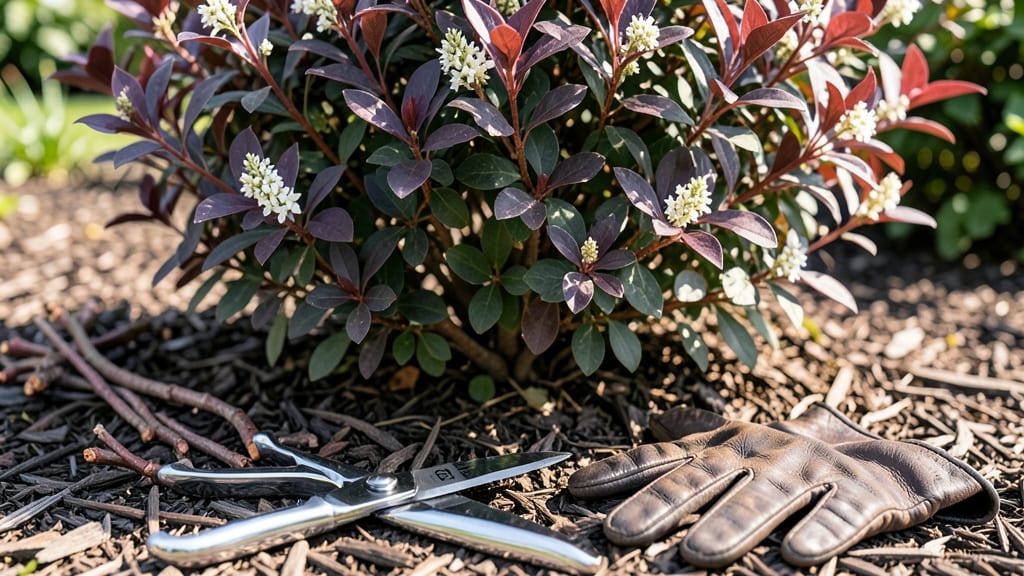
Pruning Physocarpus 'Diabolo' in late winter transforms it from a thorny mess into a sleek, flowering machine. ✂️ I learned the hard way—skipping this step left my plant looking scraggly, with dense growth that blocked sunlight and encouraged pests.
The dormant season is the perfect time to reshape your 'Diabolo' while it rests, ensuring vibrant blooms and a thorn-free canopy by spring.
You'll need sharp pruners, gloves (those thorns are no joke), and a bucket for trimmings. The goal is to remove dead or crossing branches, open up the center for airflow, and shape it into a rounded, bushy form.
Start by cutting back any dead wood to clean stems—this alone improves the plant's health. Then, look for branches growing inward or rubbing against others; these compete for energy and should go first.
What you end up with is a sunlit, airy shrub that flowers more profusely and stays easier to maintain. The thorns become less aggressive as you encourage outward growth, and you'll notice fewer pests lurking in shaded, damp areas.
With each cut, you're not just pruning—you're inviting your 'Diabolo' to grow stronger and showier.
Fair warning: avoid heavy pruning in summer, as it stresses the plant. And never remove more than one-third of the plant at once—this rule keeps your 'Diabolo' thriving, not struggling. The payoff? A neat, productive shrub that's the star of your landscape all season long.
📚 In This Guide
- What you need
- Instructions
- Tips and common mistakes
- Wrapping up and next steps
What you need
- ● Pruning shears: Bypass pruners (for clean cuts on small stems, 4–6" blades, stainless steel or high-carbon steel). Quantity: 1 pair.
- ● Loppers: Long-handled bypass loppers (for thicker branches, 8–12" blades, ergonomic grip). Quantity: 1 pair.
- ● Pruning saw: Curved-tooth pruning saw (for stubborn, thick branches, 10–12" blade). Quantity: 1.
- ● Garden gloves: Heavy-duty, thorn-resistant (nitrile-coated or reinforced leather). Quantity: 1 pair.
- ● Disinfectant: 70% isopropyl alcohol or rubbing alcohol (to sterilize tools between cuts). Quantity: Small bottle.
- ● Sharpener: Pruner sharpening file or stone (to maintain blade sharpness). Quantity: 1.
- ● Trash bags: Heavy-duty contractor bags (for debris disposal). Quantity: 2–3.
- ● Hand pruners: Compact bypass pruners (for precision work in tight spaces). Quantity: 1.
- ● Ladder: Lightweight aluminum or fiberglass (if branches are >6 ft high). Quantity: 1 (with stabilizers).
- ● Marking spray: White or colored paint (to mark cuts for future reference). Quantity: Small can.
- ● Safety glasses: ANSI-rated (to protect from debris). Quantity: 1 pair.
- ○ Pruning sealant: Tree wound dressing (optional for large cuts >1" diameter). Quantity: Small tube.
- ● Timing: Prune during dormant season (late winter/early spring, before buds swell). Avoid pruning in wet or freezing conditions.
- ● Weather check: Choose a dry, calm day (humidity <60% to prevent disease spread).
- ● Safety first: Wear closed-toe shoes and avoid loose clothing that could snag on thorns.
- ● Tool prep: Sharpen blades before pruning for clean cuts (dull tools crush stems, inviting disease).
Instructions for pruning Physocarpus 'Diabolo' in dormant season
Here's how I transform this thorny shrub into a tidy, manageable landscape star every winter.
✂️ Step 1: Assess the Shrub's Structure and Thorn Distribution
Start by examining the entire plant from all angles. Physocarpus 'Diabolo' develops thorns along old wood, so focus on identifying where the bulk of these spines cluster. I look for areas where branches cross or rub against each other—these are prime spots for thorn development and where I'll prioritize cuts. Run your hand along several branches to feel where the thorns are most concentrated; this tactile check helps me visualize the pruning strategy.
Use a pencil or stick to mark branches that need removal. I circle entire stems that are crossing or dead, and make small ticks on branches that need light thinning. This pre-planning prevents over-cutting and helps me maintain the shrub's natural shape. Remember, you're aiming for an open center that allows light to penetrate—this reduces future thorn production by encouraging new growth from the interior.
✂️ Step 2: Remove Dead, Diseased, or Crossing Branches First
Begin pruning by cutting out any dead, diseased, or damaged branches completely back to the main stem or ground level. I use clean, sharp bypass pruners to make cuts just outside the branch collar—the swollen area where the branch meets the trunk. This ensures the wound heals properly and minimizes the risk of infection. For thicker branches, I switch to loppers to avoid tearing the bark.
Next, remove any branches that are crossing or rubbing against others. These create wounds that invite disease and produce excessive thorns. Make your cuts at a slight outward angle to allow water to run off the wound. I step back frequently to check the overall shape—this helps me avoid removing too much foliage in one area, which can create gaps in the canopy.
✂️ Step 3: Thin the Canopy to Improve Airflow and Reduce Thorns
Now focus on thinning the interior of the shrub. Select branches that are growing inward and remove about one-third of their length. I target branches that are thinner than a pencil—these are easier to control and less likely to produce dense thorn clusters. Cut just above an outward-facing bud to encourage new growth in the right direction. This step is critical for reducing thorns because it opens up the center, allowing sunlight to reach the inner branches and promoting healthier, less spiny growth.
Work your way outward, gradually reducing the number of cuts as you move toward the shrub's edges. I avoid cutting more than 25% of the shrub's total foliage in one season—this prevents stress and ensures the plant can recover quickly. After thinning, the shrub should look like an open vase with light filtering through the center. This not only reduces thorns but also makes future pruning easier.
✂️ Step 4: Shape the Outer Canopy for Balance and Aesthetics
Once the interior is thinned, move to the outer edges of the shrub. Use hand pruners to trim back any branches that are growing too long or out of proportion. I aim to create a rounded, natural shape that complements the shrub's mature size. For 'Diabolo', which typically grows 6-8 feet tall and wide, I avoid cutting back more than 10-15% of the total height or width in a single season.
Pay special attention to branches that are growing downward or inward. These can create a dense, thorny tangle over time. Cut just above a bud that faces outward or upward to encourage growth in the desired direction. Step back every few minutes to check the symmetry—this helps me spot any uneven areas before they become obvious. The goal is a shrub that looks full and lush but remains manageable and thorn-free.
🧹 Step 5: Clean Up and Dispose of Prunings
After finishing the cuts, gather all the prunings and dispose of them properly. I avoid leaving clippings on the ground, as they can harbor pests or diseases. For small shrubs, I simply bag the debris, but for larger prunings, I burn them in a designated fire pit or add them to a compost pile if they're disease-free. Clean your pruners with rubbing alcohol between cuts to prevent the spread of any potential pathogens.
Finally, give the shrub a light watering if the ground isn't frozen. This helps it recover from the pruning stress and prepares it for spring growth. I also add a 1-2 inch layer of mulch around the base, keeping it a few inches away from the trunk. This protects the roots from temperature fluctuations and retains moisture. With dormant-season pruning complete, your 'Diabolo' will enter spring with a clean slate and fewer thorns to contend with.
Tips & tricks for pruning Physocarpus 'Diabolo' like a pro
Transforming your thorny 'Diabolo' into a well-behaved landscape feature takes strategy. Here's what I've learned after years of trial and error with these prickly beauties.
Tool Selection: Invest in quality bypass pruners—they make clean cuts that heal faster and reduce the risk of disease. For branches thicker than your wrist, loppers are essential. I use a small folding saw for any branches larger than 2 inches in diameter, as these can't be cut with hand tools. Sharp tools also make the job safer—you'll avoid slipping on thorny branches when you're focused on precision cuts.
Thorn Hotspots: The most concentrated thorns develop on branches that cross or rub against each other. In Step 1, when you're assessing the shrub, pay special attention to these areas—these are your priority cuts. I've found that branches growing from the lower half of the shrub tend to develop more aggressive thorns, so I often remove these entirely if they're crossing with other branches. This creates instant relief from those painful encounters.
Pruning Angles Matter: When making cuts in Step 2 and Step 4, always cut at a slight outward angle just above a bud facing the direction you want new growth to go. This technique, called heading back, encourages healthier growth patterns. For thicker branches, I make the cut just outside the branch collar—the swollen area where the branch meets the trunk. This promotes faster healing and reduces the chance of infection entering the wound.
Seasonal Timing: Dormant season pruning (late winter to early spring) gives you the best results because the plant isn't actively growing. The cuts you make now won't stimulate new growth until spring, allowing the plant to recover fully before summer heat arrives. I always prune on a dry day when temperatures are mild—this reduces stress on the plant and makes the job more comfortable for me.
Pro Tips for Pruning Physocarpus Diabolo
- Transforming your thorny 'Diabolo' into a well-behaved landscape feature takes strategy.
- Tool Selection: Invest in quality bypass pruners—they make clean cuts that heal faster and reduce the risk of disease.
- Thorn Hotspots: The most concentrated thorns develop on branches that cross or rub against each other.
Frequently asked questions
about pruning Physocarpus 'Diabolo'—your go-to guide for thorn-free success!When is the best time to prune Physocarpus 'Diabolo'?
The ideal window is late winter to early spring (just before new growth starts). This aligns with the plant’s dormant phase, reducing stress and preventing disease. Avoid pruning in fall—it can stimulate tender growth vulnerable to frost. For heavy shaping, prune in stages over 2–3 years to avoid over-stressing the plant.
How much can I cut back my 'Diabolo' shrub?
You can safely remove up to 1/3 of the plant’s total volume in a single pruning session. For rejuvenation, cut back older stems to 6–12 inches from the ground, but avoid over-pruning—this can delay flowering. Focus on thinning dense areas first to improve airflow and reduce thorn buildup.
What if I prune at the wrong time?
Pruning in summer or fall can stimulate weak growth that’s prone to frost damage or pests. If you’ve already pruned outside the dormant season, don’t panic! Just avoid heavy cuts and focus on light shaping. Monitor for stress signs (yellowing leaves, wilting) and water deeply if needed.
Are there alternatives to pruning for managing thorns?
While pruning is the most effective method, you can reduce thorniness by:
- Fertilizing with low-nitrogen, high-phosphorus formulas to encourage dense, thorn-free growth.
- Planting in full sun (6+ hours/day) to promote stronger, less spiky stems.
- Using thorn-proof gloves (like heavy-duty leather) during maintenance to minimize scratches.
Why does my 'Diabolo' still have so many thorns after pruning?
Thorns are genetic, but poor pruning habits can worsen them. Check for:
- Overcrowding—thin out branches to 6–12 inches apart for better airflow.
- Neglecting deadheading spent flowers to redirect energy to new growth.
- Pruning too late—delayed cuts encourage vigorous but thorny regrowth.
Wrapping up and next steps
Pruning your Physocarpus 'Diabolo' during dormancy is your golden ticket to a lush, thorn-free hedge that thrives year after year! 🌿 With the right tools, timing, and technique, you’ll keep its growth in check while encouraging vibrant foliage.
Remember, consistency is key—schedule your pruning for late winter or early spring and repeat annually for the best results.
Now that you’re armed with knowledge, grab those shears and get pruning! 💪 Start small if you’re new, and soon you’ll be a pro at shaping this stunning, low-maintenance shrub. Happy gardening!