
Pruning
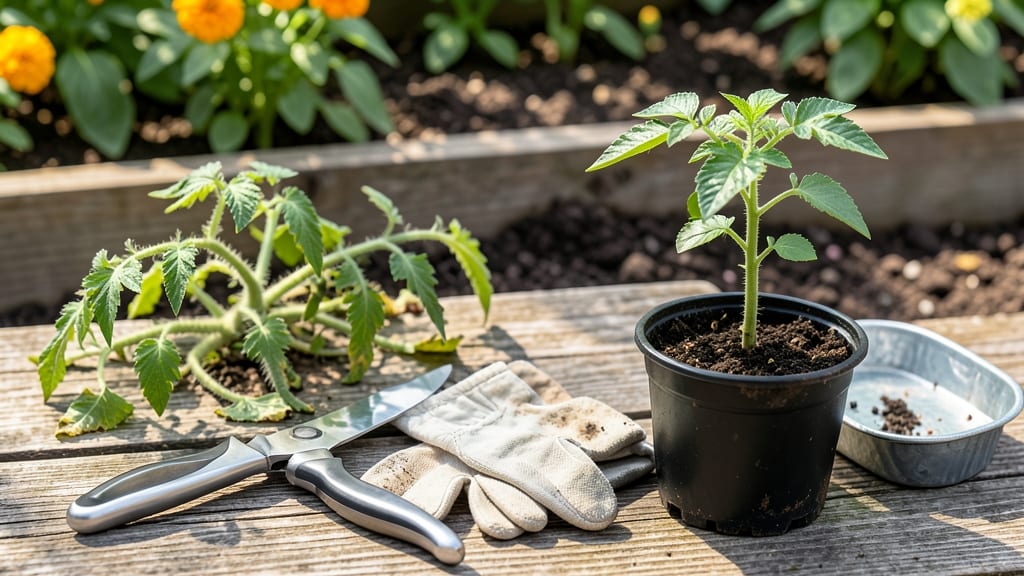
Pruning tomato seedlings isn't just about trimming—it's about shaping the future of your harvest. ✂️ I used to skip this step, thinking it would stunt my plants, but after seeing my first bushy, productive vines, I never looked back.
The right cuts now mean stronger stems that support heavier fruit and more air circulation to prevent disease.
Start when seedlings are about 6 inches tall and have their first true leaves. You'll need clean pruners or your fingers (for small jobs), and a sunny spot to work. The goal is simple: encourage the plant to grow wider and bushier, not taller.
Pinch off the lower leaves that touch the soil, and remove any "suckers"—those little shoots that grow between the main stem and branches.
What you'll end up with is a stocky, well-balanced plant that produces fruit all season long. Determinate tomatoes benefit from pruning too, though they don't need as much—focus on removing diseased leaves and shaping the plant.
Indeterminate varieties, like my favorite 'Sungold' cherries, thrive with regular pruning and can grow 10 feet tall if given the right support.
Common mistakes? Pruning too late in the season or cutting into the main stem. Timing is everything—do it early, and you'll see the difference in just a few weeks. The payoff? A garden full of heavy, flavorful tomatoes that keep coming until frost. Ready to give it a try?
📚 In This Guide
- What you need
- Instructions
- Tips and common mistakes
- Wrapping up and next steps
What you need
- ● Sharp pruning shears or scissors: Clean, sterilized (70% isopropyl alcohol or bleach solution), and bypass-pruned (for clean cuts). Avoid dull tools—they crush stems instead of cutting.
- ○ Gloves (optional but recommended): Nitrile or latex gloves to protect from thorns and sap.
- ● Disinfectant (70% isopropyl alcohol or 10% bleach solution): 1 part bleach to 9 parts water to sterilize tools between cuts and prevent disease.
- ● Small bucket or container: For collecting pruned stems (compost them later!).
- ● Labeling tags (if repurposing stems): Waterproof markers if saving cuttings for propagation.
- ● Healthy seedlings: Wait until seedlings have 3–5 true leaves (not just cotyledons) and are at least 6–8 inches tall.
- ● Sunny, dry conditions: Prune on a calm, cloudy day or early morning to reduce stress on plants.
- ● Water nearby: A watering can or hose to hydrate plants before/after pruning (helps recovery).
- ○ Staking or support system (optional but helpful): Bamboo stakes, cages, or trellises if you plan to train vines vertically.
Step-by-Step guide to pruning tomato seedlings for healthier growth
Here's my foolproof method for shaping strong, productive tomato plants from day one.
🌱 Step 1: Identify Key Growth Points to Preserve
Wait until your seedlings have developed 3-4 true leaves (the first set of leaves after the initial seed leaves) before pruning. This is when the plant has enough energy to recover from cuts. Look for the main stem and the first sets of leaves—these are your reference points.
Real talk: Don't prune earlier, even if the plant looks leggy. Young seedlings are fragile, and removing too much too soon stresses them. Focus instead on giving them proper light and water until they're ready. You'll know they're ready when the stem feels sturdy and the leaves are vibrant green.
✂️ Step 2: Remove Lower Leaves Below the First Flower Cluster
Use clean, sharp scissors or pruning shears to snip off the bottom 2-3 sets of leaves just above where they meet the stem. This encourages energy to flow upward to the fruit-bearing parts of the plant. I always make my cuts at a 45-degree angle—it helps water run off the cut instead of pooling.
Don't worry about leaving tiny leaf stubs. Just make sure you're cutting right at the stem. If you leave any leaf material attached, it can rot and invite disease. This step might seem counterintuitive—removing leaves when you want more growth—but it redirects the plant's energy toward stronger stems and more flowers.
🌿 Step 3: Pinch Off Suckers for Bushier Growth
Suckers are the small shoots that grow in the V-shaped junction between the main stem and a branch. These compete with your plant for energy. When they're about 1-2 inches long, pinch them off with your fingers or snip them cleanly at the base. I do this every 2-3 weeks during the growing season.
Here's the thing—if you miss a sucker, it can grow into a full branch that steals nutrients from your main plant. You'll see them as tiny offshoots in the leaf axils (where the leaf meets the stem). Be thorough but gentle. The goal is to shape the plant, not damage it. A well-pruned tomato plant will have a strong central stem with multiple branches bearing fruit.
☀️ Step 4: Prune for Airflow and Sunlight Access
As your tomato plants grow taller, focus on removing any leaves that shade the fruit or block airflow. Aim to keep the lower third of the plant leaf-free to prevent soil-borne diseases. Cut any yellowing or diseased leaves immediately—they're entry points for pests and fungi.
You'll notice that pruning opens up the plant, letting more sunlight reach the fruit. This is critical for sweetness and ripening. I always prune on a dry, sunny morning so the cuts have time to dry out before evening. Avoid pruning when the plants are wet or stressed—they're more vulnerable to infection.
⏰ Step 5: Monitor and Adjust Pruning Through the Season
Continue pruning throughout the growing season, focusing on removing suckers, diseased leaves, and any growth that competes with fruit production. By mid-season, you might need to remove some of the lower branches entirely to redirect energy to the upper fruit clusters. This is especially important for indeterminate varieties that keep growing all season.
Watch your plant's response to pruning. If it looks stressed, you're overdoing it. If it's growing vigorously with lots of new leaves and flowers, you're on the right track. The key is balance—prune enough to shape the plant but not so much that you stunt its growth. With practice, you'll develop a feel for what works best for your specific tomato varieties.
Tips & tricks for pruning tomato seedlings
These simple tricks will help you shape healthier tomato plants that produce bigger harvests all season.
Timing is Everything: The 3-4 true leaves stage in Step 1 is non-negotiable for young seedlings. I learned this the hard way after seeing seedlings wilt after early pruning. Wait until the stem feels sturdy and leaves are vibrant green—this means the plant has enough energy to recover. Confession: I skipped this step for years and wondered why my plants struggled.
Cutting Technique Matters: That 45-degree angle in Step 2 isn't just for looks—it helps water run off cleanly instead of pooling at the cut. Use clean, sharp scissors to make precise cuts right at the stem. I always sterilize my tools with rubbing alcohol between plants to prevent disease spread.
Sucker Patrol Strategy: When those 1-2 inch suckers appear in Step 3, remove them consistently every 2-3 weeks. I check my plants every Saturday morning—this regular routine prevents suckers from becoming full branches that steal nutrients. Think of it as maintenance for your plant's growth budget.
Seasonal Adjustments: By mid-season in Step 5, you might need to remove entire lower branches to redirect energy upward. This is especially important for indeterminate varieties that keep growing. Watch your plant's response—if it looks stressed, you're overdoing it. The goal is balance, not perfection.
Pro Tips for Pruning Tomato Seedlings
- These simple tricks will help you shape healthier tomato plants that produce bigger harvests all season.
- Timing is Everything: The 3-4 true leaves stage in Step 1 is non-negotiable for young seedlings.
- Cutting Technique Matters: That 45-degree angle in Step 2 isn't just for looks—it helps water run off cleanly instead of pooling at the cut.
Frequently asked questions
Got questions about pruning tomato seedlings? You’re not alone! Here are some of the most common concerns—and straightforward answers—to help you grow like a pro.
When should I start pruning my tomato seedlings?
Prune after your seedlings have developed their first true leaves (not the tiny seed leaves) and are at least 6–8 inches tall. For indeterminate varieties (like cherry tomatoes), wait until they’ve grown 2–3 feet tall before heavy pruning. Early pruning can stress young plants, so patience pays off!
How often should I prune tomato seedlings?
For indeterminate tomatoes, prune weekly or biweekly during the growing season to encourage bushiness and airflow. For determinate varieties (like Roma), minimal pruning is needed—just remove suckers if they appear. Focus on quality over quantity; over-pruning can weaken plants.
What if I accidentally prune too much?
Don’t panic! If you’ve trimmed back too aggressively, your plant may look shocked at first. Stop pruning immediately and give it time to recover. Keep soil moist, provide shade if needed, and avoid fertilizing until new growth appears. Most tomatoes bounce back surprisingly well with proper care.
Can I use scissors or should I pinch suckers by hand?
Both work, but pinching suckers by hand (the small shoots in leaf axils) is gentler and reduces the risk of disease. If using scissors, sterilize them first with rubbing alcohol to prevent bacterial spread. For larger cuts, clean pruners are better—but always make cuts at a 45-degree angle to promote healing.
What if my tomato plant isn’t producing flowers after pruning?
Pruning too late in the season (especially in cooler climates) can delay flowering. If your plant is healthy but not blooming, check for:
- Enough sunlight (6–8+ hours daily)
- Proper nutrients (too much nitrogen = leafy growth, not flowers)
- Consistent watering (drought stress can halt blooms)
Wrapping up and next steps
Pruning tomato seedlings might seem daunting at first, but with the right technique, you’ll unlock bushier plants, healthier vines, and a bountiful harvest! 🌱 The key is patience—start early, use clean tools, and follow your plant’s natural growth cues.
Remember, every snip is an investment in stronger, more productive tomatoes.
Now that you’re armed with knowledge, grab those shears and get pruning! 🌿 Track your progress, adjust as needed, and soon you’ll be reaping the rewards of your green thumb. Happy gardening!