
How To
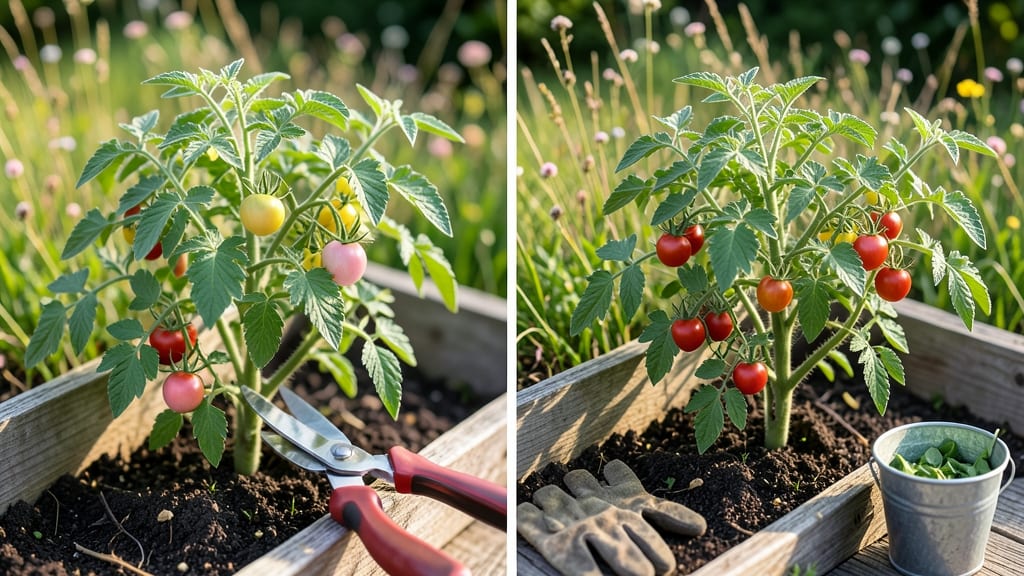
Determinate tomatoes need minimal pruning—just a few strategic cuts to boost fruit production and airflow. 🌱 I learned the hard way that over-pruning these busier varieties backfires, but the right approach keeps plants healthy and loaded with ripe tomatoes all season.
Start with clean, sharp pruners and focus on removing only suckers (those little shoots between the main stem and branches) that grow larger than your thumb. Skip the heavy-handed approach—determinates grow in a compact shape, so prune just enough to prevent disease and improve sunlight penetration to lower branches.
By mid-season, you’ll notice fewer crowded stems and more sun reaching the fruit clusters. The key is consistency—check plants weekly and remove only what’s necessary. This method works for both backyard gardens and container-grown tomatoes, ensuring you get the harvest you planted for.
📚 In This Guide
- What you need
- Instructions
- Tips and common mistakes
- Wrapping up and next steps
What you need
- ● Pruning shears or sharp scissors – Look for bypass-style pruners (4–6 inches long) to avoid crushing stems.
- ● Gloves – Garden gloves (nitrile or leather) to protect against thorns and dirt.
- ○ Disinfectant (optional but recommended) – Rubbing alcohol (70%+) or a bleach-water mix (1:9 ratio) to sterilize tools between cuts.
- ● Compost bin or bag – For removing pruned debris (avoid composting diseased plant parts).
- ● Watering can or hose – To hydrate plants before/after pruning (especially in hot weather).
- ● Sunny day or overcast morning – Prune when plants are well-watered and temps are mild (avoid midday heat!).
- ● Hand lens or magnifying glass – For spotting early signs of pests/disease on stems.
- ● Plant support (stakes or cages) – If your determinate variety needs light structural help (e.g., ‘Roma’ or ‘Celebrity’).
- ● Garden twine – For securing floppy stems if needed.
- ● Pruning sealant (for large cuts) – Not critical for determinates, but handy if you’re removing big branches.
Step-by-step guide to pruning determinate tomatoes
Determinate tomatoes don’t need heavy pruning, but a little strategic trimming boosts air flow and fruit production.
🌿 Step 1: Remove Lower Leaves for Better Airflow
Start by stripping off any leaves touching the soil—these will rot and spread disease. Use clean pruning shears or your fingers to gently pinch them away. The goal is to expose the stem up to about 12 inches from the base. This prevents soil-borne pathogens from climbing up the plant.
Watch for yellowing or wilting lower leaves—these are prime candidates for removal. If you see signs of early blight (brown spots), remove those leaves immediately. Determinate tomatoes have a bushier growth habit, so focus on the bottom third of the plant first. You’ll notice the stem looks cleaner and more open after this step.
✂️ Step 2: Trim Suckers Sparingly
Determinate tomatoes produce suckers—the small shoots that grow in the leaf axils—but you don’t need to remove them all. Unlike indeterminate varieties, determinate plants don’t benefit from aggressive pruning. Instead, just pinch off any suckers that appear below the first flower cluster. These early suckers drain energy from fruit production.
Here’s the thing—determinate tomatoes set fruit along the entire stem, so over-pruning reduces yield. Only trim suckers that are growing toward the center of the plant or appear weak. You’ll see thicker, sturdier stems and more evenly distributed fruit after this step. Avoid cutting into the main stem or large branches.
☀️ Step 3: Open the Canopy for Sun Exposure
Determinate tomatoes grow in a compact bush shape, but their leaves can still block sunlight from reaching the center. Gently spread outward any branches that are crowding each other, and trim back any leaves that are shading the fruit clusters. The goal is to let light and air reach every part of the plant, especially where tomatoes are forming.
If you notice leaves growing inward or overlapping, snip them off just above a leaf node. This encourages the plant to focus energy on fruit rather than excess foliage. You’ll see the plant’s center brighten up within a few days, and the tomatoes will ripen more evenly. Avoid pruning after mid-July—determinate plants start maturing fruit then, and late cuts can delay harvest.
⏰ Step 4: Monitor and Maintain Through Harvest
After your initial pruning, check the plant weekly for new suckers or crowded growth. Determinate tomatoes produce fruit in waves, so adjust pruning based on what’s happening. If you see a branch with too many leaves but few tomatoes, trim back a few leaves to redirect energy to fruit production.
Real talk: determinate tomatoes don’t need much pruning, but a little goes a long way. Focus on airflow and sunlight, and you’ll end up with healthier plants and bigger harvests. Stop pruning once fruit starts coloring—this signals the plant to focus on ripening rather than new growth.
Tips & tricks for pruning determinate tomatoes
Between us, these simple adjustments can transform your determinate tomato plants from struggling bushes to high-yielding fruit machines. Let's cut to the chase—literally.
Timing is Everything: The best time to prune is in the morning when the plants are dry. This prevents disease spread from wet leaves and makes it easier to spot problems like early blight. I always do my pruning right after watering so I can see the plant structure clearly. The 12-inch clearance from the base in Step 1 creates a natural barrier against soil-borne diseases that would otherwise climb up the stem.
Tool Selection Matters: Don't reach for your garden shears—use clean pruning shears or your fingers for small jobs. I learned this the hard way after introducing bacterial wilt through contaminated tools. Sterilize your shears with rubbing alcohol between plants, and avoid cutting into the main stem. For determinate tomatoes, less is more—you're not shaping a tree here, you're creating airflow and sunlight pathways.
Visual Cues for Pruning: Look for these three signs when pruning: leaves touching soil, suckers below the first flower cluster, and inward-growing branches. The mid-July cutoff in Step 3 is critical—after this point, the plant focuses on ripening existing fruit rather than new growth. I mark my calendar with a big red X to remember this deadline. You'll know you're doing it right when you see more sunlight reaching the center of the plant within days.
Seasonal Adjustments: In hot climates, prune more aggressively to prevent heat stress, while cooler regions can afford slightly more foliage. The key is always to maintain that balance between airflow and sunlight exposure. If your tomatoes are ripening unevenly, that's your cue to open up the canopy more. I've seen plants go from patchy ripening to uniform harvests just by letting more light in—it's like flipping a switch for the plant's energy focus.
Pro Tips for Prune Determinate Tomatoes
- Between us, these simple adjustments can transform your determinate tomato plants from struggling bushes to high-yielding fruit machines.
- Timing is Everything: The best time to prune is in the morning when the plants are dry.
- Tool Selection Matters: Don't reach for your garden shears—use clean pruning shears or your fingers for small jobs.
Frequently asked questions
Got questions about pruning determinate tomatoes? You’re not alone—this technique can feel tricky at first! Below, we’ve answered the most common questions to help you prune like a pro and maximize your harvest.
Why should I prune determinate tomatoes at all?
Determinate tomatoes are naturally bushy and produce fruit in clusters near the top. Pruning helps improve air circulation, reducing disease risk (like blight) and directing energy to the remaining fruit. It also makes harvesting easier! Skip pruning, and you might end up with fewer, smaller tomatoes.
When is the best time to prune determinate tomatoes?
Start pruning early—when plants are 12–18 inches tall and have a few sets of true leaves. Focus on removing suckers (shoots between the main stem and branches) and lower leaves that touch the soil. Avoid heavy pruning late in the season, as determinate tomatoes set fruit all at once and need their energy for ripening.
What if I accidentally prune too much?
Don’t panic! Determinate tomatoes are hardier than indeterminate varieties, but over-pruning can stress the plant. If you’ve removed too many leaves or branches, stop immediately. The plant will recover, though it may produce fewer tomatoes. Next time, aim to keep 3–5 main stems and prune conservatively.
Can I prune determinate tomatoes the same way as indeterminate ones?
Not exactly! Indeterminate tomatoes benefit from aggressive pruning to encourage vertical growth, but determinate tomatoes don’t need it. For determinates, focus on removing suckers and diseased leaves—never prune more than 20–30% of the plant. Think of it as light maintenance, not a growth hack.
Will pruning determinate tomatoes delay fruiting?
Pruning shouldn’t delay fruiting if done correctly. Determinate tomatoes set fruit early in the season, and light pruning (like removing suckers) actually helps the plant focus energy on existing fruit. However, heavy pruning late in the season can slow ripening. Time your cuts right—early and often!
Wrapping up and next steps
Pruning determinate tomatoes might seem tricky, but with the right tools and techniques, you’ll boost your harvest and keep your plants healthy! Remember: less is more—focus on removing diseased leaves, thinning suckers, and ensuring airflow. Your efforts will pay off with juicier, more abundant tomatoes by season’s end. 🍅✨
Now that you’re ready to prune like a pro, grab your shears and get started! For extra success, keep an eye on your plants weekly and adjust as they grow. Happy gardening—and enjoy those homegrown tomatoes! 🌱😊