
Pruning
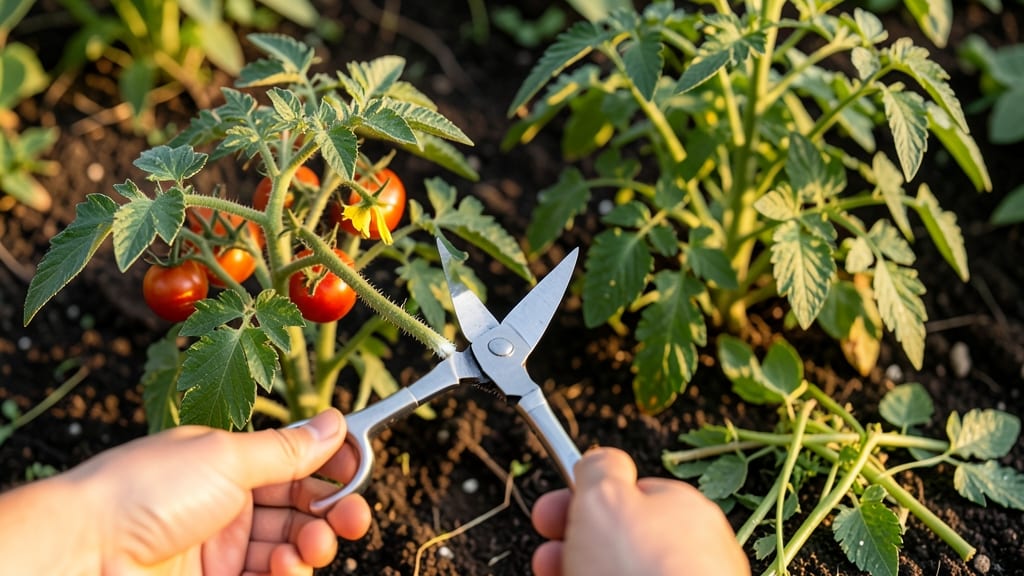
Pruning determinate tomato plants means focusing on light thinning of suckers and lower leaves to boost airflow and sunlight penetration, while avoiding aggressive cuts that could stress the plant. Limit pruning to removing only crowded or diseased foliage—especially after flowering—to protect fruit production. Always prune in the cooler morning hours for the best recovery.
Determinate tomatoes grow as compact bushes, so their pruning needs differ from their vine-like indeterminate cousins. 🌱 Unlike indeterminate varieties that benefit from heavy pruning to direct energy upward, determinate plants produce most of their fruit in one flush.
Removing too many leaves can actually reduce your harvest by limiting the plant's ability to photosynthesize. Instead, focus on creating small openings in the foliage to let sunlight reach the fruit clusters while maintaining the plant's natural shape.
Timing matters most—never prune before flowering, as this can delay or reduce fruit set. After flowers appear, you can safely remove any yellowing or diseased leaves, as well as any suckers growing between the main stem and branches.
Use clean, sharp pruners to make cuts just above a leaf node, and always work in the morning when temperatures are cooler. This gives the plant time to recover before the heat of the day sets in.
💡 In This Article
- Why Determinate Tomatoes Respond Differently to Pruning
- Step-by-Step Pruning Guide for Determinate Tomatoes
Why determinate tomatoes respond differently to pruning
Determinate tomatoes grow as self-contained bushes, unlike their vine-like indeterminate relatives, which means their growth cycle is fundamentally different. These plants produce most of their fruit in one concentrated flush, typically within a 2-3 week window after flowering.
Their compact structure relies on a balance between foliage and fruit production—too much pruning disrupts this equilibrium by reducing the plant's ability to photosynthesize enough energy to support that single massive harvest. 🌿
The key difference lies in their hormonal response. Determinate varieties prioritize fruit development over vegetative growth, so aggressive pruning triggers stress hormones like ethylene, which can actually accelerate leaf drop and reduce fruit set.
Studies show that plants with more than 70% of their leaves removed often produce 20-30% fewer tomatoes compared to minimally pruned counterparts. This is why even experienced gardeners avoid the "open-center" approach used for indeterminate tomatoes.
Another critical factor is their branching structure. Determinate plants develop multiple main stems from the base, creating a natural scaffold for fruit clusters. Each branch typically bears 3-5 fruit trusses spaced along its length.
Removing too many leaves from these branches can leave the fruit exposed to sunburn, while also reducing the plant's ability to transport nutrients efficiently. The goal is to create small openings—about 6-8 inches wide—rather than stripping the plant bare.
Light plays a surprising role here too. Determinate tomatoes rely on diffused sunlight rather than intense direct rays, which is why heavy pruning can backfire. When you thin foliage too aggressively, the remaining leaves may overheat, leading to leaf scorch and reduced photosynthesis.
Instead, aim to create a dappled light effect that protects the fruit while still allowing airflow to prevent diseases like early blight.
Finally, consider the plant's energy allocation. Determinate tomatoes allocate about 60% of their energy to fruit production during peak season, compared to 40% for indeterminate varieties. This means every leaf counts—removing too many shifts energy away from ripening fruit and toward regrowing foliage.
The sweet spot is maintaining about 30-40% of the original leaf canopy after pruning to balance airflow, sunlight, and energy demands.
What most gardeners overlook is the plant's natural recovery timeline. Determinate tomatoes have a slower healing response than indeterminate types, so pruning cuts should be minimal and strategic. Always leave at least 2-3 healthy leaves below each fruit cluster to support ongoing photosynthesis.
This careful approach ensures your plant can still deliver that big harvest without unnecessary stress. 🌱