
Pruning
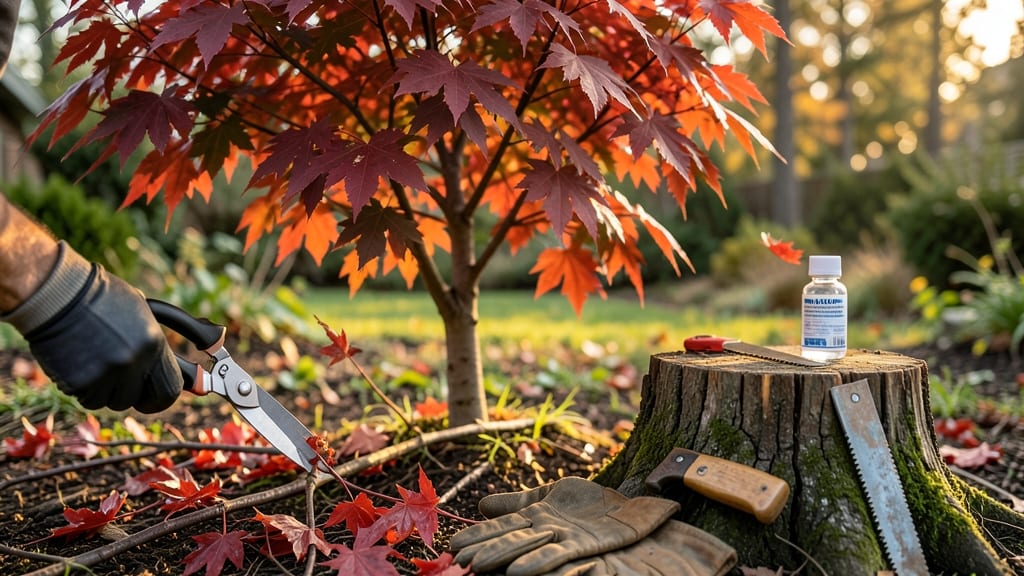
Pruning red maple trees transforms them from scraggly to stunning. ✂️ I learned the hard way that waiting until spring means missing the best growth opportunities—and letting dead branches linger invites pests. The right cuts now mean a stronger, fuller canopy that lasts decades.
Start with the basics: sharp pruning shears, safety gloves, and a ladder (or a sturdy friend). Red maples bleed sap heavily in spring, so winter or late fall is ideal—just avoid extreme cold.
Your goal is to remove dead, crossing, or weak branches first, then shape for sunlight access. By summer, you’ll see fresh green leaves filling gaps where branches used to block light. The tree’s energy shifts from struggling to thriving, and those vibrant red fall leaves become even more spectacular.
It’s not just about looks—proper pruning prevents disease and extends the tree’s lifespan. Works for young saplings or mature giants. Here’s how to do it right without harming your tree.
📚 In This Guide
- What you need
- Instructions
- Tips and common mistakes
- Wrapping up and next steps
What you need
- ● Pruning saw – A sharp, bypass pruning saw (10–14 inches) for larger branches (3+ inches in diameter).
- ● Loppers – Bypass loppers (18–24 inches) for medium branches (½–3 inches). Choose ratcheting loppers for extra leverage.
- ● Hand pruners – Bypass pruners (7–10 inches) for small branches and twigs (ergonomic handles to reduce hand fatigue.
- ○ Extension pole (optional but helpful) – A 3–6 ft telescoping pole with a saw or pruner attachment for high branches.
- ● Gloves – Heavy-duty work gloves with cut-resistant palms to protect against thorns and splinters.
- ● Safety gear – Safety glasses and ear protection (if using a chainsaw for large limbs).
- ● Ladder (if needed) – A stable, extendable ladder (20–30 ft) with non-slip feet. Never stand on the top 3 rungs!
- ● Disposable pruning bags – Heavy-duty mesh bags (5–10 gallon) to collect debris and prevent disease spread.
- ● Rope or harness (for tall trees) – A tree climber’s harness or secure rope if working above 20 feet.
- ● Check the weather – Prune on a dry, calm day (avoid wind or rain).
- ● Inspect the tree – Look for diseased, dead, or crossing branches to target first.
- ● Sanitize tools – Wipe blades with rubbing alcohol (70%+) or bleach solution (1 part bleach to 9 parts water) to prevent bacterial spread.
- ● Clear the area – Remove lawn furniture, pets, or bystanders from a 10-foot radius.
- ● Chainsaw – For very large branches (4+ inches) (use with caution!).
- ● Tree wound dressing – Pruning sealant (controversial but useful for large cuts >2 inches).
- ● Notebook & marker – To sketch a pruning plan or mark cuts for later reference.
- ● First-aid kit – For minor cuts or scrapes (include antiseptic wipes and bandages).
Step-by-Step guide to pruning red maple trees
Here’s how to keep your red maple thriving year-round with clean, strategic cuts.
✂️ Step 1: Identify the Right Time to Prune
Red maples respond best to pruning in late winter to early spring (just before buds swell) or summer after leaf-out. Avoid heavy pruning in fall—it invites disease by leaving fresh cuts exposed to wet conditions. I always check the tree’s health first: if branches are already dead, remove them anytime, but for shaping, timing matters.
Look for three distinct growth phases: dormant season (best for major cuts), leaf-out (ideal for minor shaping), and summer (perfect for removing water sprouts). Never prune during frost or extreme heat—stress weakens the tree’s defenses.
🌿 Step 2: Gather Tools and Safety Gear
You’ll need sharp pruning shears for small branches, loppers for ½–2-inch stems, and a pruning saw for anything thicker. A ladder (or a sturdy stool for smaller trees) and gloves are non-negotiable—red maples have serrated edges that cut skin. I also keep disinfectant (70% rubbing alcohol) handy to wipe tools between cuts and prevent disease spread.
Wear closed-toe shoes and avoid working near power lines. Red maples grow fast, and branches can weigh more than you think. If a branch is over 3 inches thick, call an arborist—these cuts require special techniques to avoid damaging the tree’s structure.
☀️ Step 3: Remove Dead, Diseased, or Crossing Branches First
Start by scanning the canopy for dead wood (brown, brittle branches that snap easily) or diseased branches (mushroom growth, oozing sap, or odd discoloration). Cut these out first—they’re the tree’s weak points. Use clean tools and make cuts just outside the branch collar (the swollen area where the branch meets the trunk).
Next, target crossing branches (where two limbs rub together) or water sprouts (thin, vertical shoots). These compete for energy and create entry points for pests. I like to step back every few cuts to visualize the tree’s natural shape—red maples have a graceful, rounded form, so let that guide you.
⏰ Step 4: Thin the Canopy for Better Airflow
Remove 20–30% of the tree’s branches to open the canopy and reduce disease risk. Focus on thinning from the inside out—this lets sunlight reach the lower branches. Look for branches that grow straight up (called "dominant leaders") and remove every other one to encourage a balanced shape.
Use the "one-third rule": never remove more than one-third of the tree’s foliage in a single season. Red maples are resilient, but over-pruning stresses them. After thinning, step back and check for even light distribution—if one side looks darker, you’ve gone too far.
✂️ Step 5: Shape and Clean Up
For shaping, make cuts just above a bud or branch collar (never leave stubs—this invites decay). Angle the cut slightly downward to shed water. If a branch is too large to cut in one go, make a two-step cut: first undercut the branch, then cut from the top to avoid tearing the bark.
Collect all debris and dispose of it properly (don’t compost diseased wood). Finally, sterilize your tools with rubbing alcohol and store them in a dry place. A well-pruned red maple will reward you with vibrant fall color and stronger growth—just follow these steps, and you’ll keep it healthy for decades.
Tips & tricks for pruning red maple trees
These simple tricks will help you prune like a pro and keep your red maple thriving for years.
Timing is Everything: In Step 1, when you're choosing between late winter/early spring or summer pruning, consider your tree's health. If you notice dead branches anytime of year, remove them immediately—they can harbor pests and diseases. For shaping cuts, stick to the recommended windows to avoid stressing the tree during vulnerable growth phases.
Tool Prep Matters: Before you start in Step 2, sharpen your pruning shears and loppers—dull tools crush branches instead of making clean cuts. I also recommend cleaning your tools with rubbing alcohol between cuts on diseased branches. This prevents spreading pathogens to healthy parts of the tree. For branches over 3 inches thick, consider borrowing or renting a professional-grade pruning saw.
Visualizing the Canopy: When thinning in Step 4, step back every 5-6 cuts to visualize the tree's shape. Red maples naturally grow with an open, rounded form—aim to maintain that natural silhouette. If you're unsure about a cut, take a photo first, then step back to see how it affects the overall balance. This helps avoid over-pruning while still improving airflow.
Cleanup Prevents Problems: After finishing in Step 5, collect all debris and dispose of it properly—never compost diseased wood. I've seen too many cases where prunings left on the ground led to fungal growth that infected the tree. Also, sterilize your tools thoroughly before storing them to prevent cross-contamination between pruning sessions.
Pro Tips for Pruning Red Maple Tree
- These simple tricks will help you prune like a pro and keep your red maple thriving for years.
- Timing is Everything: In Step 1, when you're choosing between late winter/early spring or summer pruning, consider your tree's health.
- Tool Prep Matters: Before you start in Step 2, sharpen your pruning shears and loppers—dull tools crush branches instead of making clean cuts.
Frequently asked questions
Got questions about pruning your red maple tree? You’re not alone! Here are answers to the most common concerns—from timing to tools—to keep your tree thriving.
When is the best time to prune a red maple tree?
The ideal window is late winter or early spring (just before buds swell) to avoid disease risks. Never prune during fall—it stresses the tree and invites pests. For minor trims, summer works, but avoid heavy cuts then.
Can I prune a red maple tree in winter?
Yes, but with caution! Prune only on mild days (above 40°F/4°C) to prevent shock. Avoid heavy cuts—focus on dead branches or safety hazards. Winter pruning is best for dormant-season tasks like removing weak limbs.
What if my red maple “bleeds” after pruning?
Bleeding (sap oozing) is normal but unsightly. It won’t harm the tree. To minimize it, prune in late winter when sap flow slows. Seal cuts with pruning sealant only if the branch is >2” thick (small cuts heal naturally).
Should I remove large branches myself, or hire a pro?
For branches >4” thick or high up, call an arborist. DIY risks damage, improper cuts, or safety hazards. If you’re confident, use a pole saw or harness—but prioritize safety over cost.
How long does it take for a red maple to recover from pruning?
Healthy trees recover in 1–2 growing seasons. Focus on 15–25% of the canopy max per year. Over-pruning weakens the tree; thin selectively to improve airflow and sunlight. Patience pays off!
Wrapping up and next steps
Pruning your red maple tree is a rewarding task that boosts its health, shape, and longevity—and you’ve got all the know-how to tackle it! 🌳 Whether you’re trimming for aesthetics, safety, or seasonal care, consistency is key.
Now that you’re armed with the right tools, techniques, and timing, there’s no better moment to roll up your sleeves and give your tree the TLC it deserves.
Ready to take action? Start small: Pick a sunny weekend, gather your supplies, and prune just one section at a time. Before you know it, your red maple will be thriving—and you’ll be the proud gardener behind it! 🌟