
Pruning
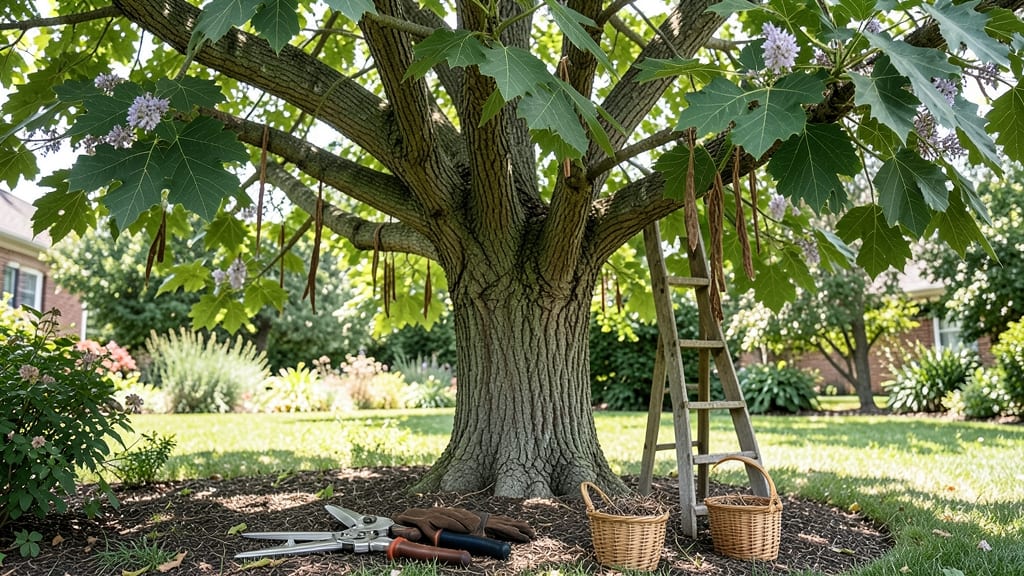
Pruning catalpa trees in late winter reveals their true potential—stronger branches, better airflow, and fewer disease risks. ✂️ I’ve pruned these giants for years, and the dormant season is the only time I’d trust my handsaw to the task.
Catalpas respond best when you remove deadwood first, then shape the canopy before new growth starts. The right tools make all the difference: bypass pruners for small branches, a pruning saw for thicker limbs, and gloves to handle the sticky sap.
Safety gear—like goggles—isn’t optional when dealing with limbs that can weigh hundreds of pounds. Start by removing dead, diseased, or crossing branches, then thin the canopy by one-third to let sunlight reach the inner branches.
After pruning, the tree will send out fresh, vibrant growth by spring—thicker stems and fuller foliage than before. Just avoid fertilizing right away; let the cuts heal for 4-6 weeks to prevent stress.
If you see oozing sap or fungal growth, clean your tools with rubbing alcohol to stop the spread. This method works for mature catalpas in both urban and rural settings. The key is patience—never rush the process, and always prune with the tree’s natural shape in mind.
Your catalpa will thank you with decades of healthy, lush growth.
📚 In This Guide
- What you need
- Instructions
- Tips and common mistakes
- Wrapping up and next steps
What you need
- ● Pruning shears or hand pruners – Sharp, bypass-style (not anvil-type) for clean cuts. Choose 5-6 inch blades for smaller branches.
- ● Loppers – 20-24 inch reach, for branches ½ to 1½ inches thick. Opt for ratcheting loppers for extra leverage.
- ● Pruning saw – A bow saw or folding pruning saw for branches 2+ inches thick. Look for carbon steel blades for durability.
- ○ Extension pole saw – 10-12 ft for high branches (optional but helpful for large trees).
- ● Gloves – Heavy-duty work gloves with cut-resistant palms to protect from thorns and rough bark.
- ● Safety glasses – ANSI-rated to shield eyes from debris.
- ● Ladder (if needed) – Aluminum or fiberglass, 20-30 ft, with non-slip feet and a sturdy outrigger for stability.
- ● Disinfectant (70% isopropyl alcohol or bleach solution) – To sterilize tools between cuts and prevent disease spread.
- ○ Tree wound dressing (optional but recommended) – Pruning sealant or tree paint for cuts larger than ½ inch.
- ● Heavy-duty trash bags or bucket – For collecting pruned branches and debris.
- ● Pole pruner – For high branches without a ladder (alternative to extension pole saw).
- ● Rope or harness system – If working on very tall trees (safety first!).
- ● Work boots with ankle support – For stability on uneven terrain.
- ● Sunscreen and hat – Especially for winter pruning in sunny conditions.
- ● Notebook or pruning map – To sketch your tree’s structure and mark cuts before starting.
Step-by-Step instructions for pruning catalpa trees
Here's how I prune catalpa trees for maximum health and beauty—timed perfectly for dormant season.
✂️ Step 1: Remove Dead, Diseased, or Damaged Branches
Start with your pruning shears and examine the tree from top to bottom. Look for branches that are completely brown, cracked, or showing signs of disease like oozing sap or fungal growth. These branches won't recover and will only drain energy from your catalpa. Cut these out first—they're your priority.
Make your cuts just outside the branch collar (that swollen area where the branch meets the trunk). Don't leave stubs—this invites decay. If a branch is larger than 2 inches in diameter, use your pruning saw instead of shears. I always disinfect my tools between cuts with rubbing alcohol to prevent spreading disease.
✂️ Step 2: Thin the Canopy for Better Airflow
Now focus on thinning the canopy to let sunlight reach the inner branches. Catalpa trees grow fast and can get congested, which leads to weak wood and pest problems. Look for branches that cross each other or grow inward—these are your targets. Remove about 20-30% of the canopy total, making sure to keep a balanced shape.
When thinning, cut branches back to their point of origin or to a lateral branch. Never remove more than ¼ of the tree's total foliage in one season—this stresses the tree. I like to work in sections, stepping back every few cuts to visualize the balance. The goal is an open center that lets light filter through.
✂️ Step 3: Shape the Tree for Optimal Growth
Now it's time to refine the tree's shape. Catalpas have a natural vase shape, so I focus on maintaining that while removing any branches that spoil the silhouette. Look for branches that grow straight up or at sharp angles—these often break in storms. Cut these back to a strong lateral branch or the trunk.
For larger branches, use the three-cut method: make your first cut about 12-18 inches from the trunk, then a second cut about 6 inches farther out. Finally, make your clean cut just outside the branch collar. This prevents the branch from tearing the bark as it falls. Step back often to check your progress—you want a tree that looks natural, not manicured.
✂️ Step 4: Clean Up and Maintain Tools
After pruning, collect all the debris and remove it from the area. Leaving branches on the ground creates a habitat for pests that might climb back into your tree. I always rake up smaller twigs and dispose of them in yard waste—not the compost pile.
Finally, clean your pruning tools thoroughly with soapy water and dry them completely. Store them in a dry place to prevent rust. I like to sharpen my pruning shears after each use—it makes future cuts cleaner and safer. Leave the tree with fresh, clean cuts and you've set it up for strong new growth in spring.
Tips & tricks for pruning catalpa trees
Here's what I've learned after years of pruning catalpas—these small details make all the difference for your tree's health.
Branch Collar Precision: In Step 1, when cutting branches larger than 2 inches, I can't stress enough how critical it is to cut just outside the branch collar. That swollen area is where the tree naturally heals itself—cutting too close creates wounds that take years to recover. I mark the collar with a piece of tape if I'm unsure where to cut, then make my final cut cleanly with a sharp saw. The cleaner the cut, the faster the tree seals off that area.
The 20-30% Rule: During Step 2's canopy thinning, I find people often err on the side of caution and remove too little. Remember, we're aiming for 20-30% of the total canopy—not 20% of each section. Step back every 5-6 cuts to visualize the balance. You want sunlight to reach the inner branches, but don't overdo it—removing more than 25% in one season stresses the tree. I always work in small sections to avoid over-pruning by accident.
Storm-Proofing Technique: In Step 3, when shaping the tree, I look for branches growing straight up like arrows. These are prime candidates for removal—they're weak points that snap easily in storms. Cut these back to strong lateral branches that grow at less than 45-degree angles. For larger branches, I use the three-cut method religiously: first cut 12-18 inches out, second cut 6 inches farther, then the final clean cut. This prevents the bark from tearing when the branch falls.
Tool Maintenance Secret: After finishing Step 4, I take an extra 5 minutes to sharpen my pruning shears with a file. Dull blades crush instead of cleanly cutting, which damages the tree and makes your work harder. I also keep a small bottle of rubbing alcohol in my tool bag—wiping down blades between cuts prevents spreading disease from one branch to another. Clean tools mean healthier trees and longer tool life.
Pro Tips for Prune Catalpa Tree
- Here's what I've learned after years of pruning catalpas—these small details make all the difference for your tree's health.
- Branch Collar Precision: In Step 1, when cutting branches larger than 2 inches, I can't stress enough how critical it is to cut just outside the branch collar.
- The 20-30% Rule: During Step 2's canopy thinning, I find people often err on the side of caution and remove too little.
Frequently asked questions
Got questions about pruning your catalpa tree?
You’re not alone—this task can feel tricky, especially for first-timers! Below, we’ve rounded up the most common queries to help you prune with confidence.
When is the best time to prune a catalpa tree?
The ideal window is late winter or early spring (just before buds swell), while the tree is still dormant. This minimizes stress and disease risk. Avoid pruning in fall—it can encourage new growth that won’t harden off before winter. For heavy pruning, wait until late winter when the risk of frost has passed.
How much can I prune off a catalpa tree at once?
Never remove more than 25% of the canopy in a single season—this includes branches, not just leaves. Catalpas are resilient but can struggle with over-pruning. For large trees, spread pruning over 2–3 years to avoid shocking the tree. Focus on dead, diseased, or crossing branches first.
Why is my catalpa tree bleeding sap after pruning?
Sap bleeding (or “weeping”) is normal in catalpas and other fast-growing trees. It’s harmless unless it’s excessive or accompanied by wilting or dieback. To reduce it, prune on dry, cool days and seal cuts larger than ½-inch with pruning sealant. Avoid pruning during warm, humid weather to lower disease risks.
Can I prune catalpa trees in summer?
Summer pruning is not recommended unless removing dead/diseased branches. Heavy pruning during active growth can stress the tree, attract pests, or encourage weak, water-sprout growth. If you must prune in summer, do it early morning or late evening to reduce heat stress and water the tree thoroughly afterward.
What’s the difference between thinning and heading back a catalpa?
| Thinning | Heading Back |
|---|---|
| Removing entire branches back to the trunk or main stem to improve airflow and light penetration. | Cutting back branch tips to encourage bushier growth (often creates dense foliage). |
| Best for catalpas—promotes a stronger structure and reduces disease. | Use sparingly—can lead to a weaker, more crowded canopy over time. |
Pro Tip:
If your catalpa has large, hollow branches, avoid pruning them—hollow wood is often structurally sound. Instead, focus on thinning the canopy to reduce weight and improve safety. Always use sterilized tools to prevent spreading disease between cuts!
Wrapping up and next steps
Pruning your catalpa tree in the dormant season is a game-changer—it boosts vitality, enhances airflow, and keeps your tree thriving for years to come! 🌿 By following the right techniques and timing, you’ll encourage stronger growth and a healthier canopy.
Now that you’re armed with the knowledge, roll up your sleeves and get pruning—your catalpa will thank you with lush, vibrant foliage and stunning blooms.
Ready to take action? Start by marking your calendar for late winter or early spring and gather your tools. Happy pruning—and here’s to a flourishing yard! 🌳✨