
How To
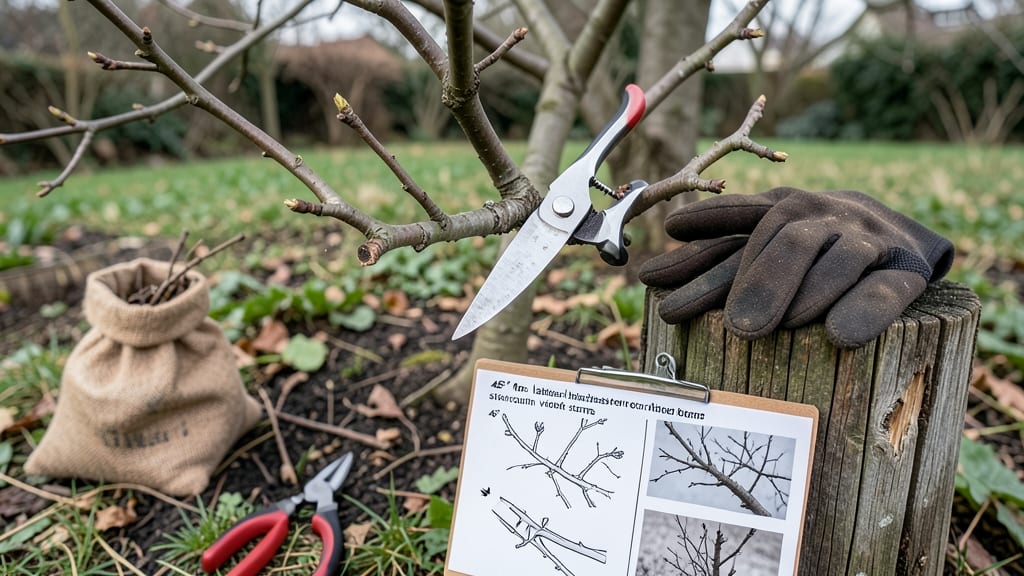
Winter pruning transforms your apple tree into a stronger, fruitier machine—here’s exactly how to do it right. ✂️ The dormant season is the perfect time to shape your tree, remove deadwood, and encourage next year’s harvest without stressing the plant.
Start with clean, sharp tools: bypass pruners for small branches, a pruning saw for thicker limbs, and rubbing alcohol to disinfect cuts. Your goal is to open the canopy for sunlight and air flow, which prevents disease and boosts fruit production.
Just avoid pruning too late in winter—wait until buds swell but before leaves emerge.
You’ll focus on three key cuts: removing dead or crossing branches, thinning to improve airflow, and shaping for balance. After pruning, seal larger wounds with pruning paint (optional but helpful for disease prevention) and clean up fallen debris.
The result? A tree that wakes up in spring ready to grow healthier canes and more apples than ever.
📚 In This Guide
- What you need
- Instructions
- Tips and common mistakes
- Wrapping up and next steps
What you need
- ● Pruning shears – Bypass pruners (8-10 inch blades) for small branches (up to ½ inch thick). 1 pair required.
- ● Loppers – For branches ¾ to 1½ inches thick. 1 pair required.
- ● Pruning saw – For branches 2+ inches thick. 1 saw required (bow or folding saw).
- ● Gloves – Heavy-duty, cut-resistant gloves to protect hands from thorns and rough bark. 1 pair required.
- ● Disinfectant – Rubbing alcohol (70%+) or a pruning saw cleaner to sterilize tools between cuts. Small bottle required.
- ○ Extension pole – For hard-to-reach branches (10-15 ft telescoping pole). 1 pole (optional).
- ○ Tree wound paint – Not scientifically proven to help, but some gardeners use it for larger cuts. Small container (optional).
- ○ Marking twine or flags – To tag branches for future reference. Small roll (optional).
- ● Safety glasses – Protective eyewear in case of debris. 1 pair (highly recommended).
- ● Choose a dry, sunny day (avoid frost or wet conditions).
- ● Review your tree’s structure and health beforehand (identify dead, diseased, or crossing branches).
- ● Have a clear plan—sketch your cuts if needed!
Step-by-step guide to pruning apple trees in winter
Winter pruning transforms your apple tree into a stronger, more productive framework—here's how to do it right.
✂️ Step 1: Assess the Tree and Plan Your Cuts
Start by examining the tree's structure while it's dormant. Look for dead, diseased, or crossing branches—these are your top priorities. I always begin by mapping out the cuts in my head: remove suckers (shoots growing from the base or roots), water sprouts (vertical shoots from the trunk or branches), and any branches growing inward toward the center.
Use a sharp pruning saw for thick branches over 1 inch in diameter and bypass pruners for smaller cuts. The goal is to open the canopy to sunlight and air circulation, which prevents fungal diseases like apple scab. Mark your cuts with a piece of twine or flagging tape if you're working in stages—it's easy to get distracted and miss a branch.
✂️ Step 2: Make Clean Cuts at the Right Angle
Cut branches just outside the branch collar (the swollen area where the branch meets the trunk). Avoid leaving stubs—these invite rot and disease. For larger branches, make a top cut first, about 2-3 inches out from the trunk, then a bottom cut to remove the remaining weight. This prevents the branch from tearing as you saw.
Angle your cuts slightly outward to encourage water runoff and reduce the risk of moisture pooling. If you're pruning a branch thicker than your saw blade, make a notch cut on the underside first to control the branch's fall. Always step back and admire your work—clean cuts heal faster and look professional.
✂️ Step 3: Thin Out the Canopy for Light and Airflow
Remove 25-30% of the tree's total volume in winter, focusing on branches that rub against each other or grow inward. This opens the canopy and allows sunlight to reach the center, where fruit develops. I target branches that are thinner than a pencil—these often produce smaller fruit and compete with stronger canes.
Look for scaffold branches (the main structural limbs) and ensure they're spaced 8-12 inches apart along the trunk. These branches should be larger than your wrist and grow at a 45-degree angle from the trunk. If you see a branch growing straight up, it's likely competing with the leader (the central trunk) and should be pruned back.
✂️ Step 4: Shape the Tree for Future Growth
Step back and evaluate the tree's shape from all sides. The goal is a balanced, open-center structure that allows easy access for harvesting and spraying. If the tree is too dense at the top, prune the upper branches first to lift the canopy. For younger trees, aim for a central leader (one main trunk) with well-spaced scaffold branches.
I always finish by checking for dominant shoots (vigorous new growth) that could overtake the tree's structure. Prune these back by one-third to encourage a more balanced growth pattern. Avoid over-pruning—your tree will struggle to recover if you remove too much foliage at once.
✂️ Step 5: Clean Up and Protect the Tree
After pruning, rake up and dispose of all clippings—they can harbor fungal spores and pests. I seal larger cuts with pruning sealant (optional but helpful for wounds over ½ inch thick) to prevent disease entry. For smaller cuts, let them heal naturally—the sealant isn't necessary and can trap moisture.
Apply a 2-3 inch layer of mulch around the base of the tree (but not touching the trunk) to retain moisture and regulate soil temperature. This is also a great time to fertilize lightly with balanced 10-10-10 if your soil test indicates a need. Water deeply after pruning to help the tree recover, especially if winter is dry.
Tips & tricks for perfect winter apple tree pruning
Winter pruning is your chance to reset your apple tree's growth pattern—here's how to do it like a pro without common mistakes.
Tool Selection: Invest in a pair of bypass pruners for branches under 1 inch and a sharp pruning saw for thicker cuts. Dull tools crush branches instead of cleanly cutting them, creating larger wounds that heal poorly. I always test my tools on a scrap branch first to ensure they're sharp enough for clean cuts.
Branch Collar Awareness: The branch collar—the swollen area where the branch meets the trunk—is your guidepost. Cutting just outside this collar prevents damage to the tree's healing tissue. If you accidentally cut into the collar, the wound will take much longer to heal and may become infected. I mark the collar with a piece of tape if I'm unsure where to cut.
Canopy Vision: Step back frequently to visualize the tree's structure from all angles. The goal is an open center that allows sunlight to reach the center branches where fruit develops. I imagine the tree as an umbrella—you want the spokes (branches) evenly spaced so rain and sunlight can reach the middle. This prevents fungal diseases and encourages better fruit production.
Pruning Sealant Strategy: Only use pruning sealant on wounds over ½ inch thick. For smaller cuts, let the tree seal itself naturally—sealant can trap moisture and promote rot. If you choose to seal, use a high-quality, water-based sealant that won't peel or crack as it dries. I keep a small bottle in my tool pouch for quick application after making larger cuts.
Pro Tips for Prune Apple Trees In Winter
- Winter pruning is your chance to reset your apple tree's growth pattern—here's how to do it like a pro without common mistakes.
- Tool Selection: Invest in a pair of bypass pruners for branches under 1 inch and a sharp pruning saw for thicker cuts.
- Branch Collar Awareness: The branch collar—the swollen area where the branch meets the trunk—is your guidepost.
Frequently asked questions
Got questions about winter pruning? You’re not alone! Here are answers to the most common concerns—so you can prune with confidence and set your apple tree up for a bountiful harvest.
When exactly is the best time to prune apple trees in winter?
Prune during the tree’s dormant season—typically between late winter (after the worst cold snaps) and early spring, before buds swell. Aim for late February to March in most U.S. climates. This timing minimizes disease risk and lets the tree heal before growth resumes.
What if I missed the winter window? Can I prune in spring or summer?
Yes, but with caution! Summer pruning (after harvest) is best for shaping, while spring pruning (before bloom) is riskier—it can stress the tree and attract pests. If you must prune later, sterilize tools and avoid heavy cuts. Winter is ideal, but better late than never!
How do I know which branches to cut? Should I remove all the dead wood?
Focus on 3 D’s: Dead (blackened, brittle branches), Diseased (mushrooms, ooze), and Damaged (broken or crossing branches). Also trim water sprouts (vertical shoots) and branches growing inward. Leave 3-5 strong scaffold branches for structure.
Do I need to seal pruning cuts? What about paint or pruning sealant?
No—sealants aren’t necessary for small cuts (<1 inch). They can even trap moisture and harm the tree. For larger wounds, let them heal naturally by keeping the area clean. If you’re concerned, use copper fungicide on cuts to prevent disease.
My apple tree is young (3-5 years old). How aggressive should I be with pruning?
Young trees need light pruning—focus on removing suckers (shoots at the base) and shaping the canopy to encourage an open-center form. Avoid heavy cuts; prioritize 10-20% of total growth per year. Patience pays off!
What if I prune too much? Will my tree survive?
Over-pruning can stress the tree, but it’ll usually recover if you don’t remove more than 25% of the canopy. Signs of over-pruning: leaf drop, stunted growth, or weak buds. Next year, reduce cuts by half and focus on recovery.
Wrapping up and next steps
Pruning your apple tree in winter isn’t just about shaping—it’s about setting the stage for a bountiful harvest and a healthier tree. By following these steps, you’ll encourage stronger growth, better air circulation, and easier fruit access.
Now that you’re armed with the know-how, grab those pruners and get to work! 🌳✂️
Ready to take it further? Plan your tree’s long-term care by marking next year’s pruning goals or even sketching a simple diagram. Happy pruning—your future apple harvest will thank you!