
Pruning
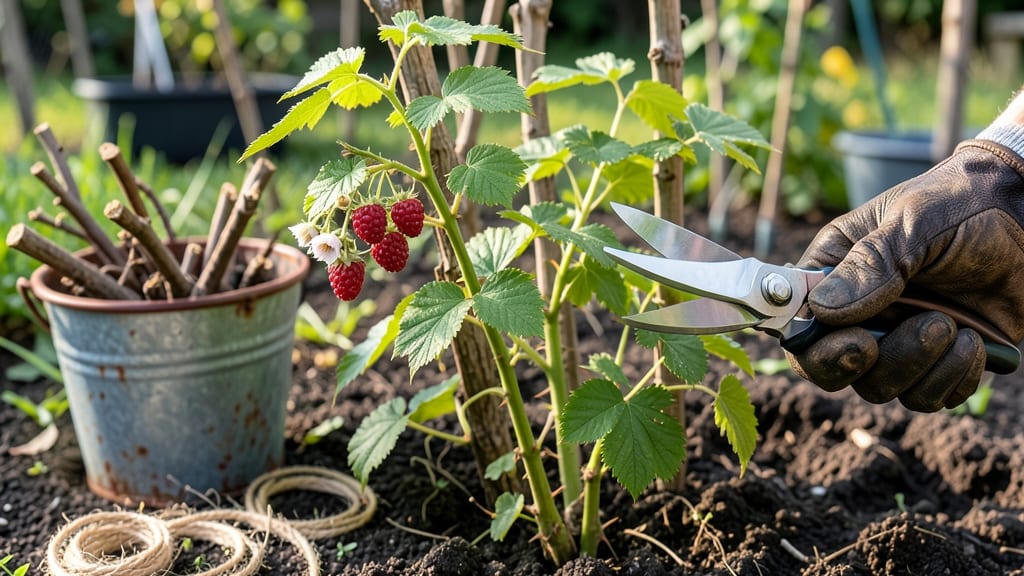
Spring pruning raspberries transforms a tangle of canes into a high-yielding berry machine—if you cut at the right time and in the right way. 🌱 I’ve pruned raspberries for years, and the difference between a messy patch and a productive one comes down to three strategic cuts that keep your plants healthy and productive for decades.
The key is timing: prune summer-bearing varieties (like Heritage or Boyne) in late winter or early spring before new growth starts, while fall-bearing types (like Caroline or Nova) get pruned right after harvest.
You’ll remove last year’s fruited canes (the ones that look dead or brown) and thin out crowded growth to let sunlight and air reach the center. This isn’t just about tidying up—it’s about doubling your harvest by giving the plant energy to focus on new canes.
After pruning, your berries will be bigger, sweeter, and more abundant—and the plants will resist diseases like cane blight better. The secret? Cut at a 45-degree angle just above a bud, and use clean, sharp pruners to avoid tearing the bark.
I’ve seen raspberry patches go from sparse to bursting with fruit just by following these steps. Works for all raspberry types and climates, from Zone 4’s harsh winters to Zone 9’s mild ones. Here’s how to do it without overcomplicating things!
📚 In This Guide
- What you need
- Instructions
- Tips and common mistakes
- Wrapping up and next steps
What you need
- ● Pruning shears or loppers: Sharp, bypass-pruning shears (for small canes) or loppers with 8-10" handles (for thicker stems). Quantity: 1 pair.
- ● Gloves: Heavy-duty, thorn-resistant gardening gloves (raspberry thorns are no joke!). Quantity: 1 pair.
- ● Disinfectant: Rubbing alcohol (70%+), bleach solution (1:9 ratio), or pruning sealant to sterilize tools between cuts. Quantity: Small bottle or spray.
- ● Garden twine or zip ties: For securing canes to stakes (if needed). Quantity: 1-2 rolls.
- ● Stakes or trellis supports: Bamboo stakes (5-6 ft tall) or wire trellis to train canes. Quantity: 4-6 per plant.
- ● Wheelbarrow or bucket: For collecting pruned canes and debris. Quantity: 1.
- ● Rake or garden fork: To clear old mulch or weeds around the base. Quantity: 1.
- ● Hand saw: For thick, woody canes that shears can’t handle.
- ● Pruning paint or wound dressing: To seal cuts and prevent disease (only for large cuts).
- ● Knee pads or stool: For comfort if you’re working with large patches.
- ● Labeling tags: To mark new canes if you’re unsure which are primocanes (floral) vs. floricanes (fruit-bearing).
Step-by-step guide to pruning raspberries in spring
Spring pruning sets the stage for a bountiful harvest—here's how to do it right.
✂️ Step 1: Remove Winter-Damaged Canes
Start by inspecting your raspberry patch for canes that look brown, mushy, or hollow at the base—these won't recover and should be cut immediately at ground level. I like to grab each cane near the base and give it a gentle tug; if it pulls away easily, it's dead. Healthy canes feel firm and snap when bent.
Use clean, sharp pruners to make a clean cut just above the soil line. Don't leave stubs—they invite disease. If you're unsure about a cane, wait a few days and check again. Some canes may appear dead early in spring but recover once temperatures warm.
✂️ Step 2: Thin Out Overcrowded Canes
Raspberries thrive with proper spacing—aim for 10-15 canes per square yard for optimal air circulation and fruit production. Select the strongest, most vigorous canes (look for thick stems and multiple buds) and remove the rest at the base. I usually keep the most recent year's growth, as these produce the best fruit.
Don't thin too aggressively—you want to maintain a strong framework for next year's harvest. If you're unsure which canes to keep, err on the side of caution and leave a few extra. You can always thin further in midsummer if needed. Avoid cutting back healthy canes—only remove what's necessary for airflow and sunlight penetration.
✂️ Step 3: Prune Primocanes for Summer Fruit
For summer-bearing raspberries, focus on the new growth (primocanes) that emerged last year. These will produce fruit next summer, so leave them uncut now. Instead, look for any side shoots growing from the base of old canes—these are called "suckers" and should be removed immediately to prevent overcrowding.
Use your pruners to snip sucker growth at the base, making sure not to damage the main canes. This step is crucial for maintaining plant health and ensuring strong fruit production. If you notice any canes with signs of disease (like rust-colored spots or mold), remove them entirely and dispose of them in the trash—not the compost.
🌿 Step 4: Lightly Trim Tips for Bushier Growth
To encourage bushier canes and more fruit production, give the tips of your remaining canes a light trim. Cut back the top 2-4 inches of each cane to promote branching. This is especially important for canes that are growing too tall or leggy—it helps redirect energy toward fruit production rather than excessive height.
Work on a dry, sunny day to minimize the risk of disease spread. After pruning, give your raspberry patch a light watering to help the plants recover. Avoid heavy watering immediately after pruning, as this can stress the canes. Instead, water deeply once or twice a week to encourage strong root growth.
☀️ Step 5: Apply Mulch and Monitor Progress
Spread a 2-3 inch layer of organic mulch (like straw or wood chips) around the base of your raspberry plants. This helps retain moisture, suppress weeds, and regulate soil temperature. Mulch also protects canes from temperature fluctuations that can cause damage.
Keep an eye on your plants in the weeks following pruning. Healthy canes should show signs of new growth within 2-3 weeks. If you notice any yellowing leaves, wilting, or other signs of stress, check for pests or disease and address them promptly. With proper care, your raspberries will reward you with a productive harvest all season long.
Tips & tricks for pruning raspberries in spring
Here's what nobody tells you—these little-known tricks make all the difference between a decent harvest and a truly bountiful one.
Timing is Everything: The best time to prune is right after the last hard frost but before new growth appears. Early spring (March-April in most zones) gives your plants time to recover before summer heat. I've learned this the hard way—pruning too early can stress plants, while waiting too long means you're cutting back growth that could have produced fruit. Look for buds just starting to swell but no new leaves yet.
Tool Prep Prevents Problems: Before you even touch a cane, sterilize your pruners with rubbing alcohol. Diseased canes can spread pathogens through your tools, ruining your entire patch. I keep a small bottle of 70% isopropyl alcohol in my gardening bucket and wipe blades between cuts. Sharp, clean tools also make cuts heal faster and look more professional. Don't skip this step—it's the gardener's equivalent of washing hands before surgery.
Visual Cues for Healthy Canes: When deciding which canes to keep, look for these signs of vitality: firm stems that snap when bent (not bend like a bow), multiple buds along the length, and a healthy green color. The "tug test" mentioned in Step 1 works best in early spring—healthy canes will resist being pulled from the ground. I also check for last year's fruit production—canes that bore heavily last summer are often the most vigorous.
Mulch Matters More Than You Think: That 2-3 inch layer of mulch in Step 5 isn't just about looks—it's a game-changer for moisture retention and weed suppression. I use straw because it breaks down slowly and doesn't compact like wood chips. After pruning, I spread the mulch while the soil is still slightly damp to help it settle properly. This creates a microclimate that keeps roots cool in summer and insulated in winter, which translates to bigger berries and fewer diseases.
Pro Tips for Pruning Raspberries In Spring
- Here's what nobody tells you—these little-known tricks make all the difference between a decent harvest and a truly bountiful one.
- Timing is Everything: The best time to prune is right after the last hard frost but before new growth appears.
- Tool Prep Prevents Problems: Before you even touch a cane, sterilize your pruners with rubbing alcohol.
Frequently asked questions
Got questions about pruning raspberries in spring? You’re not alone! Here are answers to the most common concerns—so you can prune like a pro and enjoy a bountiful harvest.
When is the exact best time to prune raspberries in spring?
The ideal window is late winter to early spring, just as new growth begins (around February–March in most zones). Wait until after the last hard frost but before buds swell. For fall-bearing varieties, prune in late winter; for summer-bearing, prune in late winter/early spring before canes fruit.
What if I missed spring pruning? Can I still do it later?
Yes, but timing matters! For summer-bearing raspberries, delay pruning until after harvest (late summer/fall). For fall-bearing types, prune in late winter—never after buds form. Late pruning may reduce yield but won’t kill the plant. Just be patient!
My raspberry canes look dead—how do I tell if they’re really gone?
Check for green tissue under the bark (scratch a cane with your fingernail). If it’s brown and mushy, it’s dead—remove it! Healthy canes are firm with green or white underneath. Pro tip: If >30% of canes die, consider soil/fungal issues and adjust care next season.
Do I need to sterilize my pruners between cuts?
Absolutely!
Dip pruners in rubbing alcohol (70%+) or a 10% bleach solution between cuts to prevent spreading bacterial canker or fungal diseases. Wipe with a clean cloth afterward. Bonus: Sharpen blades yearly for cleaner cuts and less stress on canes.
Will pruning raspberries reduce my harvest next year?
Not if done right! Pruning removes old, unproductive canes and directs energy to new, fruiting growth. Summer-bearing varieties need 2/3 of old canes removed; fall-bearing types keep last year’s canes for fruit. Done correctly, you’ll see bigger, healthier berries—not fewer!
Wrapping up and next steps
Pruning raspberries in spring isn’t just a chore—it’s the secret to a bountiful harvest all season long! 🌱 By mastering those three key cuts (summer-bearing, fall-bearing, and floricane management), you’ll boost air circulation, prevent disease, and keep your plants thriving.
Now that you’re armed with the know-how, there’s no better time to grab your pruners and get to work—your future raspberry feasts are waiting!
Ready to take it further? Plan your next steps:
- Mark your calendar for post-harvest pruning (fall is perfect for summer-bearing varieties!).
- Experiment with mulching or soil amendments to give your berries a nutrient boost.
- Share your progress—or ask questions—in gardening communities for extra tips!