
Pruning
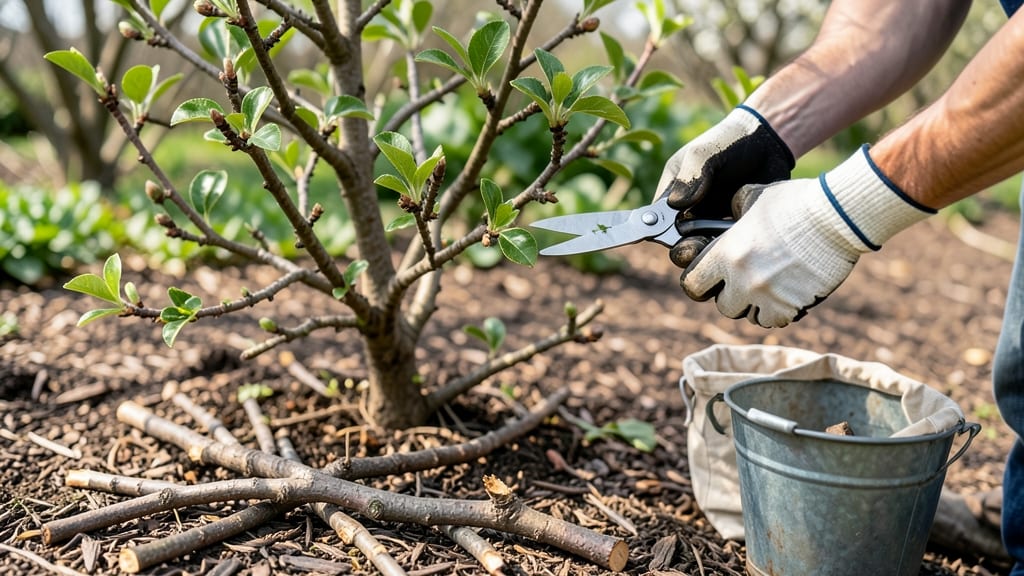
Late-winter pruning transforms your quince bush from tangled mess to productive powerhouse—and the key is timing. ✂️ I’ve pruned quince for years, and the difference between a bush that struggles and one that bursts with fragrant fruit comes down to when and how you cut.
Quince responds best to late-winter pruning, just as buds swell but before new growth begins, ensuring energy goes to fruit, not foliage.
You’ll need sharp bypass pruners, rubbing alcohol for sanitizing cuts, and a clear day to assess the bush’s structure. Quince canes grow thick and woody, so focus on removing dead, crossing, or weak branches first—these compete with fruit production.
Thin the center to improve airflow, and shape the outer canes to create an open vase form, which maximizes sunlight exposure for fruit development.
The payoff? A bush that produces larger, sweeter fruit with fewer pests and diseases. After pruning, apply a balanced fertilizer to support new growth, and monitor for signs of stress—quince can be sensitive to over-pruning.
Within a season, you’ll see stronger canes, better fruit set, and a bush that’s easier to maintain.
This technique works for both standard quince and flowering quince, though fruit-bearing varieties need slightly more aggressive thinning. If your bush is young, prioritize shaping over fruit removal; established bushes can handle more aggressive pruning to rejuvenate growth. Ready to give it a try?
📚 In This Guide
- What you need
- Instructions
- Tips and common mistakes
- Wrapping up and next steps
What you need
- ● Pruning shears: A sharp, bypass-style pair (for clean cuts) with a 4- to 6-inch blade. Avoid dull tools—they crush stems, inviting disease. Pro tip: 💡 Sterilize blades with rubbing alcohol between cuts to prevent spreading bacteria.
- ● Loppers: For thicker branches (½ inch or larger), opt for long-handled loppers (24–30 inches) for leverage and comfort.
- ● Pruning saw: A folding pruning saw with a fine-tooth blade for branches over 1 inch in diameter.
- ● Gloves: Heavy-duty, cut-resistant gloves (like those for rose pruning) to protect against thorns and blisters.
- ● Disposable pruning bags or bucket: A 5-gallon bucket or mesh bags to collect debris and dispose of it far from the bush.
- ● Rubbing alcohol (70% or higher): A small bottle to sterilize tools between cuts.
- ● Hand pruners with a bypass blade: For precision trimming on smaller branches.
- ● Ladder or step stool: If your quince bush is tall (6+ feet), a stable, 3-step ladder ensures safe reach.
- ● Pruning sealant: A latex-based sealant (like Tanglefoot Tree Wound Pruning Seal) for cuts larger than ½ inch—though many gardeners skip this for quince.
- ○ Marking spray (optional): A biodegradable spray paint (like white or pink) to mark branches for removal if you’re unsure.
- ● Notebook & pen: To jot down notes on your pruning plan or track the bush’s progress over time!
Step-by-step instructions for pruning quince bushes
Late-winter pruning transforms your quince into a productive, disease-resistant powerhouse.
✂️ Step 1: Assess the Bush and Gather Tools
Start by examining your quince bush when it's fully dormant but buds haven't yet swollen—typically in late February to early March in most climates. Look for three-year-old canes (they're thicker than pencil leads) and last year's fruiting wood (these are the branches that bore fruit). Have your sharp pruning shears (cleaned with rubbing alcohol) and sterilized loppers ready—dull tools crush stems, inviting rot.
Remove any dead, diseased, or crossing branches first. These are easy to spot: blackened canes, mushroom-like growths, or branches growing straight into another at sharp angles. I always prune these out immediately—they're the biggest infection risks. Wear gloves (quince thorns are vicious) and eye protection if your bush is dense.
🌱 Step 2: Thin to Create an Open Center
Quince thrives on air circulation, so your goal is to remove 25-30% of the oldest wood while maintaining a vase-like shape. Start at the center and work outward. Remove vertical "water sprouts" (thin, upward-growing branches) and weak, spindly canes—these never fruit well. Keep 3-5 strong, outward-facing branches as your main scaffold, cutting back to just above an outward-facing bud using a 45-degree angle.
Here's the thing—quince responds poorly to heavy pruning, so never remove more than 30% of the plant in one year. You'll see thicker, sturdier canes by next season if you follow this rule. If your bush has multiple trunks, thin to keep just the 2-3 strongest stems—this prevents overcrowding and improves fruit quality.
☀️ Step 3: Prune for Light Penetration and Fruit Production
Next, focus on fruit-bearing wood. Last year's fruiting branches should be cut back by half—this encourages new growth that will produce next year's crop. Look for lateral branches (side shoots) that grew from last year's fruit spurs. These are your future fruit producers, so leave them unless they're weak or diseased. Cut just above a swollen bud (not a leaf scar) to ensure new growth emerges in the right direction.
Step back frequently to check light penetration. You want sunlight to reach the center of the bush—this prevents fungal diseases like quince rust and ensures even ripening. If you see shady interior branches, thin them out completely. A well-pruned quince should look like an open vase rather than a dense thicket. This is the moment that matters: light and air are your best tools against disease.
⏰ Step 4: Clean Up and Apply Preventative Measures
After pruning, collect all clippings and dispose of them in a sealed bag—never compost quince prunings (they harbor fire blight bacteria). Sterilize your tools again with rubbing alcohol or a 10% bleach solution (9 parts water, 1 part bleach) to prevent spreading disease to other plants. Now's also the time to apply a copper fungicide spray (like Bordeaux mixture) if your area has a history of fire blight or rust—this creates a protective barrier for spring growth.
Finally, mulch the base with 2-3 inches of organic mulch (like wood chips) to retain moisture and regulate soil temperature. Keep mulch 6 inches away from the trunk to prevent rot. Water deeply if your region hasn't had recent rainfall—dormant roots need moisture to push out new growth in spring. You'll notice swollen buds within a few weeks if everything's right.
Tips & tricks for pruning quince bushes
Late-winter pruning isn't just about cutting branches—it's about setting your quince up for a bountiful harvest. Here's what I've learned after years of trial and error (and a few too many over-pruned bushes).
Timing is Everything: The late February to early March window is critical because it's when the bush is fully dormant but before buds begin to swell. This timing prevents stressing the plant too early in the season. I've found that pruning too early can expose the plant to late winter frost damage, while waiting too long risks encouraging new growth that could be damaged by spring frosts. If you miss the window, aim for early spring—just be ready to protect new growth from cold snaps.
Tool Sharpness Matters More Than You Think: Dull pruning shears and loppers don't just make work harder—they crush stems, creating open wounds that invite disease. I always test my tools by making a clean cut through a piece of paper before starting. For quince, which is particularly susceptible to fire blight, clean cuts are non-negotiable. Sterilize your tools between cuts with rubbing alcohol or a 10% bleach solution, especially when dealing with diseased branches. This simple step has saved my bushes from multiple outbreaks.
Visualizing the Final Shape: Before making a single cut, step back and visualize your quince as an open vase. This isn't just aesthetic—it's functional. The open center allows sunlight to penetrate to the core, which is crucial for preventing fungal diseases like quince rust. I like to sketch a rough outline on paper first, marking where I'll make cuts. This helps me avoid the common mistake of removing too much in one go. Remember, quince responds poorly to heavy pruning, so think of each cut as an investment in next year's fruit production.
Bud Identification is Your Superpower: When pruning fruit-bearing wood, cutting just above a swollen bud (not a leaf scar) is the difference between productive branches and dead ends. Swollen buds are typically round and firm, while leaf scars are more flattened. I always run my thumb along the branch to feel for these buds—it's like reading Braille for your quince's future. This technique ensures new growth emerges in the right direction, with fruit spurs developing where you want them for maximum yield.
Pro Tips for Pruning Quince Bush
- Late-winter pruning isn't just about cutting branches—it's about setting your quince up for a bountiful harvest.
- Timing is Everything: The late February to early March window is critical because it's when the bush is fully dormant but before buds begin to swell.
- Tool Sharpness Matters More Than You Think: Dull pruning shears and loppers don't just make work harder—they crush stems, creating open wounds that invite disease.
Frequently asked questions
Got questions about pruning your quince bush? You’re not alone! Here are answers to the most common concerns—so you can confidently shape your bush for healthier canes and better fruit.
When is the exact best time to prune a quince bush?
Late winter—just before buds swell—is ideal (typically February to early March in most climates). This timing minimizes disease risk and lets you see the bush’s structure clearly. Avoid pruning in fall or early spring, as wet conditions can invite fungal infections. Pro tip: If you miss late winter, wait until early summer (after fruiting) but avoid heavy pruning then.
How much can I cut back a quince bush in one year?
Quince bushes are hardy but sensitive—never remove more than 25-30% of the plant’s total growth in a single year. Focus on dead, diseased, or crossing branches first, then thin out older canes to encourage new growth. Over-pruning stresses the bush and can reduce fruit production. Avoid: Cutting back more than 1/3 of the canopy annually.
Will pruning affect my quince fruit harvest?
Pruning improves fruit quality and quantity by boosting airflow and sunlight penetration. However, heavy pruning in fruiting years (like the first 2-3 years after planting) may temporarily reduce harvests. Prioritize structural pruning early on, then shift to light maintenance as the bush matures. Patience pays off—well-pruned quince bushes yield larger, sweeter fruit over time!
What if my quince bush bleeds sap after pruning?
Sap bleeding (or “weeping”) is normal in late winter and won’t harm the bush. It’s the tree’s way of healing. To minimize mess, prune on a dry, cool day and avoid cutting into wet wood (which oozes more). Seal cuts with pruning sealant only if your area has high fungal pressure—otherwise, let the sap dry naturally. Remember: Clean tools between cuts to prevent disease spread.
Can I prune a quince bush the same way as an apple tree?
Nope! Quince bushes have different growth habits—they’re multi-stemmed (unlike apple trees’ central leader) and produce fruit on older wood. Avoid aggressive “apple-style” heading cuts; instead, use open-center or vase-shaped pruning to maintain an airy structure. Focus on thinning out rather than topping. Key difference: Quince thrives with less severe pruning than apples.
Bonus: What if my quince bush isn’t flowering or fruiting?
Check these fixes:
- Age: Quince bushes often take 3-5 years to mature and fruit.
- Sunlight: Ensure it gets 6+ hours of direct sun daily.
- Pruning balance: Too much removal of old wood = fewer fruit buds.
- Pollination: Quince needs cross-pollination—plant a second variety nearby.
- Soil/pH: Test for acidity (6.0–7.0 pH) and amend with compost if needed.
Wrapping up and next steps
Pruning your quince bush in late winter isn’t just about shaping—it’s about setting the stage for vibrant growth, abundant blooms, and sweeter fruit. By following the right techniques, you’ll encourage stronger canes, better airflow, and a healthier plant that rewards you with delicious harvests. 🌱
Now that you’re armed with the know-how, grab those pruners and get to work! Start small if you’re new, and don’t forget to celebrate each step—your quince bush will thank you with lush foliage and juicy rewards. Happy pruning! 🌟