
Pruning
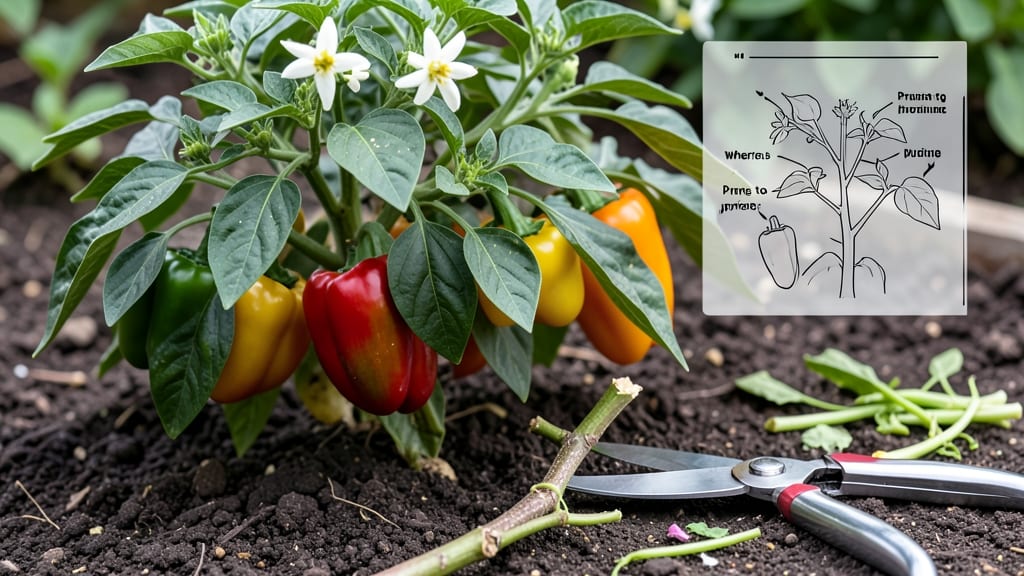
Pruning pepper plants for maximum yield isn’t about hacking branches—it’s about redirecting energy to where it matters most: your fruit. 🌶️ I’ve gone from 10 peppers to 50 on the same plant by mastering just three simple cuts, and the secret lies in timing and technique.
Start early when plants are 12–18 inches tall, focusing on removing the lower leaves to improve airflow and prevent disease. The real magic happens with suckers—those tiny shoots between the main stem and branches—and pinching them off before they grow an inch.
This forces the plant to focus on existing fruit rather than new growth. By midseason, you’ll see the difference: fewer but larger peppers, thicker stems, and plants that keep producing until frost. The key is consistency—prune weekly during peak growth, and always use clean, sharp shears to avoid tearing stems.
This method works for bell peppers, jalapeños, and even habaneros, whether you’re growing in pots or garden beds. Ready to transform your harvest?
📚 In This Guide
- What you need
- Instructions
- Tips and common mistakes
- Wrapping up and next steps
What you need
- ● Sharp pruning shears – Bypass pruners (recommended for clean cuts) or anvil pruners (for thicker stems). Size: 5-7 inches, with ergonomic grips for comfort.
- ● Garden gloves – Nitrile-coated for grip and protection against thorns/spines (especially for hot peppers like jalapeños or habaneros). Quantity: 1 pair per person.
- ● Disinfectant (70% isopropyl alcohol or hydrogen peroxide) – Quantity: Small spray bottle or wipe for sterilizing tools between cuts.
- ● Rubbing alcohol or bleach solution (1 part bleach to 9 parts water) – For cleaning tools post-pruning. Quantity: Small container.
- ● Hand pruners or small scissors – For delicate trimming of smaller stems or leaves.
- ● Garden twine or plant ties – To support heavy branches after pruning. Quantity: 1-2 rolls.
- ● Compost bin or bag – For collecting pruned material (avoid composting diseased plants).
- ○ Plant growth regulator (optional) – Such as seaweed extract or kelp meal to encourage faster recovery after pruning. Quantity: Follow product instructions.
- ● Choose a dry, sunny day (morning is ideal) to minimize stress on the plant.
- ● Ensure your peppers are healthy and disease-free before pruning. Remove any yellowing or wilted leaves first.
- ● Have a clear goal for pruning (e.g., shaping, increasing airflow, or encouraging fruit production).
Step-by-step guide to pruning pepper plants for maximum yield
Here’s how I boost pepper production by focusing energy where it matters most—strong stems and fruit-bearing branches.
🌱 Step 1: Wait Until Plants Are Established
Don’t prune until your pepper plants have 4-6 true leaves and are at least 10-12 inches tall. This usually takes 4-6 weeks after transplanting. Pruning too early stresses young plants and slows growth—you’ll know they’re ready when the main stem is sturdy and the first flower buds appear.
I always prune in the morning when plants are hydrated. Avoid pruning after rain or late in the day, as wet foliage can invite fungal diseases. Use sterilized pruning shears (wipe blades with rubbing alcohol between cuts) to prevent spreading pathogens.
✂️ Step 2: Remove Suckers and Weak Growth
Suckers are the small shoots that grow in the V-shaped junction between the main stem and a branch. These compete with fruit for energy, so pinch them off early. Look for thin, leafy shoots growing upward—these are your targets. Use your fingers or shears to snip them at the base.
Also remove any yellowing or diseased leaves and weak, spindly branches growing downward. This redirects energy to fruit-bearing stems and keeps plants compact. I prune suckers every 2-3 weeks during the growing season to maintain shape and encourage bushier growth.
☀️ Step 3: Open the Plant’s Canopy for Airflow and Sun
Thin out crowded branches to improve air circulation and sunlight penetration. Aim for a balanced shape with 3-4 main stems per plant. Cut back any branches growing inward or crossing others—these create shade and trap moisture, increasing disease risk.
Focus on keeping the lower leaves pruned away as the plant grows taller. This prevents soil-borne diseases from splashing onto foliage and improves airflow at the base. After pruning, step back and check for even light distribution—if shadows appear, trim more aggressively.
🌿 Step 4: Encourage Fruit Production with Strategic Cuts
Once your plant is 18-24 inches tall, prune the topmost set of leaves just above a leaf node with a flower bud. This signals the plant to focus energy on existing flowers and fruits rather than growing taller. You’ll see new branches form below the cut, each with potential fruit clusters.
For bush varieties, limit pruning to suckers and lower leaves. For taller, indeterminate varieties, prune the top 1-2 times per season to promote bushier growth. Always leave at least 3-4 leaves above the cut to support new growth.
⏰ Step 5: Time Pruning for Seasonal Success
In spring and early summer, prune aggressively to shape the plant and remove suckers. In late summer, switch to light maintenance pruning—only remove dead or diseased growth. Stop pruning 6-8 weeks before your first frost to allow remaining fruit time to mature.
I also prune after heavy fruiting to refresh the plant. Cut back spent stems (those with no new growth) to encourage new shoots. Avoid pruning during heatwaves or droughts—plants need energy to recover, and stress from pruning can reduce yield.
Tips & tricks for pruning pepper plants for maximum yield
Real talk: Pruning pepper plants is where the magic happens for serious harvests. These are the tricks I've learned after years of trial and error that'll help you avoid common mistakes and get the most out of your plants.
Timing is Everything: The 4-6 week wait until plants have 4-6 true leaves and are 10-12 inches tall is non-negotiable. I've seen beginners prune too early and end up with stunted growth. Look for that sturdy main stem and first flower buds—those are your cues. And remember, morning pruning is best. Wet foliage at any other time invites fungal problems, and you don't want to deal with that when you're this close to a great harvest.
Sucker Patrol Strategy: Those suckers in the V-shaped junctions are sneaky energy thieves. I've found that pinching them off every 2-3 weeks during the growing season makes all the difference. Use your fingers for small suckers—it's faster than grabbing shears. And here's a pro move: always make your cuts at the base where the sucker meets the main stem. This prevents any chance of regrowth from that spot.
Canopy Control: When you're aiming for that balanced shape with 3-4 main stems, think of your plant like a sunbathing lounge chair—it needs to be open to catch all the rays. Cut back any branches growing inward or crossing others immediately. I like to do a quick visual check after pruning by standing back and imagining sunlight coming from all directions. If you see shadows, that's your signal to trim more aggressively. This airflow isn't just about sunlight—it's your first line of defense against pepper diseases.
Seasonal Pruning Calendar: Think of your pruning schedule like a four-act play. Spring and early summer are for aggressive shaping, late summer is maintenance mode, and that 6-8 week pause before frost is your final bow. I mark my calendar with these seasonal cues because pepper plants respond so well to this rhythm. And here's a bonus tip: after heavy fruiting, those spent stems might look done, but cutting them back gives you a second wave of growth that often produces even better peppers later in the season.
Pro Tips for Prune Pepper Plants For Maximum Yield
- Real talk: Pruning pepper plants is where the magic happens for serious harvests.
- Timing is Everything: The 4-6 week wait until plants have 4-6 true leaves and are 10-12 inches tall is non-negotiable.
- Sucker Patrol Strategy: Those suckers in the V-shaped junctions are sneaky energy thieves.
Frequently asked questions
Got questions about pruning pepper plants? You’re not alone! Here are some of the most common concerns—and their answers—to help you grow like a pro.
When is the best time to prune pepper plants?
Prune your pepper plants after they’ve established 4-6 true leaves (usually 4-6 weeks after germination). Avoid pruning during flowering or fruiting, as this can stress the plant. For container-grown peppers, prune lightly throughout the growing season to encourage bushier growth.
Do I need to prune all pepper plants, or just certain varieties?
Most pepper varieties—especially bell peppers, jalapeños, and habaneros—benefit from pruning. However, heirloom or bush-type peppers (like some chiles) may not need heavy pruning. Observe your plant’s growth: if it’s leggy or overcrowded, pruning will help. If it’s compact and healthy, minimal trimming is fine.
What should I do with the cuttings I remove?
Don’t toss those pruned stems! Root them in water or moist soil to propagate new plants. Many pepper cuttings (especially from healthy, disease-free plants) will grow into thriving new plants. Just ensure the cuttings have at least 2-3 nodes and a few leaves before rooting.
My pepper plant looks sad after pruning. Did I do it wrong?
If your plant wilts or drops flowers/fruit after pruning, you may have cut too aggressively. Focus on removing only leggy stems, yellow leaves, or suckers (side shoots). Avoid pruning more than 1/3 of the plant at once. Keep it hydrated and in a sunny spot to recover quickly!
Can I prune pepper plants in winter or early spring?
If you’re growing peppers year-round in warm climates, light pruning (removing dead or damaged branches) is fine in winter. However, avoid heavy pruning until after the last frost in spring. Cold stress + pruning = double trouble for peppers. Wait until temps stay above 60°F (15°C) before major trims.
Wrapping up and next steps
Pruning your pepper plants might feel like extra work, but it’s the secret weapon for a bountiful harvest! 🌱 By removing suckers, shaping growth, and boosting airflow, you’re setting your plants up for healthier roots, more flowers, and bigger peppers.
Start small, stay consistent, and watch your garden thrive—your future salsa, stir-fries, and snacks will thank you!
Ready to level up your yield? Grab those shears, pick a sunny day, and get pruning! For even more tips, check out our guide on pepper plant care—happy growing! 🌶️✨