
Pruning
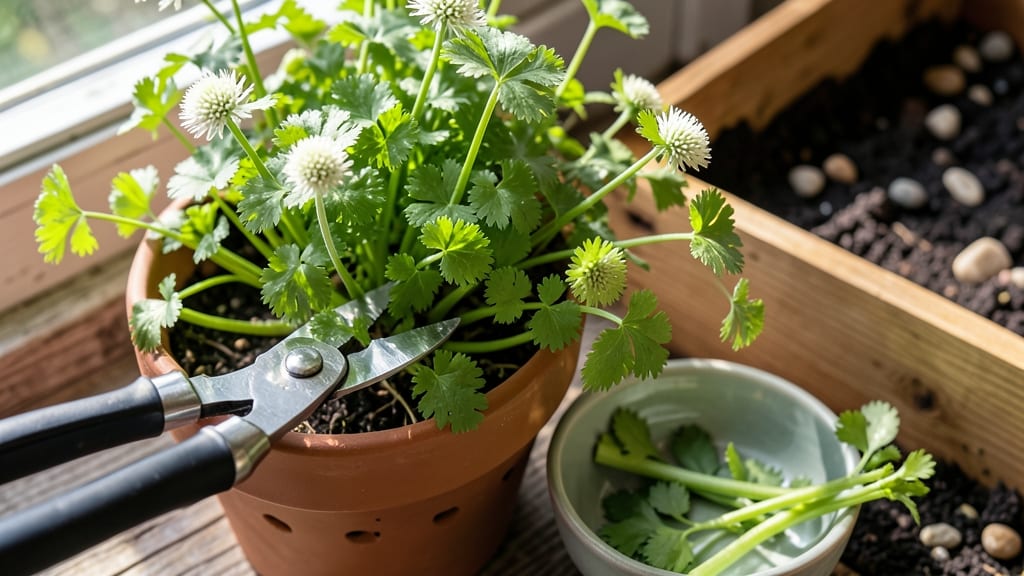
Pruning herbs like cilantro isn’t just about keeping it tidy—it’s the secret to never-ending harvests and plants that grow back thicker than ever. ✂️ I’ve watched cilantro bolt and go to seed too fast, but a few simple cuts changed everything.
The key is timing: prune when stems reach 4-6 inches tall, and you’ll trigger bushier regrowth instead of leggy, bitter plants.
You only need sharp scissors or pruning shears—no fancy tools required. Snip just above a set of leaves (where new growth emerges), and avoid cutting into woody stems. This encourages the plant to branch out rather than grow tall and bolt.
Most gardeners make one critical mistake: they prune too late or too aggressively, stressing the plant instead of encouraging it.
The payoff comes in 2-3 weeks—new shoots push out from the base, and you’ll have fresh cilantro for months instead of just a few weeks. The flavor stays bright, and the plant resists bolting longer.
Think of it as giving your cilantro a haircut that makes it grow thicker, not just shorter.
This method works for container gardens, windowsill pots, or in-ground beds—anywhere cilantro thrives. Even if you’ve killed cilantro before, this technique is foolproof once you get the timing right. Ready to turn those stubs into a lush, productive plant?
📚 In This Guide
- What you need
- Instructions
- Tips and common mistakes
- Wrapping up and next steps
What you need
- ● Cilantro plant(s) – Healthy, mature plants with at least 4–6 inches of growth (indoor or outdoor).
- ● Clean, sharp pruning shears or scissors – Must be sanitized (rubbing alcohol or soapy water) to prevent disease. Avoid dull tools—they crush stems!
- ● Watering can or spray bottle – For post-pruning hydration (aim for 1–2 inches of water per week, depending on climate).
- ● Well-draining potting mix or garden soil – If repotting cuttings, use a mix rich in organic matter (e.g., compost or peat-based soil).
- ○ Small pots or containers (optional) – 4–6 inch pots with drainage holes for propagating cuttings (reuse yogurt cups if needed!).
- ○ Rooting hormone (optional but helpful) – Speeds up root growth for cuttings (gel or powder form).
- ○ Plastic wrap or humidity dome (optional) – Creates a mini greenhouse for cuttings to retain moisture.
- ● Sunlight access – A sunny windowsill (6+ hours of light) or grow lights for indoor regrowth.
- ● Timing: Prune cilantro in the morning to allow stems to heal before evening watering.
- ● Weather watch: Avoid pruning during extreme heat or cold—cilantro thrives in 55–75°F (13–24°C).
- ● Harvest hack: Use the pruned stems in recipes immediately (think salsas, soups, or garnishes) to avoid waste!
How to prune cilantro for bushier, longer-lasting harvests
This is the trick I use to keep my cilantro thriving—turning leggy plants into dense, flavorful bushes.
✂️ Step 1: Identify the Right Time to Prune
Prune cilantro when it reaches about 6-8 inches tall—that's when the stems are sturdy enough to handle cutting but haven't yet bolted. Look for 4-6 true leaves (the larger ones after the initial seed leaves). This timing ensures you encourage bushier growth without stressing the plant.
Wait until morning after a light watering. The soil should be slightly damp but not soggy—cilantro hates wet feet. If the stems feel flimsy or the leaves taste bitter, you've waited too long. That bitterness signals the plant is bolting, and pruning won't help much at that stage.
✂️ Step 2: Cut Just Above a Leaf Pair
Use sharp, clean scissors or pruning shears to snip the main stem about 1 inch above a set of leaves. This encourages new side shoots to grow from that node. I always make the cut at a slight angle to prevent water from pooling on the stem, which could cause rot.
Don't cut too close to the leaves—you want to leave a small bump of stem. If you cut flush, the plant may not regrow as vigorously. Also, avoid cutting into woody stems; cilantro is an annual and won't recover well from harsh pruning. Think of this as a haircut: you're shaping, not shaving.
🌱 Step 3: Encourage Bushier Growth with Light Pinching
After the initial prune, keep an eye out for new side shoots. Once they reach about 2-3 inches tall, give them a little pinch between your fingers. This removes the top growth and signals the plant to branch out further. I do this every 2-3 weeks during the growing season.
Don't overdo it—cilantro is sensitive. If you pinch too much, the plant may become stressed and bolt prematurely. Focus on the main stems and larger side shoots first. You'll know you're doing it right when you see a bushy, almost broccoli-like shape forming.
☀️ Step 4: Adjust Light and Water After Pruning
Move your cilantro to a spot with 4-6 hours of morning sun and afternoon shade, especially in hot climates. Too much direct sun after pruning can stress the plant and lead to bolting. If you're growing indoors, ensure it's within 12 inches of a bright window or under grow lights for 12-14 hours daily.
Water lightly but consistently after pruning—keep the soil evenly moist but not soggy. Stick your finger 1 inch into the soil; if it feels dry, water until moisture reaches that depth. Overwatering can cause root rot, while underwatering makes the plant wilt and bolt.
🌿 Step 5: Harvest Regularly to Prolong Growth
Once your cilantro starts regrowing, harvest leaves as needed by snipping individual stems just above a leaf pair. This keeps the plant producing new growth instead of flowering. I harvest about 10-20% of the plant at a time to avoid overstressing it.
If you notice the plant starting to flower (those white or yellow blooms), it's time to harvest the whole plant or pull it up. The leaves will become bitter, but the stems and seeds are still useful for cooking. Save the seeds for next year's planting—they're easy to dry and store in a cool, dark place.
Tips & tricks for perfect cilantro pruning
Here's what I wish I'd known when I first tried to revive my cilantro plants—these tricks make all the difference between a sad, leggy herb and a thriving bush.
Timing is Everything: The 6-8 inch height guideline in Step 1 is your golden window—any shorter and the stems aren't sturdy enough, any taller and you risk bolting. I've learned to check cilantro growth daily after the 4-week mark; that's when plants start stretching toward light. Morning is the absolute best time to prune because the plant is hydrated from overnight watering and the cut heals faster in cooler temperatures.
Tool Matters More Than You Think: Those sharp scissors in Step 2 aren't just for clean cuts—they prevent crushing stems that can lead to rot. I keep a dedicated pair of pruners just for herbs, sterilized with rubbing alcohol between uses. Dull tools tear plant tissue, creating entry points for disease. For cilantro's delicate stems, even kitchen shears with a slightly serrated edge work better than your average scissors.
Visual Cues for Healthy Growth: After your initial prune, watch for these signs: new side shoots should appear within 7-10 days, and the leaves should be a vibrant green—not yellowing or curling. If you're pinching every 2-3 weeks as in Step 3 but seeing no new growth, your plant might need more light. I've had to move mine closer to the window twice, and each time the regrowth was noticeably bushier within a week.
Pro Tips for Pruning Herbs Cilantro
- Here's what I wish I'd known when I first tried to revive my cilantro plants—these tricks make all the difference between a sad, leggy herb and a thriving bush.
- Timing is Everything: The 6-8 inch height guideline in Step 1 is your golden window—any shorter and the stems aren't sturdy enough, any taller and you risk bolting.
- Tool Matters More Than You Think: Those sharp scissors in Step 2 aren't just for clean cuts—they prevent crushing stems that can lead to rot.
Frequently asked questions
about pruning cilantro—because even herb pros have questions! Here are the most common ones to keep your cilantro thriving.When is the best time to prune cilantro?
Prune cilantro after it bolts (sends up flowers) or when stems reach 6–8 inches tall. Early morning pruning helps retain moisture, and avoid trimming more than ⅓ of the plant at once to prevent stress. For regrowth, focus on cutting just above a leaf node (where leaves meet the stem).
How long does it take for cilantro to regrow after pruning?
With ideal conditions (sunlight, water, and soil), cilantro typically regrows in 2–4 weeks. If your plant is slow to bounce back, check for:
- Underwatering (keep soil consistently moist, not soggy)
- Overcrowding (thin seedlings if planted too close)
- Nutrient deficiency (add compost or balanced fertilizer)
Can I use scissors or should I pinch cilantro by hand?
Both work! Scissors are best for thicker stems (clean cuts reduce disease risk), while pinching (using fingers) is gentler for delicate leaves. Sterilize tools with rubbing alcohol before/after use to prevent bacterial spread. For regrowth, aim for a 45-degree angle just above a leaf node.
What if my cilantro keeps bolting after pruning?
Bolting (flowering) is cilantro’s natural response to heat or age. To delay it:
- Plant in cool seasons (spring/fall) or use shade cloth in summer.
- Harvest frequently to encourage leaf growth over flowers.
- Try slow-bolting varieties like ‘Calypso’ or ‘Santo’.
Can I prune cilantro grown from seeds or store-bought plants?
Yes! Both work, but homegrown cilantro (from seeds) often regrows better because it’s adapted to your climate. Store-bought plants may be stressed from transport, so:
- Give them 1–2 weeks to adjust before pruning.
- Trim only the outer leaves to avoid shocking the plant.
- Move pots to a shadier spot if leaves wilt post-pruning.
Wrapping up and next steps
Mastering the art of pruning cilantro isn’t just about keeping your plants tidy—it’s about unlocking their full potential! With the right tools, timing, and care, you’ll enjoy a bountiful, flavorful harvest for months to come.
Whether you’re a seasoned gardener or a curious beginner, every snip brings you closer to a thriving herb patch.
Ready to take the next step? Experiment with your pruning techniques—try harvesting leaves at different heights or even propagating those cuttings in water. Your kitchen (and taste buds) will thank you! 🌱✨