
Pruning
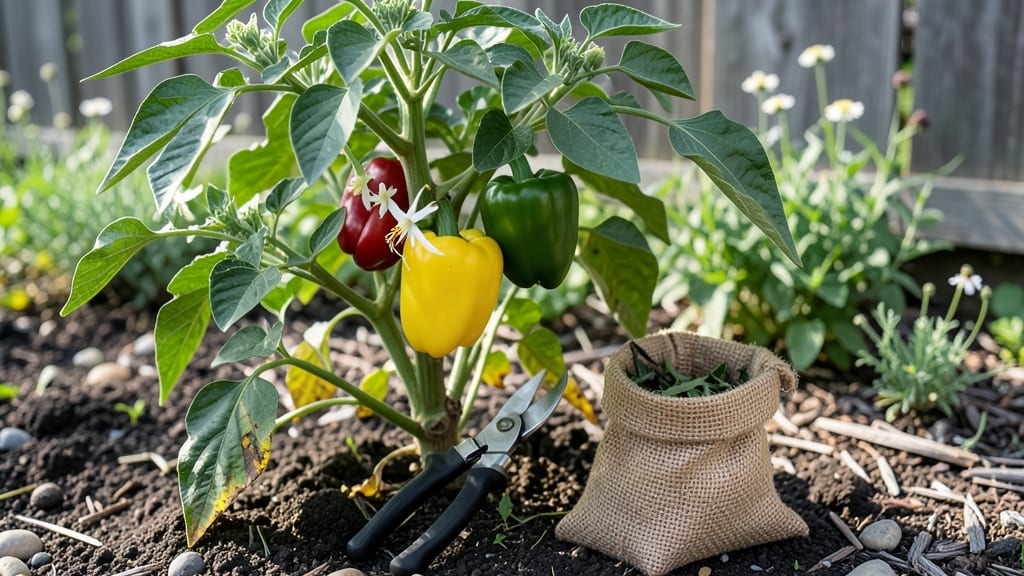
Pruning bell peppers isn't just about trimming—it’s about redirecting energy to produce larger, more abundant harvests while keeping plants healthy. I learned this the hard way after my first overgrown pepper plants yielded small, bitter fruit.
The right cuts improve airflow, reduce disease risk, and encourage bushier growth with more fruiting sites. This method works for both container-grown and in-ground peppers, and it’s simpler than you might think.
The best time to prune is early in the season when plants are young, but you can also trim throughout the growing period—just avoid heavy cuts after mid-summer in cooler climates.
Start by removing any yellowing or diseased leaves first, then focus on suckers (the small shoots that form in the leaf axils). These compete with fruit production, so snipping them early gives your peppers more energy to develop. Use clean, sharp scissors or pruners to avoid damaging stems.
After pruning, your plants will bounce back within 7-10 days with new growth, and you’ll notice more flowers and fruit setting within 2-3 weeks. Water deeply the day after pruning to help recovery, and hold off on heavy fertilizing for a week to avoid stressing the plant.
Monitor for signs of over-pruning, like wilting or stunted growth—this means you’ve cut too much, and the plant needs time to adjust. A well-pruned pepper plant can yield 30-50% more fruit than an unpruned one.
This technique works for all bell pepper varieties, from classic green bells to colorful heirlooms, and adapts easily to different climates. Whether you’re growing in a 5-gallon container or a full garden bed, the same principles apply.
The key is balance—prune enough to encourage growth, but not so much that you weaken the plant. With practice, you’ll develop a feel for when and how much to trim for the best results.
📚 In This Guide
- What you need
- Instructions
- Tips and common mistakes
- Wrapping up and next steps
What you need
- ● Sharp pruning shears – A bypass pruner (not an anvil type) is best for clean cuts without crushing stems. Look for 4- to 6-inch blades for precision.
- ● Clean, sharp scissors or garden knives – For smaller cuts or if you don’t have pruners. Disinfect with rubbing alcohol before and after use to prevent disease.
- ● Gloves – Nitrile or rubber gloves to protect your hands from thorns, dirt, and potential irritants.
- ● Disinfectant solution – A mix of 1 part bleach to 9 parts water (or 70% isopropyl alcohol) to sterilize tools and cuts.
- ● Garden twine or soft ties – For staking or trellising if you’re training vines upward (use 1-2mm diameter twine to avoid cutting into stems).
- ● Plant support stakes or cages – 5-6 foot tall stakes or tomato cages (if repurposing) to support pruned plants.
- ● Compost or mulch – To cover cut areas and reduce moisture loss or pest attraction.
- ● Labeling tags – If you’re experimenting with different pruning techniques on multiple plants.
- ● Choose the right time – Prune on a dry, cloudy day to reduce stress on the plant. Avoid pruning after rain or in extreme heat.
- ● Wait until plants are established – Prune 4-6 weeks after transplanting or when plants have 3-4 true leaves.
- ● Have a plan – Sketch a simple diagram of your plant’s structure beforehand if you’re new to pruning.
Step-by-Step guide for pruning bell peppers
Here's the method I've used for years to boost yield and plant health—no guesswork, just proven cuts.
Identify the Right Time to Prune
Prune bell peppers only after the plant has established 4-6 true leaves and shows new growth at the top. This ensures the plant has enough energy to recover. I always wait until morning when the plant is turgid from overnight watering—this makes cuts cleaner and reduces stress.
Look for flower clusters forming at the leaf axils (where leaves meet stems). These are your pruning targets. If you see yellowing leaves at the bottom, remove those first—they're sapping energy from fruit production. Healthy plants have deep green leaves and sturdy stems without signs of pests or disease.
Remove Suckers and Weak Growth
Suckers are the small shoots that grow between the main stem and a branch. These compete with your peppers for nutrients. Use clean, sharp pruning shears to snip suckers at their base—never tear them, as this damages the plant. I make cuts at a 45-degree angle, about ¼ inch above a leaf node to encourage new growth.
Also remove any weak, leggy stems that grow upward without leaves or flowers. These never produce fruit and drain the plant. You'll know a stem is weak if it's thin and pale compared to the main branches. After pruning, wipe your shears with rubbing alcohol to prevent spreading any hidden pathogens.
Thin Flower Clusters for Better Fruit
Bell pepper plants often produce more flowers than they can support. To maximize fruit size, remove all but 1-2 flowers per cluster. Use your fingers to gently twist off excess flowers—they'll come away cleanly without damaging the stem. This might seem counterintuitive, but fewer, well-fed peppers grow 2-3 times larger than crowded ones.
Focus on leaving flowers that appear closest to the main stem first, as these tend to ripen earliest. If you notice small peppers already forming, prioritize keeping those clusters. Avoid pruning during peak heat (10 AM–4 PM)—the plant recovers better in cooler morning or evening conditions.
Maintain Airflow and Remove Dead Growth
After your initial pruning, keep the plant open by trimming back any crossing branches that block airflow. Aim for a shape that lets sunlight reach all sides of the plant. I like to create a modified bush shape—removing only the lowest leaves to prevent soil-borne diseases while keeping the top foliage dense for shade.
Throughout the season, remove any yellow or brown leaves as soon as you spot them. These are entry points for pests and diseases. If you see pepper plants with excessive fruit (more than 10-12 peppers), thin the oldest ones first—they'll ripen sooner and leave room for new growth. Never leave stubs longer than ½ inch when pruning.
Post-Pruning Care for Recovery
After pruning, give your plant a light application of balanced fertilizer (10-10-10) to support new growth. Water deeply at the base—1 inch per week—to help the plant recover. Avoid overhead watering for 48 hours post-prune to prevent fungal spores from settling on fresh cuts.
Watch for new shoots emerging within 7-10 days at the pruned nodes. These are your plant's way of telling you it's healing. If you notice wilting or yellowing leaves after pruning, the cuts were too severe—next time, be more conservative. Prune again in 2-3 weeks if suckers reappear, but reduce the intensity as the season progresses.
Tips & tricks for perfect bell pepper pruning
Pruning your bell pepper plants the right way can transform your harvest—here's how to avoid common mistakes and maximize your yield.
Timing is Everything: The morning after a light watering is the best time to prune. This ensures your plants are hydrated and turgid, making cuts cleaner and reducing stress. I've found that pruning in the morning also gives the plants plenty of time to recover before the heat of the day. If you must prune later, avoid the peak heat hours of 10 AM to 4 PM when plants are most vulnerable to stress.
The 45-Degree Angle Secret: When removing suckers or weak growth in Step 2, make your cuts at a 45-degree angle about ¼ inch above a leaf node. This angle helps water run off the cut rather than pooling, which prevents rot. I've ruined several plants by making straight cuts—always angle those shears! Also, never leave stubs longer than ½ inch, as these can become entry points for disease.
Flower Cluster Strategy: In Step 3, focus on leaving just 1-2 flowers per cluster closest to the main stem. These will produce the largest peppers because they receive the most nutrients. I've seen plants with 20 tiny peppers versus those with 10 large ones—it's all about prioritizing quality over quantity. When you see small peppers already forming, keep those clusters as they're already getting a head start on growth.
Post-Pruning Recovery: After pruning, the 48-hour no-overhead-watering rule is critical. This prevents fungal spores from settling on fresh cuts and causing infections. I've also found that applying a light 10-10-10 fertilizer immediately after pruning helps the plant bounce back faster. Watch for new shoots emerging within 7-10 days—this is your plant's way of telling you it's healing properly. If you don't see new growth by day 10, you may have been too aggressive with your cuts.
Pro Tips for Pruning Bell Peppers
- Pruning your bell pepper plants the right way can transform your harvest—here's how to avoid common mistakes and maximize your yield.
- Timing is Everything: The morning after a light watering is the best time to prune.
- The 45-Degree Angle Secret: When removing suckers or weak growth in Step 2, make your cuts at a 45-degree angle about ¼ inch above a leaf node.
Frequently asked questions
Got questions about pruning your bell peppers? You’re not alone! Here are answers to some of the most common queries to help you grow a thriving, productive plant.
When is the best time to prune bell peppers?
The ideal time to prune bell peppers is early in the growing season (when plants are 12–18 inches tall) and after fruiting begins (to redirect energy to new growth). Avoid heavy pruning late in the season—it can stress plants before harvest. Focus on removing suckers (small shoots between stems) and damaged leaves.
How often should I prune my bell pepper plants?
Prune weekly or biweekly during active growth (spring/summer) to maintain shape and encourage fruiting. Once plants start flowering, reduce pruning to every 2–3 weeks to avoid overstressing them. Always use sterilized tools to prevent disease.
Can I prune bell peppers too much?
Yes! Over-pruning removes too many leaves, reducing the plant’s ability to photosynthesize and produce energy for fruit. Aim to keep 30–50% of the foliage intact. If you’ve already pruned heavily, fertilize with a balanced NPK (10-10-10) to help recovery.
Will pruning make my bell peppers bigger or more numerous?
Pruning correctly (removing suckers and shaping the plant) can increase fruit size and quantity by improving airflow and redirecting energy to main stems. However, if you prune too late or aggressively, you may see fewer, smaller peppers. Focus on strategic cuts during early growth.
What should I do if my bell pepper plant looks sad after pruning?
If your plant wilts or stops producing after pruning, it’s likely stressed. Revive it by:
Most plants bounce back within 1–2 weeks if given time and care!
Wrapping up and next steps
Pruning your bell peppers isn’t just about trimming—it’s about boosting your harvest and ensuring healthier plants! By removing suckers, thinning foliage, and shaping your plants strategically, you’ll encourage more energy to go toward juicy, vibrant peppers instead of wild growth.
With the right tools, timing, and technique, you’re well on your way to a bountiful garden.
Ready to see those peppers explode in size and flavor? Grab your pruners, head back to your garden, and put these tips into action. Happy pruning—and even happier harvesting! 🌱🍅