
Pruning
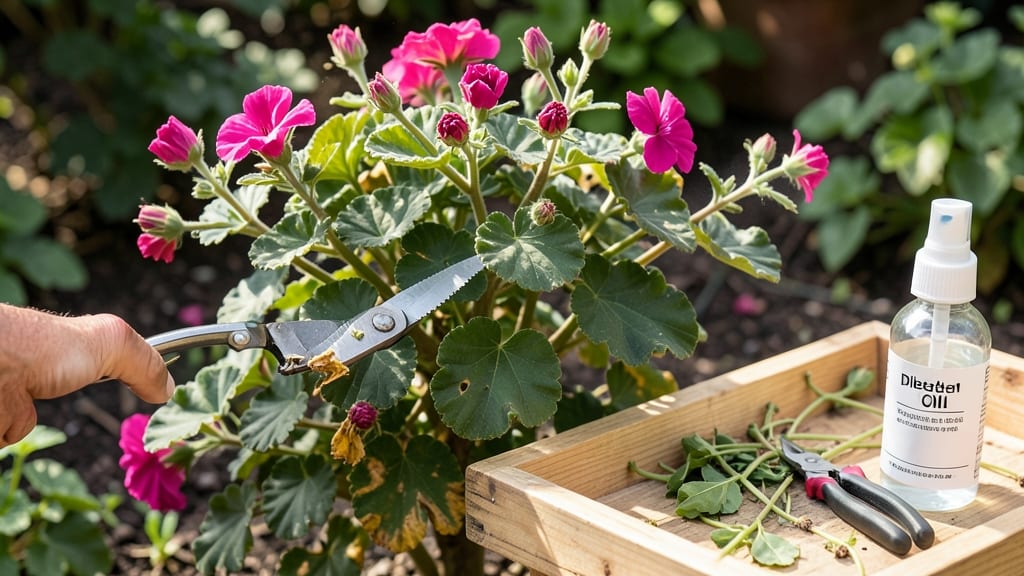
Pruning geranium plants in late winter or early spring is the secret to vibrant, bushier blooms that last all summer. 🌿 I used to let mine grow wild until they looked like overgrown bushes with just a few flowers—until I learned the right timing and technique.
The key is cutting back 1/3 of the plant right before new growth starts, which encourages fuller stems and more flowers.
You’ll need sharp pruners, gloves, and a sunny spot to work—geraniums reward precision over brute force. Start by removing any dead or leggy stems at the base, then trim back the remaining stems by about a third.
The goal is to shape the plant into a compact mound, not to strip it bare. This isn’t just about looks; it also improves airflow, which keeps diseases like powdery mildew at bay.
Within weeks, you’ll see fresh green shoots pushing through, and by summer, those same plants will be covered in blooms instead of sparse stems. The first flush of flowers arrives earlier, and the plants stay productive until frost.
It’s the difference between a few sad blooms and a neighborhood-showcase plant that everyone admires.
Works for both zonal and ivy geraniums, whether you’re growing them in pots or garden beds. The same principles apply—just adjust the timing slightly for regions with early springs. Here’s how to do it right without over-pruning or missing the window.
📚 In This Guide
- What you need
- Instructions
- Tips and common mistakes
- Wrapping up and next steps
What you need
- ● Sharp, clean pruning shears – Bypass pruners (4-6 inch blades) work best to avoid crushing stems. Sterilize with rubbing alcohol before and after use.
- ○ Gloves – Heavy-duty gardening gloves (optional but recommended to protect against thorns and sap).
- ● Disinfectant spray – 70% isopropyl alcohol or a 10% bleach solution (1 part bleach to 9 parts water) to sanitize tools between cuts.
- ○ Pruning saw (optional) – For thicker stems (½ inch or larger) that shears can’t handle.
- ● Compost bin or bag – To collect pruned stems for composting (avoid diseased plants!).
- ● Notebook & pen – To jot down pruning notes (e.g., plant variety, cut locations, or growth patterns).
- ● Hand lens or magnifying glass – To inspect stems for pests or diseases before pruning.
- ● Rubbing alcohol wipes – For quick tool sterilization on the go.
- ● Plant markers – If you’re pruning multiple varieties, label them to avoid confusion.
- ● Pruning sealant (e.g., tree wound dressing) – Only needed if your geraniums have large cuts (¼ inch or wider) to prevent disease entry.
How to prune geraniums for a full, flower-filled summer
Here's the simple method I use every winter to turn last year's scraggly geraniums into lush, blooming bushes.
✂️ Step 1: Wait for the Right Time to Prune
Prune geraniums only after the first hard frost kills the foliage but before new growth appears in spring—typically between November and early March. You'll know it's time when the stems turn brown and crispy, and the leaves fall off naturally. This dormant period is when the plant focuses energy on root health, making it ideal for pruning.
If you prune too early, you risk removing next year's blooms. If you wait too late, new shoots will have already formed, and you'll cut them off accidentally. I like to prune in late winter when the weather is still cold but the ground isn't frozen—usually around February.
🌿 Step 2: Gather Your Tools and Prepare the Plant
You only need two things: a pair of clean, sharp pruning shears and a bucket for clippings. Wipe the blades with rubbing alcohol before and after to prevent spreading disease. Geraniums are tough, so you don’t need fancy tools—just something that cuts cleanly without crushing the stems.
Remove the plant from its pot or mark the area if it's in the ground. This helps you visualize where to cut. I often lay the plant on its side on a tarp to make pruning easier—it keeps the stems from rolling away while I work. If your geranium is in the ground, prune it while it's still in place to avoid disturbing the roots.
✂️ Step 3: Cut Back to the Wooden Stem
Look for the woody, brown base where the green stems meet the root. This is your target—cut all the stems back to about ½ inch above this junction. You’ll see a small bump or node where new growth will sprout in spring. If you cut too low, you might damage the plant; if you leave too much, the geranium won’t bush out as well.
Don’t worry if it looks drastic—geraniums are resilient. After cutting, the plant will look like a bare stick, but trust the process. I like to step back and admire the "skeleton" of the plant before moving on. This is the moment that sets the stage for next summer’s blooms.
🌱 Step 4: Shape and Encourage New Growth
Once you’ve cut back the main stems, take a closer look. If any stems are still leggy or weak, trim them back further to the wood. You’re aiming for a rounded, balanced shape—this encourages even growth and more flowers. Think of it like giving the plant a fresh haircut to promote fullness.
Leave the plant in its pot or replant it in the ground. If you’re repotting, use fresh well-draining potting mix and water lightly. Place it in a cool, bright spot (like a garage or basement) but avoid freezing temperatures. You’ll see tiny buds forming at the base of the stems in early spring—that’s your reward for pruning now.
☀️ Step 5: Post-Pruning Care for a Strong Start
Water the geranium lightly after pruning to help it settle into dormancy. Avoid overwatering—geraniums in dormancy need very little moisture. Place the pot in a spot with bright, indirect light (like a sunny windowsill) or keep it in the ground where it’ll get winter sun.
In late winter, when you see new growth, it’s time to move the plant back outside. Harden it off gradually by exposing it to outdoor conditions for a few hours each day. By the time spring arrives, your geranium will be bushy, healthy, and ready to burst into blooms. Real talk: the first flush of flowers after pruning is always the most abundant.
Tips & tricks for pruning geraniums
Here's what nobody tells you about transforming winter-bare geraniums into summer showstoppers.
Timing is Everything: The November to early March window is non-negotiable for optimal results. I've learned the hard way that pruning too early can remove next year's flower buds while waiting too late risks cutting off new shoots. Look for that crispy brown stem look—it's your cue that the plant has entered true dormancy. Confession: I skipped this step for years and wondered why my geraniums never bloomed as heavily as I hoped.
Tool Prep Matters: Clean pruning shears are your secret weapon. Wipe the blades with rubbing alcohol before and after each cut to prevent disease spread between plants. I keep a small bottle of 70% isopropyl alcohol in my gardening toolkit specifically for this purpose. Sharp tools make clean cuts that heal faster, while dull blades crush stems and invite infections. Don't make my mistake of using the same shears for everything!
Visual Cues for Perfect Cuts: When cutting back to that woody brown base in Step 3, look for the small bump or node where new growth will emerge. This is your target—cut about ½ inch above it. The plant will look dramatic after pruning, but trust that skeleton structure is what allows it to regrow bushier and fuller. I like to take before-and-after photos to remind myself how much transformation happens beneath the surface.
Post-Pruning Light Strategy: After pruning, place your geraniums in bright, indirect light—like a sunny windowsill or under grow lights. Direct sunlight can stress freshly pruned plants, while too little light weakens their recovery. I've found that a south-facing window with sheer curtains gives the perfect balance. This light exposure jumpstarts the root system's energy production for spring growth.
Pro Tips for Pruning Geranium Plants
- Here's what nobody tells you about transforming winter-bare geraniums into summer showstoppers.
- Timing is Everything: The November to early March window is non-negotiable for optimal results.
- Tool Prep Matters: Clean pruning shears are your secret weapon.
Frequently asked questions
Got questions about pruning geraniums?
You’re not alone! Here are answers to the most common concerns—so you can confidently shape your plants for a showstopping summer display.
When is the best time to prune geraniums?
Prune geraniums in early spring (March–April) before new growth starts or after the first frost in fall (if they’re not winter-hardy). Avoid pruning during active blooming—wait until flowers fade or dormancy sets in. Pro tip: If your geraniums bloom year-round, trim lightly every 6–8 weeks to encourage bushiness!
How much should I cut back geraniums?
For hard pruning, reduce stems by 1/3 to 1/2 their height. Cut just above a leaf node (where leaves meet the stem) to promote branching. If your geraniums look leggy, don’t overdo it—leave at least 2–3 sets of leaves on each stem. Warning: Over-pruning can stress the plant or delay blooming.
What if my geraniums don’t bloom after pruning?
Lack of blooms often means too much shade, over-fertilizing, or improper pruning. Ensure your geraniums get 6+ hours of sunlight daily and use a balanced, low-nitrogen fertilizer (like 10-10-10) after pruning. Deadhead spent flowers regularly to encourage new blooms. Try this: If blooms are sparse, prune again lightly in mid-summer to stimulate fresh growth.
Can I prune geraniums in containers differently?
Container geraniums follow the same rules, but watch for root-bound stress—prune more conservatively if roots are circling. After pruning, refresh the soil (top-dress with compost) or repot if needed. Bonus tip: Pinch back tender new growth in early spring to keep container geraniums compact and bushy!
How do I prune geraniums for winter survival?
If your geraniums are hardy to your climate (Zones 10–11), cut back by half in late fall and mulch heavily. For tender varieties, trim back 2/3 of the plant, dig up tubers (if applicable), and store in a cool, dry place. Remember: Never prune frost-damaged stems—wait until spring to assess and trim dead growth!
Wrapping up and next steps
Pruning your geraniums during dormancy is your secret weapon for lush, vibrant blooms next season! 🌿 By following this blueprint—cleaning up dead growth, shaping strategically, and giving your plants a fresh start—you’re setting the stage for a showstopping summer display.
Remember, consistency and patience are key, so don’t rush the process.
Now that you’re armed with the know-how, roll up your sleeves and get pruning! Grab your shears, snap a few photos of your progress, and watch your geraniums thrive. Happy gardening—your future blooms will thank you! 🌸