
Pruning
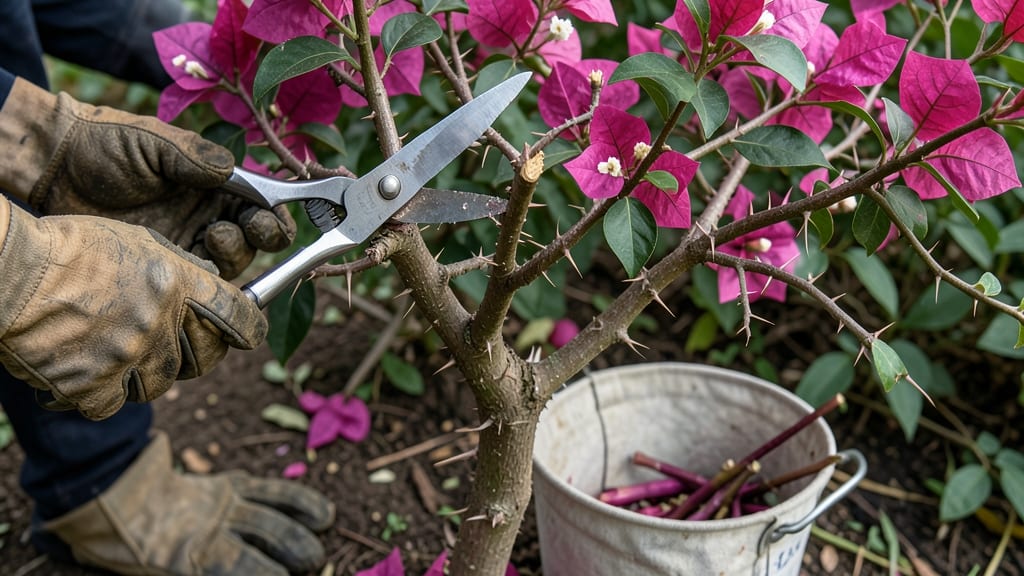
Hard pruning bougainvillea in late winter transforms leggy vines into a burst of bold, bushy blooms by spring. ✂️ I’ve watched my once-wild, sprawling plants go from scraggly to showstopping in just 6 weeks—all by cutting back with confidence. The key?
Timing, technique, and knowing exactly where to make those bold cuts. You’ll need sharp pruners, gloves, and a sanitizing spray to prevent disease. Grab a ladder if your bougainvillea climbs high, and set aside 30 minutes for the job.
The goal isn’t perfection—it’s encouraging new growth from old wood, which is where those vibrant blooms hide. After pruning, water deeply but don’t overdo it—bougainvillea hates soggy roots. A balanced fertilizer in early spring will reward your efforts with thicker foliage and bigger blooms by summer.
Just avoid pruning after blooms appear, or you’ll sacrifice next year’s flowers. This method works for both patio plants and large landscape specimens. The first year might feel drastic, but trust the process—your bougainvillea will thank you with nonstop color all season long.
📚 In This Guide
- What you need
- Instructions
- Tips and common mistakes
- Wrapping up and next steps
What you need
- ● Pruning shears: Bypass pruners (for clean cuts on stems up to ½ inch thick) – 1 pair (ensure they’re sharp and sterilized with rubbing alcohol).
- ● Loppers: Bypass or anvil type (for thicker stems up to 2 inches) – 1 pair (look for ergonomic handles for comfort).
- ● Hand pruners: Bypass or ratcheting (for small branches and detail work) – 1 pair (opt for bypass for cleaner cuts).
- ● Gloves: Heavy-duty gardening gloves (to protect from thorns and sap) – 1 pair (nitrile-coated for grip).
- ● Disinfectant: Rubbing alcohol (70%+ isopropyl) or bleach solution (1 part bleach to 9 parts water) – small bottle or spray (sterilizes tools between cuts).
- ○ Pruning sealant (optional but helpful): Tree wound paint or pruning paste – small jar (for sealing larger cuts to prevent disease).
- ● Safety gear: Long sleeves/pants (to protect from thorns).
- ● Safety glasses (if working near the face or eyes).
- ● Ladder or step stool: For reaching higher branches safely.
- ● Garden twine or zip ties: To secure branches during pruning or for staking.
- ● Sharpie or marker: To label branches if you’re doing a phased pruning plan.
- ● Trash bags or bucket: For collecting pruned debris (bougainvillea branches can be heavy!).
- ● Hose or water spray bottle: To clean sap off tools and skin post-pruning.
Instructions: hard pruning bougainvillea for year-round color
Here's how I transform leggy, sparse bougainvillea into a lush, flowering powerhouse—no matter the season.
✂️ Step 1: Time Your Pruning for Maximum Impact
Bougainvillea responds best to hard pruning in late winter or early spring, just as new growth begins. This is when the plant's energy shifts from dormancy to vigorous regrowth. If you're in a mild climate, you can prune lightly after flowering to encourage a second flush—but never cut back more than one-third of the plant's total volume at any one time.
Look for dormant stems that have no leaves or buds—these are the ones to remove completely. Healthy stems will have small, swollen nodes where leaves or flowers will emerge. I always prune just above these nodes at a 45-degree angle to prevent water from pooling and rotting the cut.
✂️ Step 2: Cut Back with Precision and Purpose
Use sharp, clean pruners to make your cuts—dull blades crush stems and invite disease. Start by removing any dead, diseased, or crossing branches first. These compete with healthy growth and weaken the plant's structure. For the main pruning, cut back each branch to about one-third of its length, leaving 3-5 leaf nodes on each remaining stem.
Here's the thing—I like to step back every few cuts and visually assess the plant's shape. Bougainvillea thrives when you encourage an open, airy structure. If you see branches growing inward, cut them back further to create space for airflow. This prevents fungal issues and ensures more blooms reach sunlight.
🌱 Step 3: Stimulate New Growth with Strategic Cuts
After your initial cuts, look for lateral buds along the remaining stems—these are your future blooming points. Prune just above these buds to encourage outward growth rather than upward elongation. I often make a second round of lighter cuts a month later to shape the plant further and remove any weak or leggy new growth.
Don't be tempted to prune too aggressively—bougainvillea is resilient but not indestructible. If you cut back too much, you'll delay flowering while the plant recovers. The goal is to balance renewal with existing structure. You'll know you've done it right when you see fresh, vibrant green growth emerging within 2-3 weeks.
☀️ Step 4: Optimize Care for Post-Pruning Recovery
Water deeply immediately after pruning to help the plant recover. Bougainvillea has shallow roots, so 1-2 gallons per plant (depending on pot size) will encourage strong regrowth. For the first 4-6 weeks, keep the soil consistently moist but not soggy—this is when new roots and stems establish themselves.
Move your bougainvillea to a location with full sun (6+ hours daily) and protect it from strong winds, which can stress new growth. If you're in a hot climate, provide afternoon shade during the hottest months to prevent leaf scorch. You'll see the first signs of recovery in 3-4 weeks—watch for new leaves unfurling and tiny flower bracts forming.
⏰ Step 5: Maintain Shape and Encourage Continuous Blooms
After the initial hard pruning, bougainvillea benefits from monthly light pruning to maintain shape and encourage continuous flowering. Pinch back new growth tips to promote bushier growth, and remove any spent blooms promptly—they sap energy that could go toward new flowers.
I also fertilize lightly every 4-6 weeks during the growing season with a balanced, low-nitrogen fertilizer (like 7-7-7 or 8-3-9). Too much nitrogen encourages leafy growth at the expense of blooms. Bougainvillea rewards precision—when you balance pruning, sunlight, and nutrients, you'll get bold, vibrant blooms year-round.
Tips & tricks for transforming bougainvillea
These precision-focused tips will help you avoid common pruning mistakes and maximize your bougainvillea's blooming potential.
Timing is Everything: The late winter or early spring timing in Step 1 is non-negotiable for hard pruning. This aligns with the plant's natural growth cycle when it's emerging from dormancy. In colder climates, wait until after the last frost—pruning too early can damage tender new growth. If you're in a mild climate and want a second flush, wait until after the first flowering cycle before attempting light pruning. The key is always watching for those first signs of new growth.
Cutting Technique Matters: For Step 2, I can't emphasize enough how important clean cuts are. Use pruners that are sharp enough to cut through stems with a single snip—dull blades crush the stem and create jagged edges that invite disease. When cutting back to one-third of the stem's length, count those 3-5 leaf nodes carefully. Each node represents a potential new branch, so you're essentially creating a scaffold for future growth. The 45-degree angle isn't just aesthetic—it prevents water from pooling at the cut site, which could lead to rot.
Visual Assessment is Critical: After making your initial cuts in Step 2, step back and examine your bougainvillea from all angles. This isn't just about aesthetics—it's about creating an open structure that allows sunlight to penetrate to the center of the plant. Inward-growing branches should be cut back further, even if it means removing more than one-third of that particular branch. Think of it as sculpting: you're creating a framework where every bloom has equal access to sunlight, which is essential for vibrant color development.
Recovery Care Makes the Difference: The post-pruning care in Step 4 is where many gardeners fall short. Those first 4-6 weeks are crucial for establishing new roots and stems. I've seen bougainvillea plants that were pruned beautifully but then neglected during recovery—resulting in sparse regrowth. The 1-2 gallons of water should be applied directly to the soil, not overhead, to prevent fungal issues. And that afternoon shade in hot climates isn't optional—it prevents leaf scorch that can weaken the plant during its vulnerable recovery phase.
Pro Tips for Hard Pruning Bougainvillea
- These precision-focused tips will help you avoid common pruning mistakes and maximize your bougainvillea's blooming potential.
- Timing is Everything: The late winter or early spring timing in Step 1 is non-negotiable for hard pruning.
- Cutting Technique Matters: For Step 2, I can't emphasize enough how important clean cuts are.
Frequently asked questions
Got questions about hard pruning bougainvillea? You’re not alone! Here are the most common concerns—and straightforward answers—to help you master this bold technique.
When is the best time to hard prune bougainvillea?
Hard prune in late winter or early spring (just before new growth starts) for the best results. Avoid pruning in fall or during flowering season—this can stunt blooms or stress the plant. In warmer climates, you can prune lightly year-round, but major cuts should still align with dormancy.
How much can I cut back without killing my bougainvillea?
You can safely remove up to ⅔ of the plant’s growth in a single session. Focus on cutting back to a healthy joint or stem (about ¼-inch above a leaf node). Avoid cutting into old, woody stems—these won’t regrow. Think of it like sculpting: drastic cuts now = lush, bushier blooms later!
What if I prune at the wrong time? Can I still save my plant?
If you prune too late (e.g., during bloom season), your plant may drop flowers or struggle to recover. Don’t panic! Water deeply, apply a balanced fertilizer, and monitor for new growth. Bougainvilleas are resilient—just adjust your timing for next year. Over-pruning in fall? Wait until spring to see regrowth.
Can I hard prune bougainvillea in containers?
Container bougainvilleas respond even better to hard pruning since their root systems are confined. Prune the same way, but repot or refresh soil afterward to support new growth. Just ensure your container has drainage—boggy roots + pruning = recipe for rot.
What’s an alternative if I don’t want to hard prune?
If hard pruning feels too drastic, try light shaping cuts (removing only 10–20% of growth) or pinching new shoots to encourage bushiness. For established plants, selective pruning (trimming leggy stems) works too. Just remember: bougainvilleas bloom on new wood, so some pruning is key for vibrant flowers!
Wrapping up and next steps
Hard pruning your bougainvillea might seem intimidating at first, but with the right tools and techniques, you’ll unlock a burst of vibrant blooms and a fuller, healthier plant. Remember, timing, clean cuts, and patience are your best friends—whether you’re tackling it in late winter or mid-summer. 🌸
Now that you’re armed with the know-how, roll up your sleeves and get pruning! Start small if you’re new, observe your plant’s response, and adjust as needed. Before you know it, your bougainvillea will be the star of your garden—bold, bushy, and bursting with color. Happy pruning! 🌿✂️