
Pruning
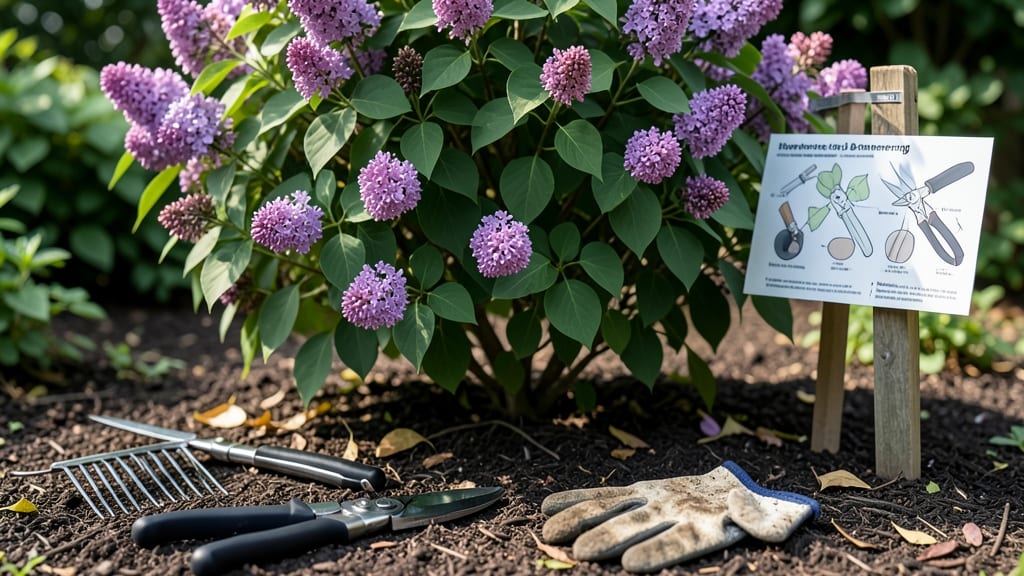
Pruning your Bloomerang lilac at the right time transforms it from a tangled mess into a neat, blooming powerhouse—and the dormant season is your golden window. 🌿 I’ve pruned mine every winter for three years now, and the difference is night-and-day: more flowers, stronger branches, and a shape that actually fits my small yard.
The key? Timing, technique, and knowing where to cut without sacrificing next year’s blooms.
You only need three tools: sharp bypass pruners, loppers for thicker stems, and a pair of gloves (trust me, lilac thorns are no joke). Start by removing any dead, crossing, or weak branches first—these are the easy wins that instantly improve airflow and shape.
Then, focus on thinning out older wood from the center to encourage new growth where the light can reach. Bloomerang lilacs are rebloomers, so we’re not hacking back like traditional lilacs; we’re sculpting for balance.
By the time spring rolls around, you’ll see thicker stems with buds forming along last year’s growth—that’s the payoff. The bush stays compact, blooms prolifically in both spring and summer, and looks intentional, not like a neglected hedge.
Just avoid the temptation to prune after the first flush of flowers; that’s when the plant sets buds for its second bloom cycle, and you’ll rob yourself of next year’s show.
This method works for any Bloomerang lilac, whether you’re dealing with a mature 6-foot bush or a young plant still finding its shape. The secret? Patience and precision—no aggressive cuts, just strategic trims that keep the plant healthy and happy.
Ready to give it a try? Grab your tools, and let’s get pruning!
📚 In This Guide
- What you need
- Instructions
- Tips and common mistakes
- Wrapping up and next steps
What you need
- ● Pruning shears: Bypass pruners with sharp, clean blades (4-6" cutting capacity). Pro tip: 💡 Sanitize with rubbing alcohol before and after use to prevent disease spread!
- ● Loppers: For thicker branches (8-10" cutting capacity). Choose bypass-style for precision cuts.
- ● Hand saw: Pruning saw with a fine-toothed blade (for branches >1" thick).
- ● Gloves: Heavy-duty gardening gloves (cut-resistant for safety).
- ○ Pruning sealant: Optional but helpful for sealing larger cuts (>½") to prevent disease (e.g., Tanglefoot Tree Wound Pruning Seal).
- ● Disinfectant: 1 part bleach to 9 parts water (for cleaning tools between cuts).
- ● Trash bags: Heavy-duty (for collecting pruned branches).
- ● Ladder or step stool: If your lilac is taller than 6 feet (ensure it’s stable and rated for your weight).
- ● Sharpie or marker: For labeling branches if you’re doing layered pruning.
- ○ Safety glasses: To protect your eyes from debris (optional but recommended).
- ● Timing: Prune late winter or early spring (before buds swell but after the worst frost).
- ● Weather: Choose a dry, calm day (no rain forecasted for 24 hours).
- ● Health check: Inspect your lilac for signs of disease (e.g., powdery mildew, borers) before pruning.
Step-by-step instructions for pruning Bloomerang lilac
Here’s my foolproof method for pruning these reblooming beauties—clean cuts that guarantee next year’s showstopper flowers.
✂️ Step 1: Time Your Prune for Dormancy
Prune your Bloomerang lilac in late winter or early spring, just as buds begin to swell but before new growth starts. This timing ensures you remove dead wood while leaving next year’s blooms intact. I always wait until after the last hard frost—around February to March in most climates—when the air stays consistently above 40°F.
Check the plant’s buds: they’ll look plump and ready to burst, but don’t prune if you see any green shoots. Those are this year’s growth, and cutting them off means fewer flowers. If you miss this window, you can still prune in late spring after flowering, but you’ll sacrifice some of the next season’s blooms.
✂️ Step 2: Remove Dead, Damaged, or Crossing Branches
Start by scanning the lilac for branches that are dead, broken, or rubbing against others. Use sharp bypass pruners to make clean cuts at a 45-degree angle, about ¼ inch above a bud or lateral branch. I always cut just outside the bud to encourage outward growth—this prevents the plant from growing inward and becoming dense.
If a branch is thicker than ½ inch, use loppers instead. Never leave stubs—these invite disease. For branches larger than 1 inch, make your cut just outside the branch collar (the swollen area where the branch meets the trunk). You’ll see new shoots emerge from these buds within 2-3 weeks—that’s your sign the plant is healing.
✂️ Step 3: Thin Out Overcrowded Areas
Bloomerang lilacs thrive when air circulates freely. Look for areas where branches are too close together—this creates a tangled mess and invites pests. Remove one-third of the oldest wood first, cutting branches back to their origin point. I like to work from the inside out, so I’m not left with a hollow center.
For each branch you remove, make your cut just above a healthy outward-facing bud. This encourages the plant to fill in gaps naturally. If you’re unsure which branches to keep, imagine the plant as a vase shape—open at the top, wider at the base. You’ll see where branches need thinning to maintain that form.
✂️ Step 4: Shape for Next Year’s Blooms
Now it’s time to shape the lilac for maximum flowering. Bloomerang lilacs bloom on both old and new wood, so you can be a little bolder with pruning than with traditional lilacs. Start by cutting back last year’s flower stems (they’ll be bare or have dried blooms) to just above a set of buds. This stimulates new growth and more flowers.
For the overall shape, step back and look at the plant. If it’s too tall, select 3-4 of the strongest branches and cut them back by one-third to encourage bushier growth. Avoid cutting into the center—this can create a weak spot where water pools and rot sets in. After pruning, the plant should look balanced, with an open structure that lets light reach all branches.
🌿 Step 5: Clean Up and Fertilize
Once you’ve finished pruning, remove all debris from the area—this prevents disease from lingering over winter. I like to rake up fallen leaves and twigs, then apply a balanced fertilizer (like 10-10-10) to encourage strong new growth. Water deeply right after pruning to help the plant recover.
Watch for new shoots emerging in 3-4 weeks. If you see any weak or leggy growth, you can trim those back slightly to redirect energy to stronger branches. By late spring, your lilac should be fuller and more vibrant than ever—just wait for those stunning blooms to return next year!
Tips & tricks for perfect Bloomerang lilac pruning
These simple strategies will help you prune like a pro and set your lilac up for a spectacular rebloom next season.
Timing is Everything: That February to March window isn't just arbitrary—it's when your lilac's energy is focused on next year's flowers, not this year's growth. I've seen people prune too early and miss the bud swell, or too late and cut off new shoots. Check those buds: they should be plump like tiny balloons but not bursting yet. If you're unsure, wait a week—better late than sorry with these beauties.
The 45-Degree Angle Secret: When you make those clean cuts in Step 2, the angle matters more than you'd think. That 45-degree slant prevents water from pooling on the cut, which would invite rot. I like to practice on a scrap piece of wood first—it helps develop muscle memory. And remember, always cut just outside the bud, never inside. This tiny detail makes all the difference in how your plant heals and grows.
One-Third Rule for Thinning: Removing one-third of the oldest wood might sound drastic, but trust me—it's what keeps your lilac thriving. The oldest branches are often the most crowded and least productive. I start with the thinnest branches first, working my way up to thicker ones. This creates instant air circulation, which prevents fungal diseases that love damp, crowded spaces. Think of it as giving your plant a spa day—more air, more light, more room to grow.
Post-Prune Care: The work doesn't end when you put down your pruners. After you've finished, give your lilac a good drink—deep watering helps it recover from the stress of pruning. I also like to add a layer of mulch around the base (but not touching the trunk) to retain moisture and regulate soil temperature. This simple step can make your lilac bounce back faster, with stronger new growth ready for next year's blooms.
Pro Tips for Prune Bloomerang Lilac
- These simple strategies will help you prune like a pro and set your lilac up for a spectacular rebloom next season.
- Timing is Everything: That February to March window isn't just arbitrary—it's when your lilac's energy is focused on next year's flowers, not this year's growth.
- The 45-Degree Angle Secret: When you make those clean cuts in Step 2, the angle matters more than you'd think.
Frequently asked questions
about pruning your Bloomerang Lilac—because even the pros need a little guidance! Here’s what you’ve been wondering:When is the absolute best time to prune my Bloomerang Lilac?
Prune your Bloomerang Lilac in late winter or early spring, before new growth starts (typically February–March in most climates). This ensures you’re not cutting off next year’s blooms. If you miss the window, wait until after flowering—but avoid heavy pruning then, as it may reduce next year’s flowers. Pro tip: Check your local frost dates to time it perfectly!
How much can I cut back my Bloomerang Lilac without harming it?
For established Bloomerang Lilacs, you can safely remove up to 1/3 of the plant’s oldest stems to the ground. Focus on thinning out crowded branches and cutting just above a bud (not a leaf). Avoid “topping” (cutting flat across)—this stresses the plant. Warning: Over-pruning can delay blooming for a season or two.
Will pruning my Bloomerang Lilac make it bloom more next year?
Yes! Pruning encourages healthier, denser growth and can actually increase next year’s blooms if done correctly. By removing old wood, you redirect energy to new stems, which often produce more flowers. Just avoid pruning after blooming if you want maximum flowers the following year. Think of it as a spa day for your lilac!
What if I prune at the wrong time? Can I still save my lilac?
No need to panic! If you prune too early (before dormancy) or too late (after flowering), your lilac may take a breather but will likely bounce back. Focus on light maintenance pruning (removing dead or crossing branches) in the off-season. Next year, stick to the late-winter rule. Remember: Lilacs are resilient—give it time and patience!
Are there alternatives to pruning if my Bloomerang Lilac looks messy?
If pruning feels overwhelming, try selective shaping instead of heavy cuts. Remove only the most unruly branches or those rubbing against others. You can also thin out dense areas by cutting back a few stems to the base. For a low-maintenance look, let it grow naturally—Bloomerang Lilacs are forgiving!
| Quick Troubleshooting Guide |
|---|
|
Problem: No blooms next year Fix: Prune in late winter, not after flowering. Avoid cutting back new growth. |
|
Problem: Leggy or sparse growth Fix: Prune 1/3 of oldest stems to encourage bushier regrowth. |
|
Problem: Dead or diseased branches Fix: Cut these out anytime—they won’t regrow. |
Wrapping up and next steps
Pruning your Bloomerang Lilac during dormancy isn’t just maintenance—it’s the secret to next year’s showstopping blooms! 🌸 By following the right steps, you’ll encourage healthier growth, more flowers, and a stronger shrub. Remember, timing, technique, and patience are your best tools.
Ready to transform your lilac into a blooming superstar? Grab your pruners and schedule that dormant-season session—your future floral display will thank you! For extra confidence, review the FAQs or consult a local horticulturist before you start.